Liberation 75 Tulip Planting - 75 Years to the day Marking the End of The Battle of the Scheldt, Oct. 1st – Nov. 8th, 1944
On November 8, 2019 the Albert County Museum and RB Bennett Commemorative Centre with The Royal Canadian Legion Branch 32 (Hillsborough) will be planting 75 Liberation75 Tulips in celebration of the liberation of the Netherlands in 1945 by the 1st Canadian Army and to commemorate the 1.1 million Canadians who served in the Second World War.
It happens that November 8 , 2019 is 75 years to the day that ended the Battle of Scheldt.
In early October 1944, the Allies controlled the harbours north of the Seine but the supply issue was not yet solved: Dieppe, Le Tréport and Ostende had been opened but could not handle the high volumes that Allied troops in Europe required. Le Havre, Boulogne and Calais were not serviceable having suffered major destructions. Further north, Antwerp had been liberated by the Allies on September 3rd, but the city was located on the Scheldt River, some 80 kilometres from the open sea and the river’s mouth was still under German control. The only way to make sure that the supplies required by the campaign in Europe could enter the continent was to capture the Scheldt. This was to be the mission of the First Canadian Army.
The marshes south of the Scheldt Estuary was defended by German troops in an area the Allies named the Breskens pocket. The terrain posed the largest threat for the advancing Allied troops, where the flooded fields not only slowed the attackers, but it also provided cover for the defending German troops from both land and aerial reconnaissance. The 3rd Canadian Infantry Division's 7th Brigade moved across the Leopold Canal while the 9th Brigade mounted an amphibious attack on the northern coast on 6 Oct; the two Canadian brigades secured the area near the Aardenburg road by 12 Oct. Meanwhile, the 8th and 9th Brigades asserted pressure from different directions to overwhelmed the Germans in the pocket. This operation was named Operation Switchback, and it ended on 3 Nov after securing Knokke and Zeebrugge, eliminating German threat on the south coast of the Scheldt Estuary.
The island stronghold of Walcheren was attacked from the air, with British Royal Air Force aircraft targetting dykes, flooding the island. The flooding hampered German movement, and also raised the water levels so that the Allies could have deeper water for an amphibious operation. As predicted by Eisenhower, the capture of this island "required a joint naval, air, and ground operation," and it was exemplified with this successful coordination between bombers and ground troops. On 31 Oct Canadian troops attacked across the single causeway between Walcheren and South Beveland, supported by an amphibious assault on 1 Nov from the south across the estuary. On 6 Nov, the island's capital Middelburg fell, and the island was declared secure two days later.
After a month of fighting, the Allied victory came at a high cost of 12,873 casualties among the veterans of Falaise and Caen, half of them Canadian. Meanwhile, the victors captured 41,043 prisoners. With the hostile forces cleared from the area, time-consuming mine-clearing operations could finally begin. Antwerp opened as an Allied port on 28 Nov. "The end of Nazism was in clear view when the first ship moved unmolested up the Scheldt", said Eisenhower. This first vessel to arrive at Antwerp was appropriately the Canadian-built freighter Fort Cataraqui. The gallantry that the Canadian soldiers had shown amidst fierce fighting earned utmost respect of Montgomery. "The Canadians have proved themselves magnificent fighters. Clearing the Scheldt was a job that could have been done only by first-rate troops. Second-rate troops would have failed."
The planting ceremony will take place at the Albert County Museum on Friday, November 8 at 2pm.
The text on the Battle of Scheldt was taken verbatim from https://ww2db.com/battle_spec.php?battle_id=116 .
Today, August 16th, is the Chipoudie Monument Unveiling in Riverside-Albert - Visit Us to Learn More about the Acadians in Albert County!

Today, August 16th, is the Chipoudie Monument Unveiling in Riverside-Albert.
The unveiling ceremony will be held at 10:30am Friday, August 16th during the Acadian World Congress at McClelan Park (Rte 114/King St. opposite Maple St. in Riverside-Albert). Following the ceremony, everyone is invited for a social gathering at the exhibition grounds in River-side-Albert to be entertained with live music and to enjoy various foods. Be sure to visit the museum to see the new Acadians in Albert County Exhibit!
Our Newest Donation - Quite Possibly the Finest Toboggan in the Country

Our museum is a treasure trove of weird and wonderful artefacts that have been lovingly donated to the museum to be shared and appreciated by everyone who visits. It’s a collecting ground for our shared past to protect and pass on to future generations. It truly is a wonderful place to explore and experience the past.
And it’s not everyday that we get an item that make us go “WOW!”, but today was one of those days. Today we received what might possibly be the finest toboggan in the country. (Ironically, on perhaps the hottest day of the year!). Someone even remarked that if it snowed now, they wouldn’t mind a bit.
43rd Annual Quilt & Fibre Fair Taking Place July 9th to 13th
The Albert County Museum is proud to present the 43rd Annual Quilt & Fibre Arts Show and Sale from July 9th to 13th, 2019. This one of the longest running quilt shows and sales in Atlantic Canada! This year’s theme is “Christmas in July” and in addition to nearly 80 quilts on for sale and display, the show also offers a variety of different fibre arts. Knitting, weaving, hooking, cross stitching, and a variety of beautifully sewn pieces are all available for purchase and all items in the show are locally made and crafted. Daily workshops and demonstrations are also included in this wonderful event.
“Quilting has a rich history in this area and there continues to be local interest in the art form” says Janet Clouston, Managing Director of the Albert County Museum. “This year the show is celebrating its 43rd anniversary and ranks as an historic event for the area as well as the Museum’s biggest fundraiser.” Clouston added, “Without the dedication and hard work of the volunteers that put the Quilt Show together, we wouldn’t be able to experience such a successful community building event. “
The 43rd Annual Quilt and Fibre Arts Show and Sale is being held from Tuesday, July 9th until Saturday, July 13th from 9:30am until 5:30pm daily in the Community Hall (built in 1870) and the beautiful Court House (built in 1903). Admission is $3 and proceeds go towards funding the many projects happening at the museum. Special $5 admission the Museum is available for paid attendees Quilt & Fibre Fair.
For further information contact: Janet Clouston from the Albert County Museum. Phone (506) 734-2003 or email: janet@albertcountymuseum.ca
Canada Day and RB Bennett Birthday Celebration on Monday, July 1st
The Albert County Museum is looking forward to welcoming friends, neighbours and visitors to the New Brunswick’s Bay of Fundy region to our Open House and celebration of two great birthday’s - Canada’s and RB Bennett’s, the 11th Prime Minister of Canada who was born right here in Hopewell! Admission is free and the day’s events start at 12 noon with singing of O’ Canada and the raising of the Canadian Flag followed by a free BBQ lunch and games for the young … and young at heart!
Live Music featuring Fundy Ceilidh. There will be several Guest Speakers, including author and historian Brent Wilson, who will share stories of the 100th Anniversary of the triumphant return of Albert County’s 26th Battalion 1919. Special exhibit of a WWI Howitzer and newly found and donated metal of fallen soldier CR Oulton, who died in 1917 at the age of 15. See you on Canada Day! Supported by the Government of Canada.
Remembering the 75th Anniversary of D-Day - June 6, 1944 - The Battle of Normandy
Today marks the 75th anniversary of D-Day and the beginning of the Battle of Normandy during the Second World War. On June 6, 1944 and during the long summer that followed, men from all over the world came to fight in Normandy to defeat Nazism and re-establish freedom. D-Day would be the opening chapter of the Battle of Normandy which raged until late August 1944 and was a pivotal step in the liberation of Western Europe and the end of the war.
On June 6, 1944 soldiers from the United States, Great Britain, Belgium, Denmark, Holland, Norway, Poland and Australia, along with some 14,000 Canadian soldiers came ashore at the beaches of Normandy in occupied France. Thousands of Royal Canadian Navy and Royal Canadian Air Force service members also took part in Operation Overlord, as the massive Allied assault was code-named.
On D-Day, the 3rd Canadian Infantry Division landed on Juno Beach. The Canadian assault troops stormed ashore in the face of fierce opposition from German strongholds and mined beach obstacles. The soldiers raced across the wide-open beaches swept with machine gun fire, and stormed the gun positions. In fierce hand-to-hand fighting, they fought their way into the towns of Bernières, Courseulles and St. Aubin and then advanced inland, securing a critical bridgehead for the allied invasion. The victory was a turning point in World War II and led to the liberation of Europe and the defeat of Nazi Germany.
The price they paid was high - the battles for the beachhead cost 340 Canadian lives and another 574 wounded. John Keegan, eminent British historian who wrote Six Armies in Normandy, stated the following concerning the Canadian 3rd Division on D-Day: “At the end of the day, its forward elements stood deeper into France than those of any other division. The opposition the Canadians faced was stronger than that of any other beach save Omaha. That was an accomplishment in which the whole nation could take considerable pride.”
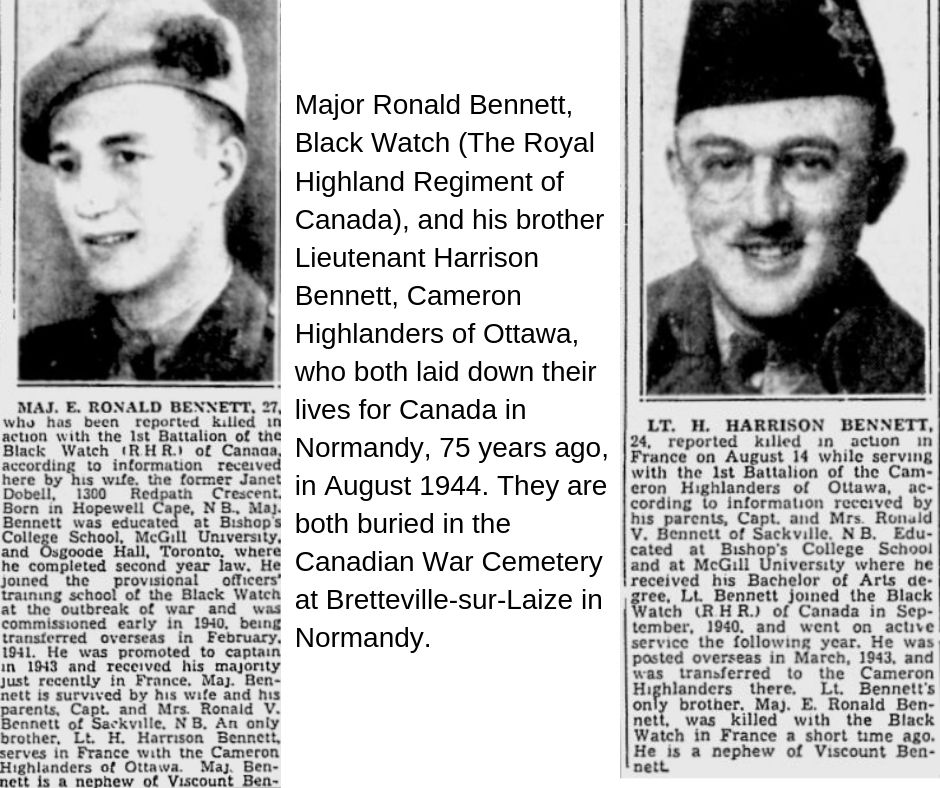
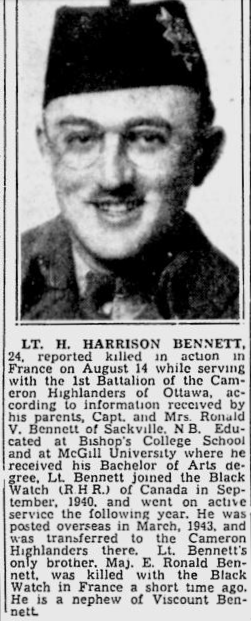
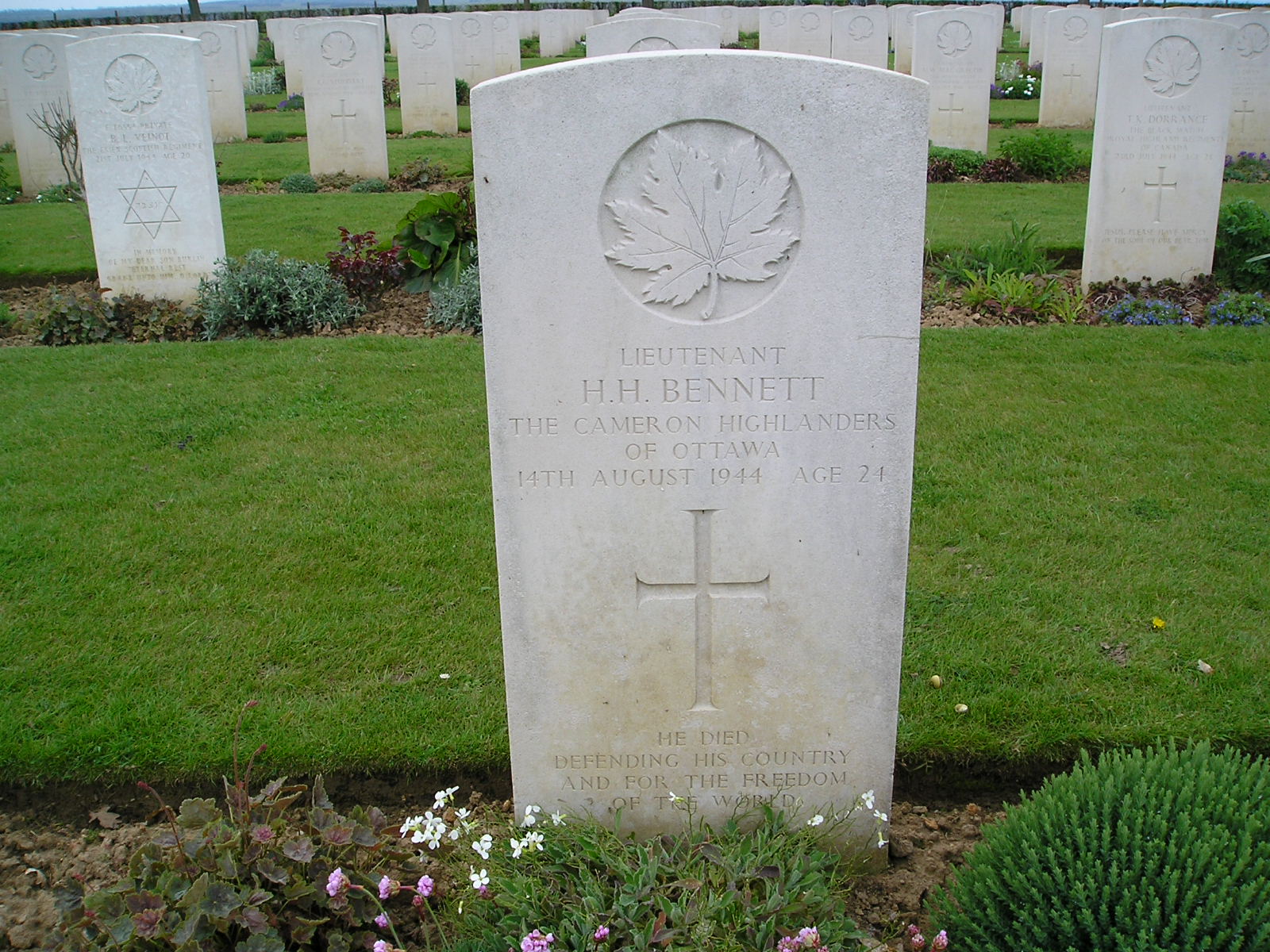
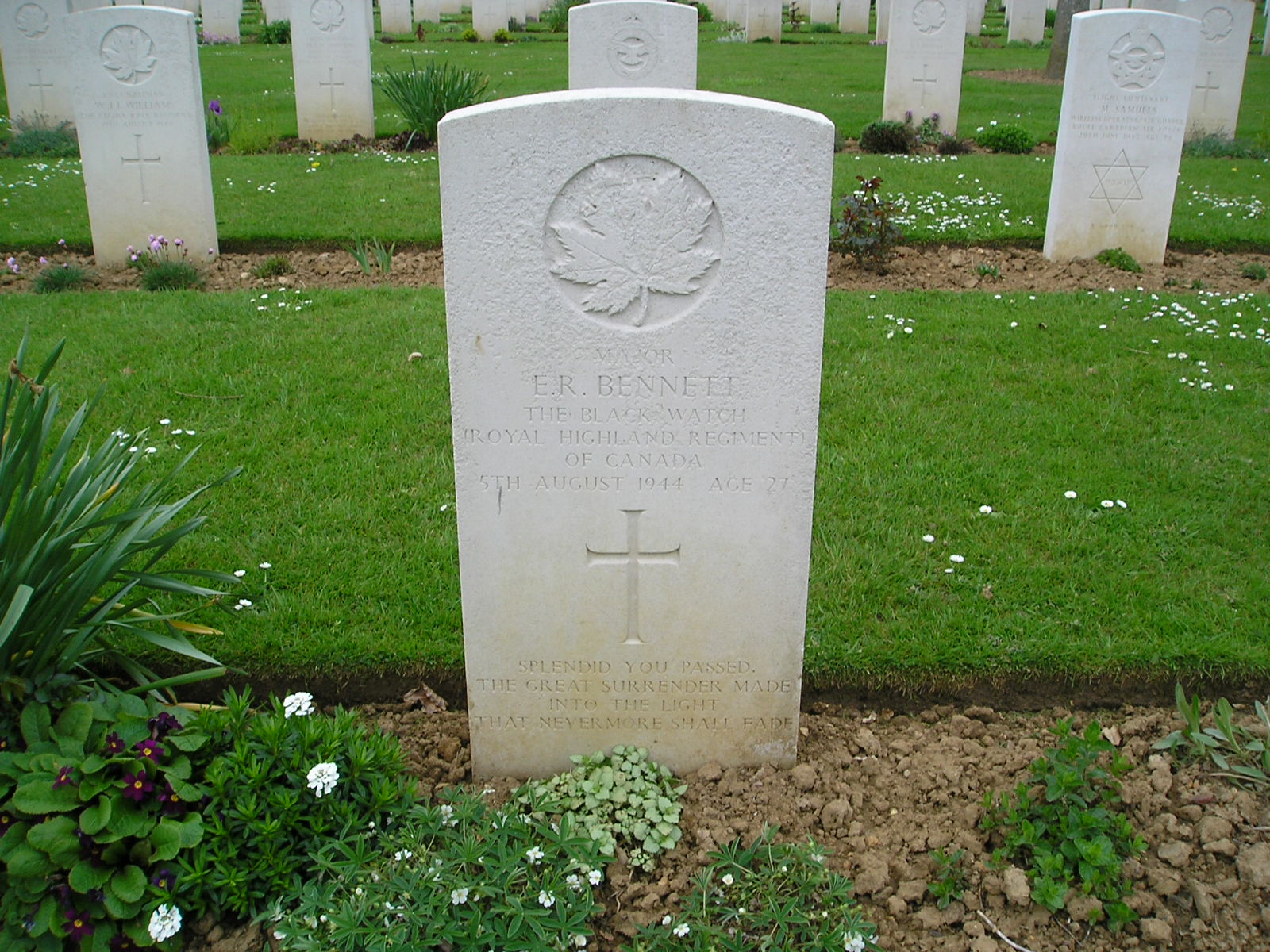
We currently do not have record of any Albert County men killed on D-day, a number however were killed during the Battle of Normandy, including two brothers born in Hopewell Cape. Major Ronald Bennett, Black Watch (The Royal Highland Regiment of Canada), and his brother Lieutenant Harrison Bennett, Cameron Highlanders of Ottawa, who both laid down their lives for Canada in Normandy, 75 years ago, in August 1944. They are both buried, about 10 rows apart, in the Canadian War Cemetery at Bretteville-sur-Laize in Normandy.
Major Edwin Ronald Bennett was mentioned in Despatches, 1st Bn., Black Watch (Royal Highland Regiment) of Canada. He was born in Hopewell Cape on May 4, 1917. He was killed in action on August 5, 1944 at the age of 27. He was the son of Capt. Ronald V. Bennett and Elva I. Bennett, of Sackville, New Brunswick. He was married to Dorothy Janet Bennett, of Montreal, PQ. They had no children.
Lieutenant Henry Harrison Bennett, Cameron Highlanders of Ottawa (Machine Gun), Canadian Infantry Corps was killed in action on August 14, 1944 at the age of 24. He was born in Hopewell Cape on February 10, 1920. He was the son of Capt. Ronald V. Bennett and Elva I. Bennett, of Sackville, New Brunswick.
They were the nephews of Prime Minster RB Bennett. RB Bennett was said to have been extremely proud of his nephews decision to serve in the Canadian Army, and was devastated to hear of their passing only weeks after visiting him at his home in Juniper Hill.
“They did not grow old, we that were left grow old
Age has not wearied not the years condemned.
At the going down of the sun and in the morning,
We have remembered them. ”



ACADIANS IN ALBERT COUNTY EXHIBIT OPENS ON MAY 18TH
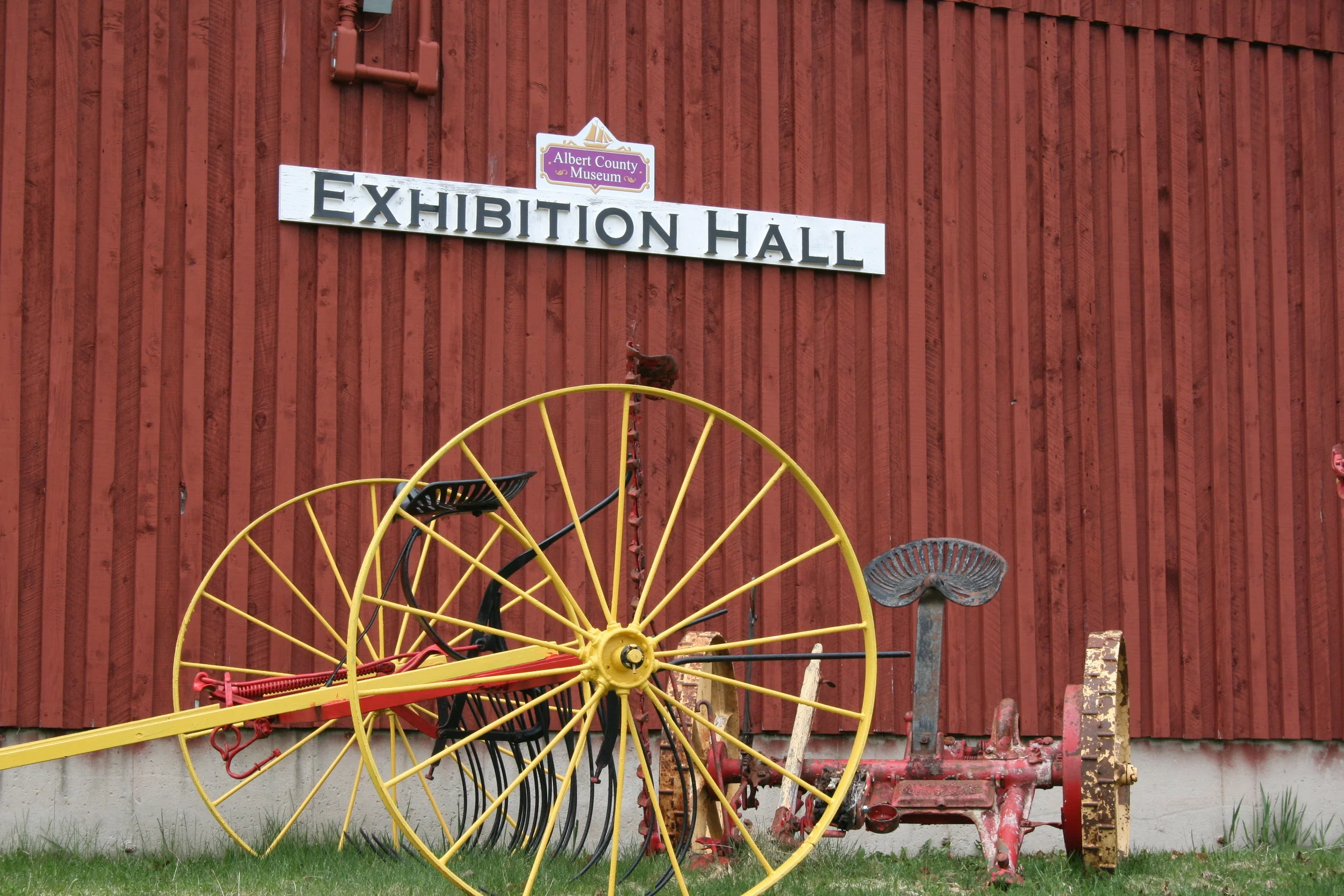
The Albert County Museum and RB Bennett Centre is proud to announce the unveiling of a unique new exhibit honouring the early Acadian settlers who arrived here in the early 1700’s and helped establish a rich agricultural presence along the shores of the Petitcodiac River and the Bay of Fundy area. The “Acadians in Albert County” exhibit will be located in the south wing of the Exhibition Hall.
Today is the 102nd Anniversary of the Capture of the Hopewell Cape Vimy Gun - April 9, 1917
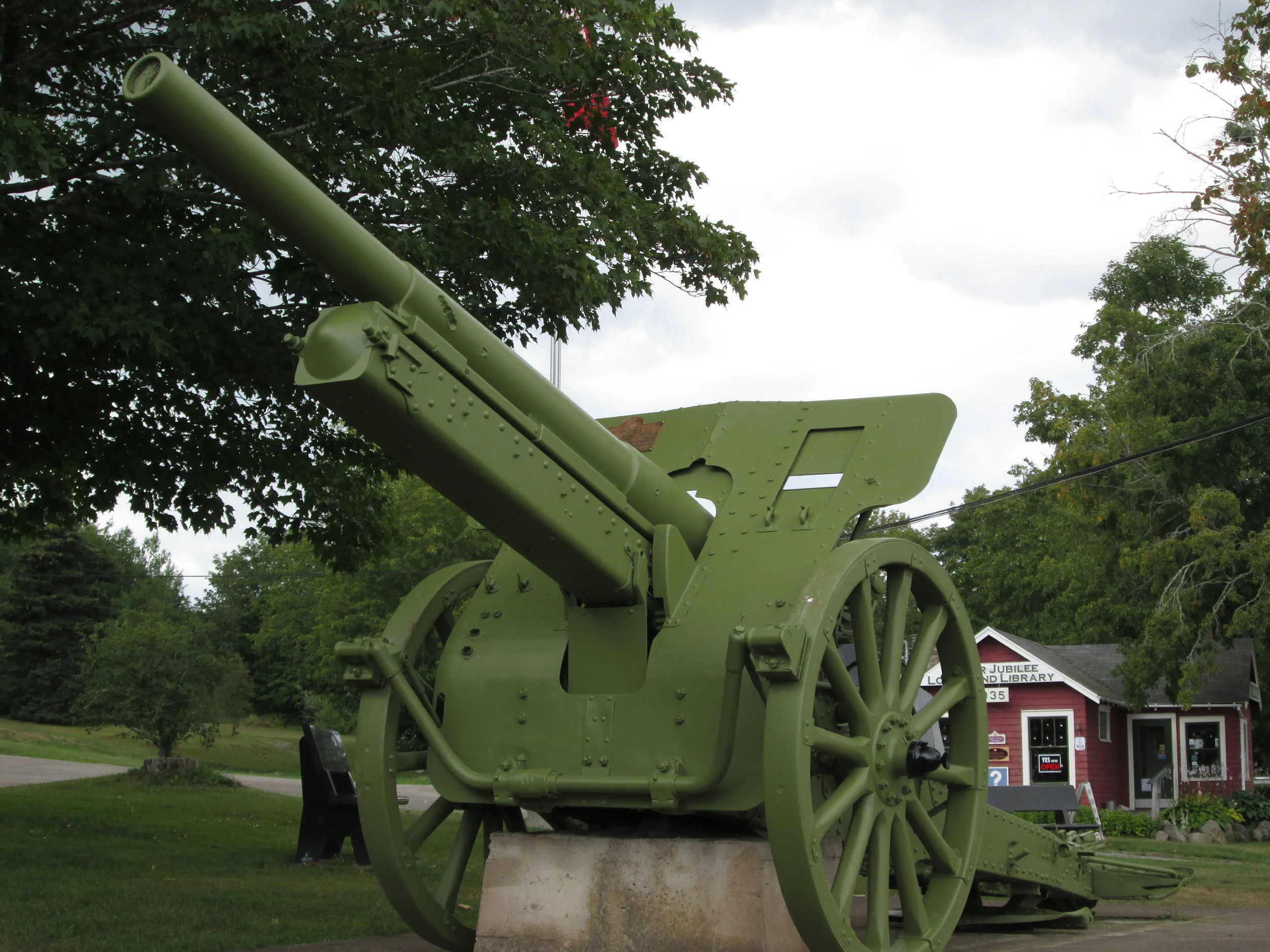
102 years ago today, April 9, 1917 the men of the Canadian Expeditionary Force, stormed the hills of Vimy Ridge for the first Allied Victory of the First World War.
The Canadian Corps captured more ground, more prisoners and more guns than any previous Allied offensive. It was a major victory for the Allies. With the overall success of the Battle of Arras, a turning point in the Great War had been reached. Read more…
The Passing of an Albert County Hero – William Henry (Bill) Balser Sr., March 31, 2019 - 95 Years Old
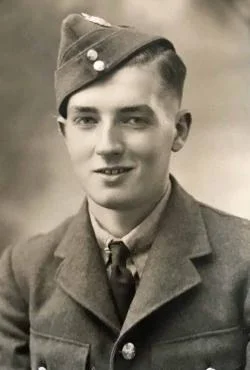
William Henry (Bill) Balser Sr., 95, from Stoney Creek NB, passed away peacefully with family by his side at Lakeview Manor in Riverview NB, on March 31, 2019.
Raised on the family farm in Albert County, Bill volunteered for military service with the RCAF and served from July 1941 to September 1945.