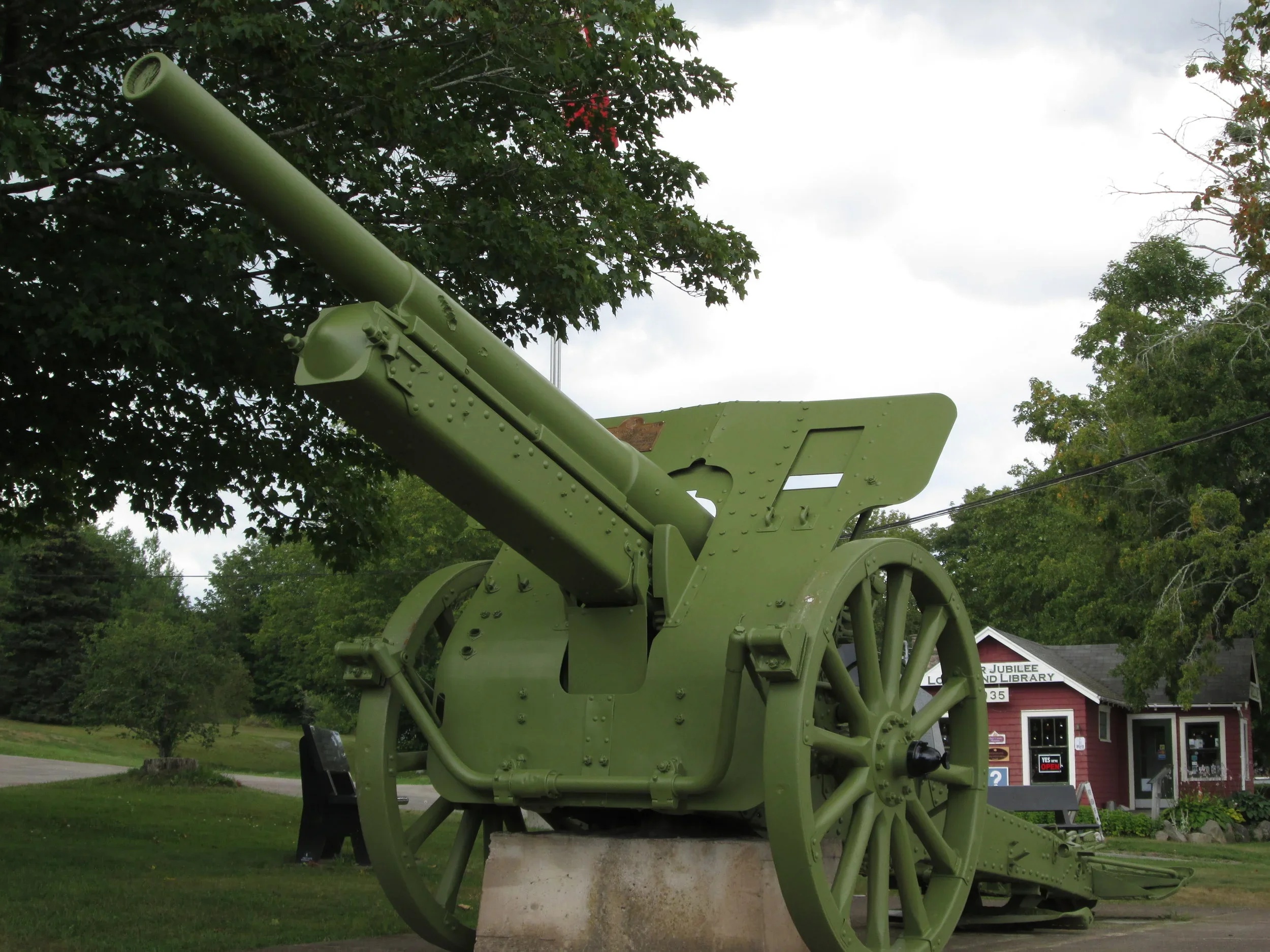
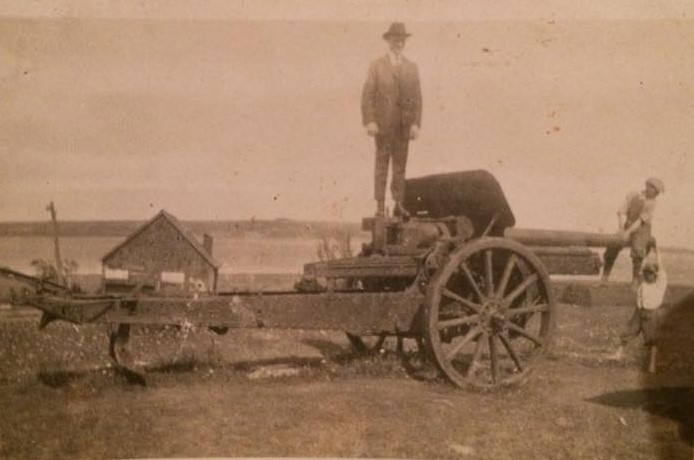
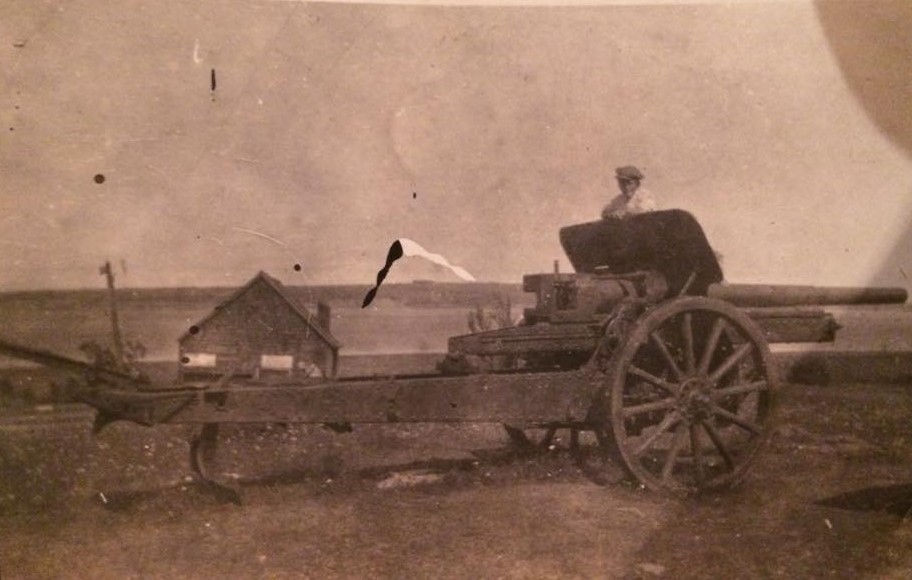
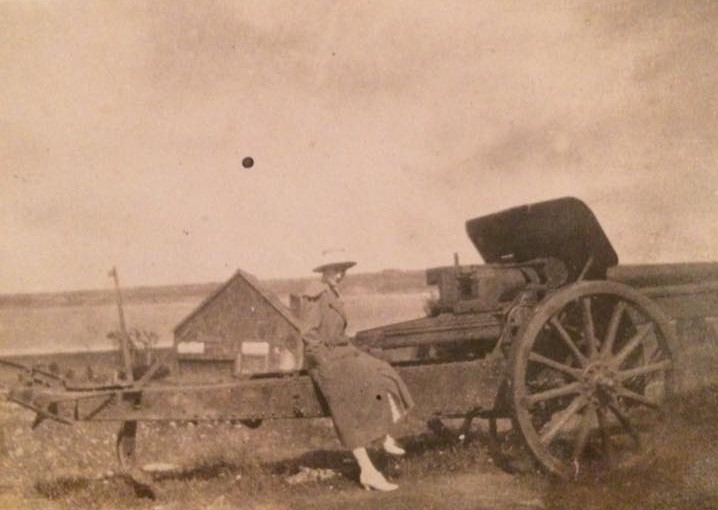
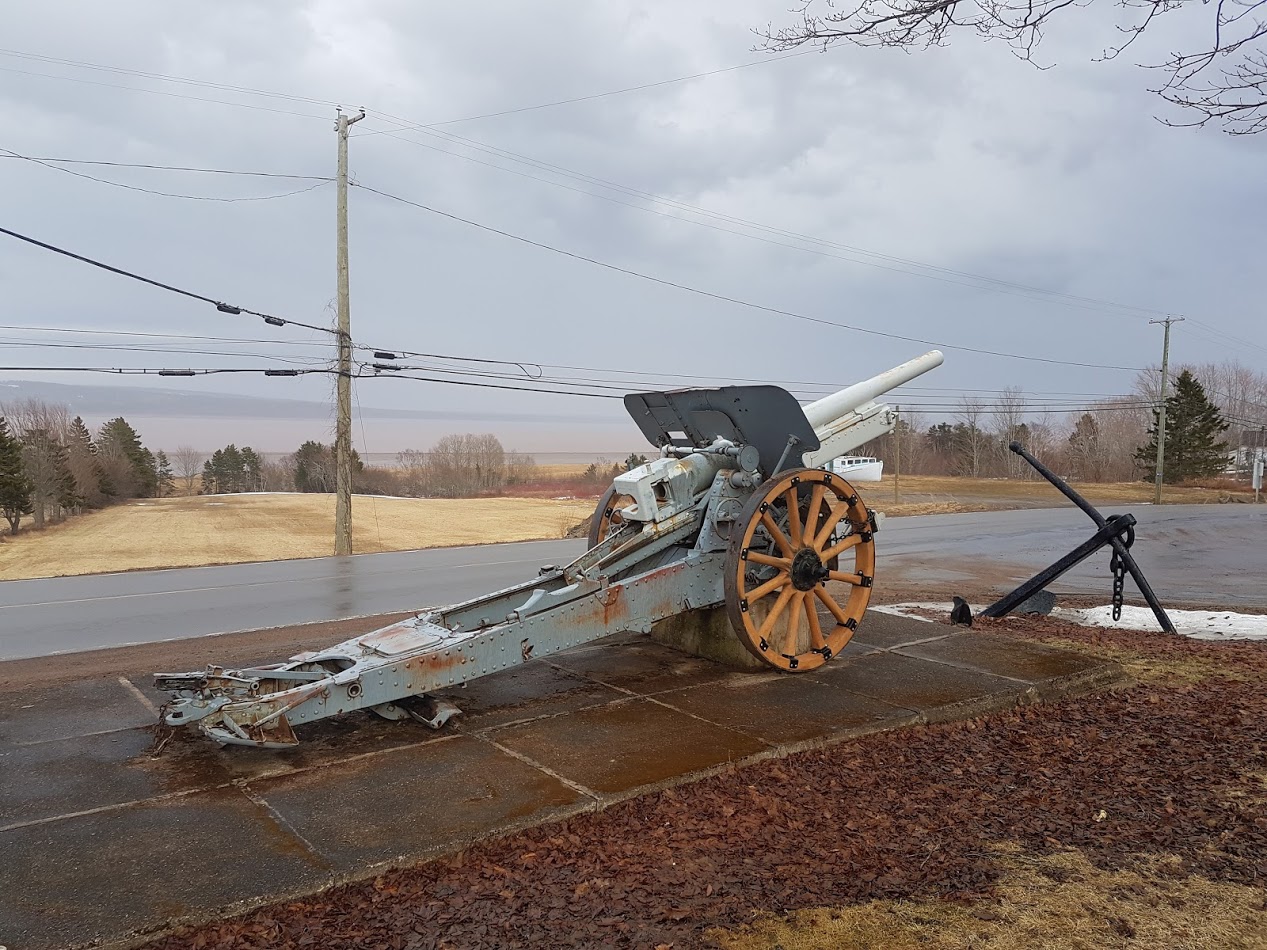
On this April 9, we honour the 109th anniversary of the Battle of Vimy Ridge and the capture of the Hopewell Cape Vimy Gun. Captured by the 27th Battalion in 1917, this German field gun was proudly won by the citizens of Albert County in the 1919 Victory Loans competition after they nearly tripled their fundraising goal with an outstanding $347,600 raised. A powerful symbol of Canadian valour and local patriotism, the Vimy Gun stands today at the Albert County Museum in Hopewell Cape.
Today is the 102nd Anniversary of the Capture of the Hopewell Cape Vimy Gun - April 9, 1917
102 years ago today, April 9, 1917 the men of the Canadian Expeditionary Force, stormed the hills of Vimy Ridge for the first Allied Victory of the First World War.
The Canadian Corps captured more ground, more prisoners and more guns than any previous Allied offensive. It was a major victory for the Allies. With the overall success of the Battle of Arras, a turning point in the Great War had been reached. Read more…
Today is the 98th Anniversary of the Hopewell Vimy Gun Arriving in Hopewell Cape - May 28, 1920
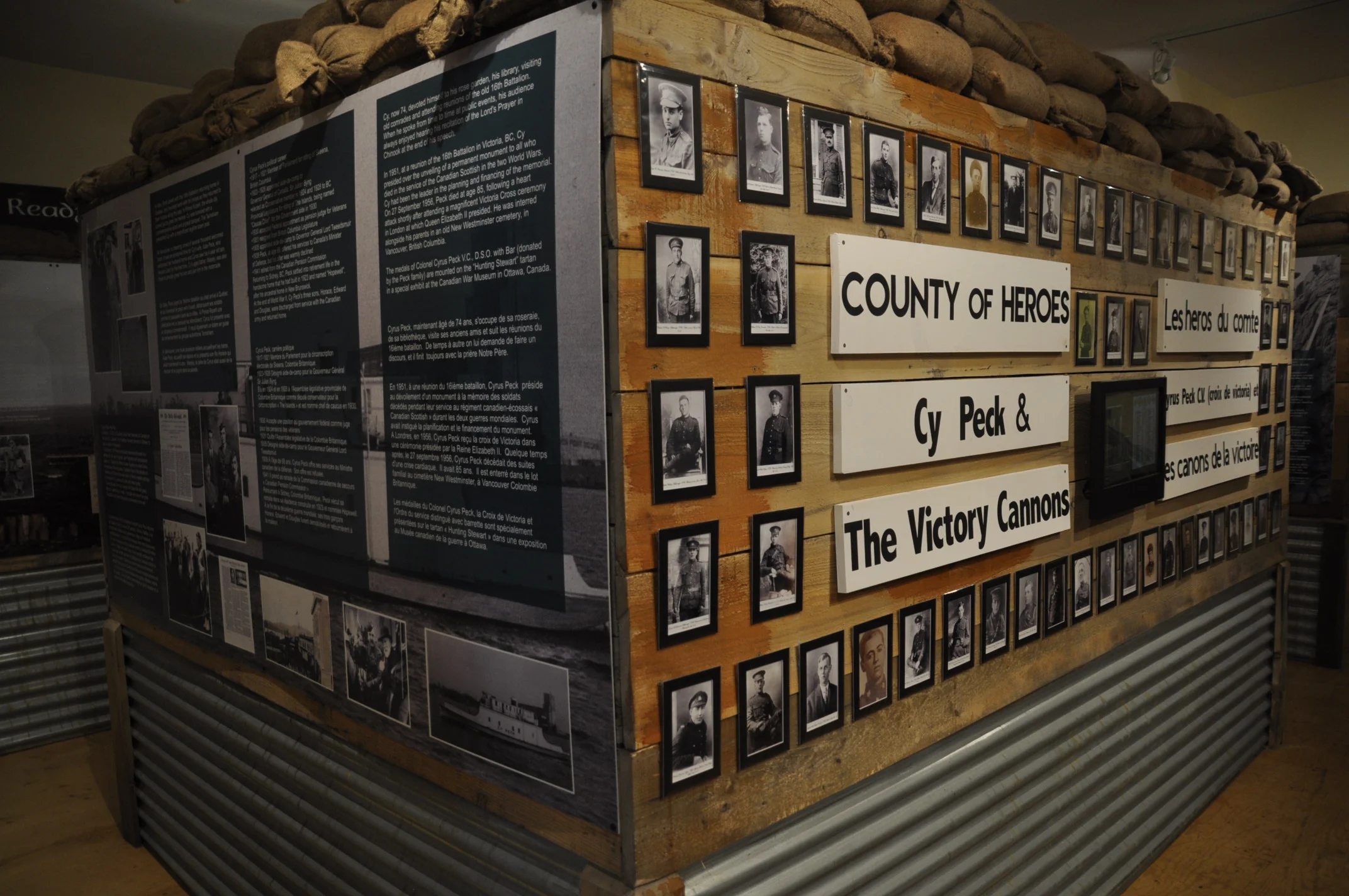
98 years ago today, May 28, 1920 the Hopewell Cape Vimy Gun arrived at Cape Station and was towed to Hopewell Cape. You can learn about the exciting story, from it's capture at Vimy Ridge, April 9, 1917 to it's arrival in Hopewell Cape at the County of Heroes-Cyrus Peck, VC and the Victory Cannons Exhibit. The exhibit opened at the Albert County Museum on May 19th.
County of Heroes Exhibit Opens Saturday, May 19th - See you there!
On Saturday, May 19, County of Heroes-Cyrus Peck, VC and the Victory Cannon opens at the Albert County Museum in Hopewell Cape, New Brunswick. The exhibit highlights the life of Albert County born, Colonel Cyrus Peck, VC, DSO (1871-1956) who won the Victoria Cross on September 2, 1918 during the Second Battle of Arras. In addition, the exhibit tells the exciting story of the capture of the Vimy Gun, from its use on the battlefield to its final resting place in Hopewell Cape Square. Housed in a stylized First World War trench, complete with sandbags, and rusted corrugated steel, the exhibit creates a life-like setting for both parts of the exhibit.
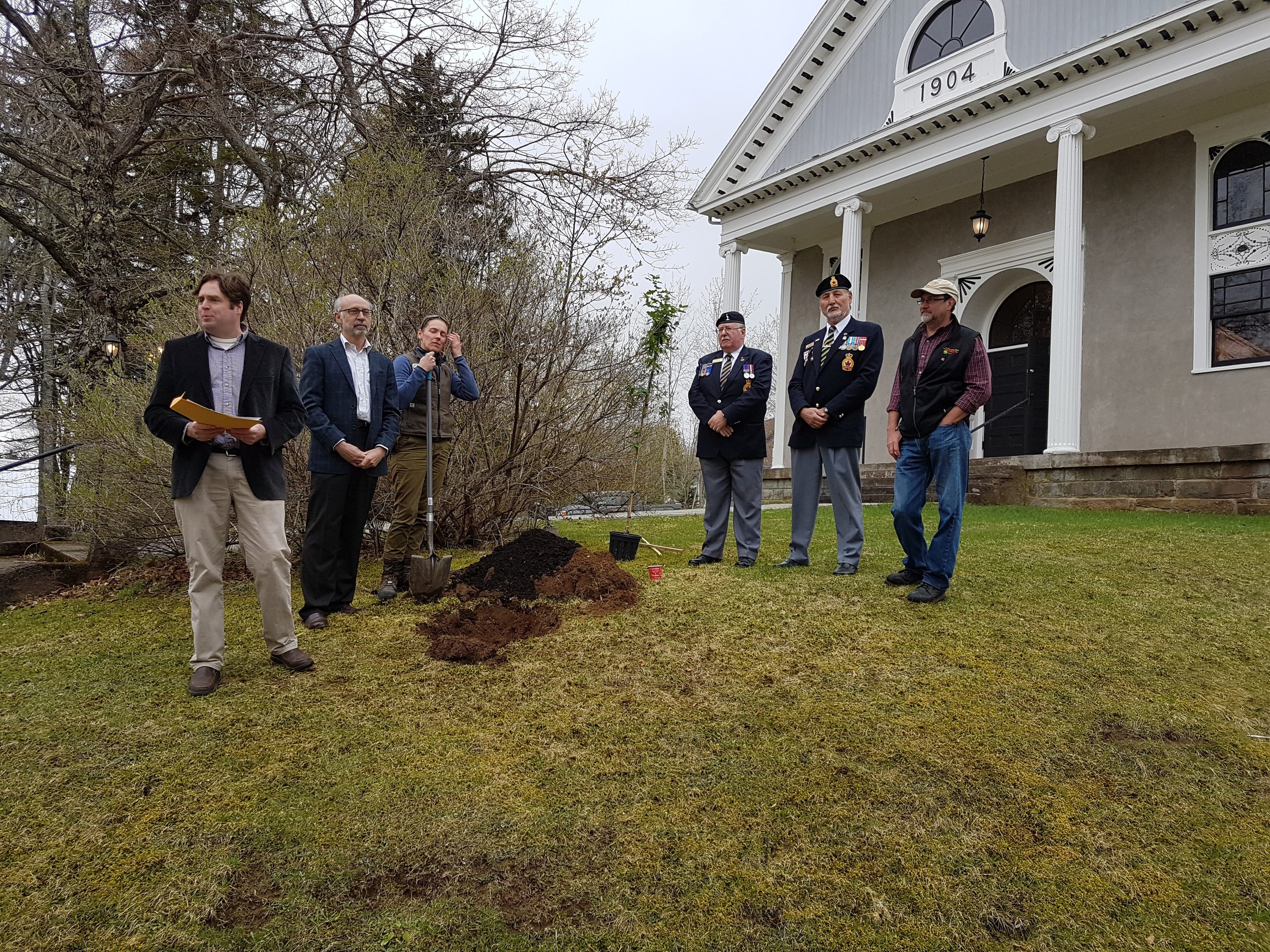
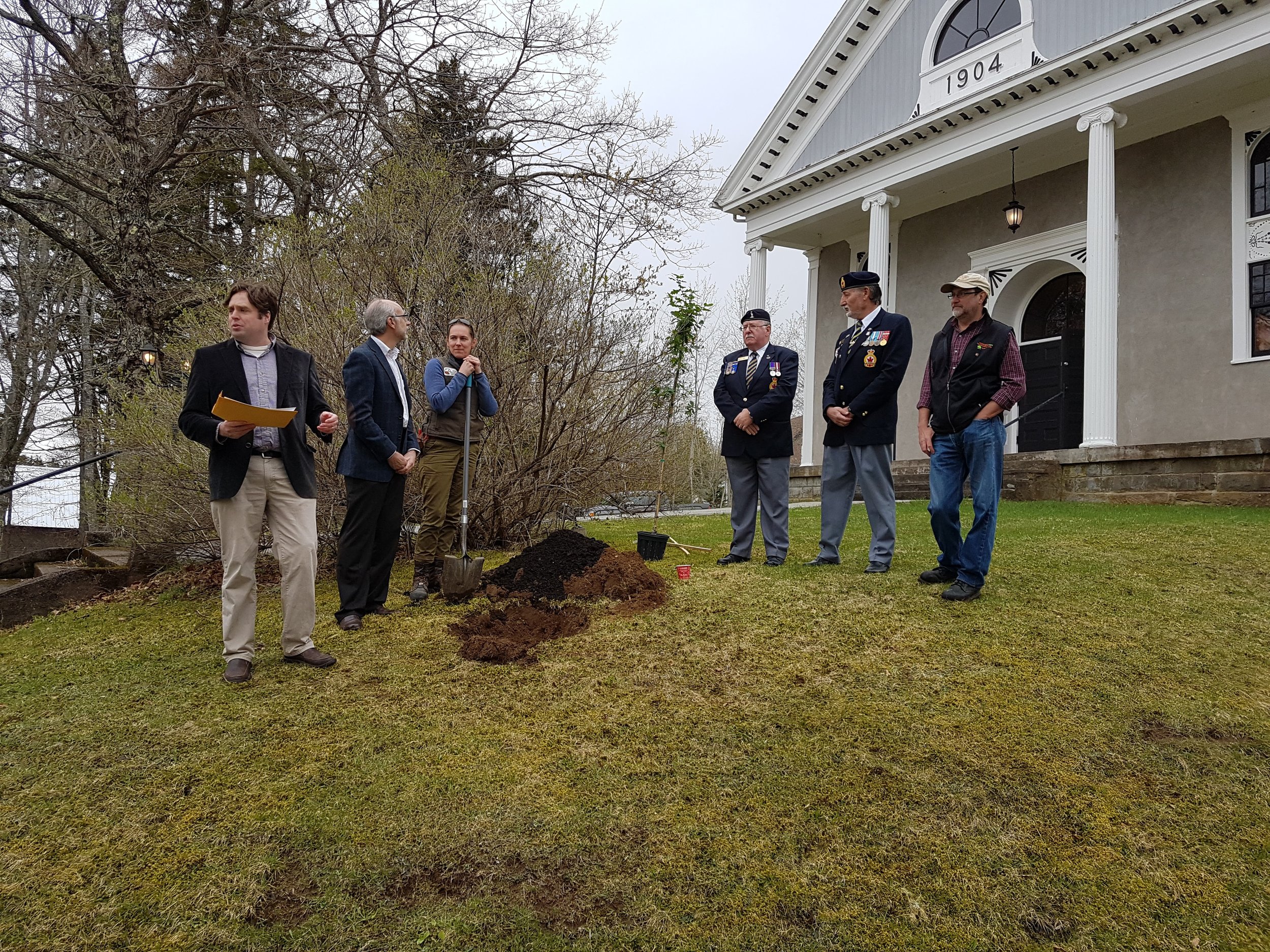
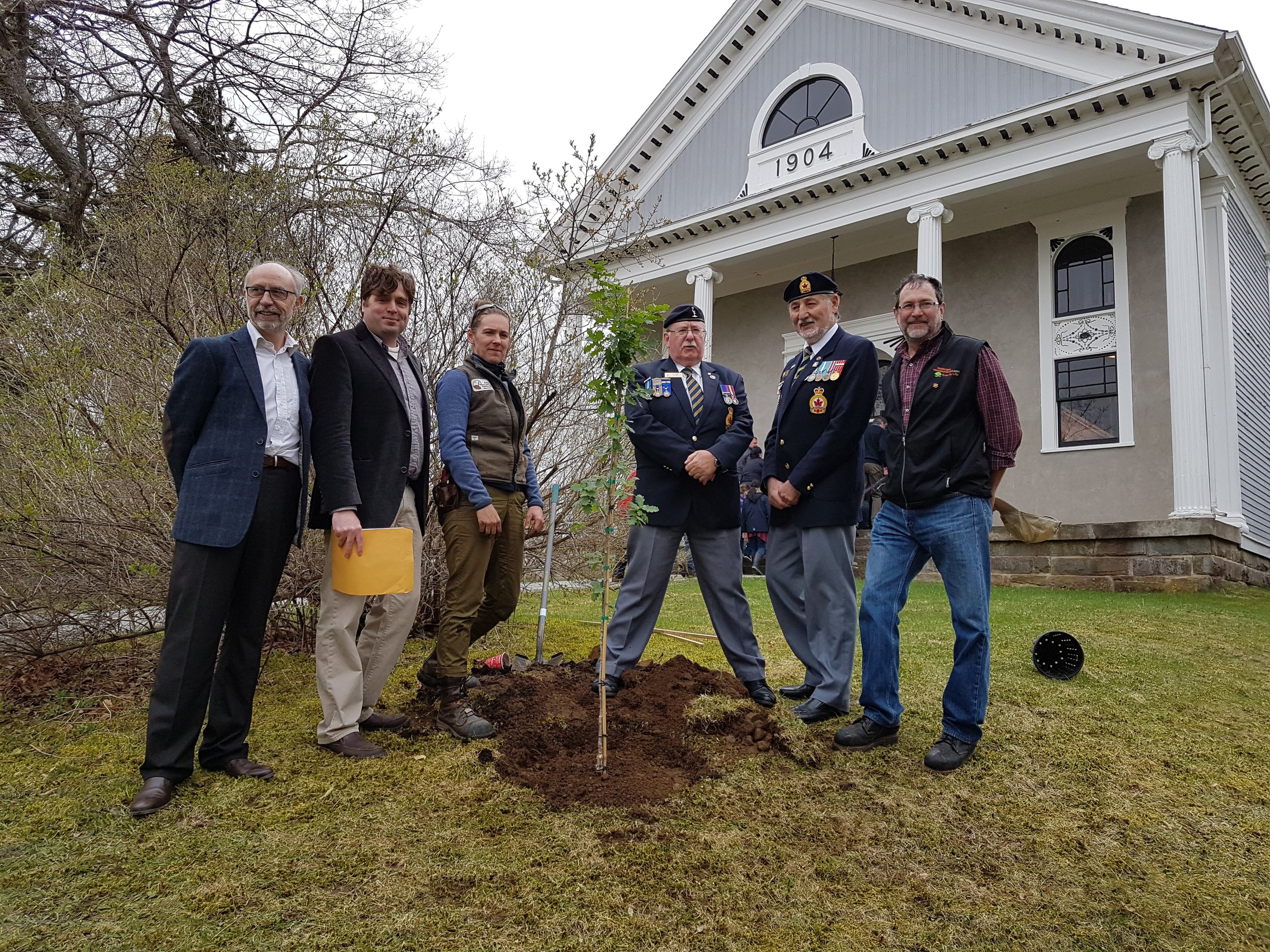
A Living Memorial to Vimy Ridge Planted at the Museum
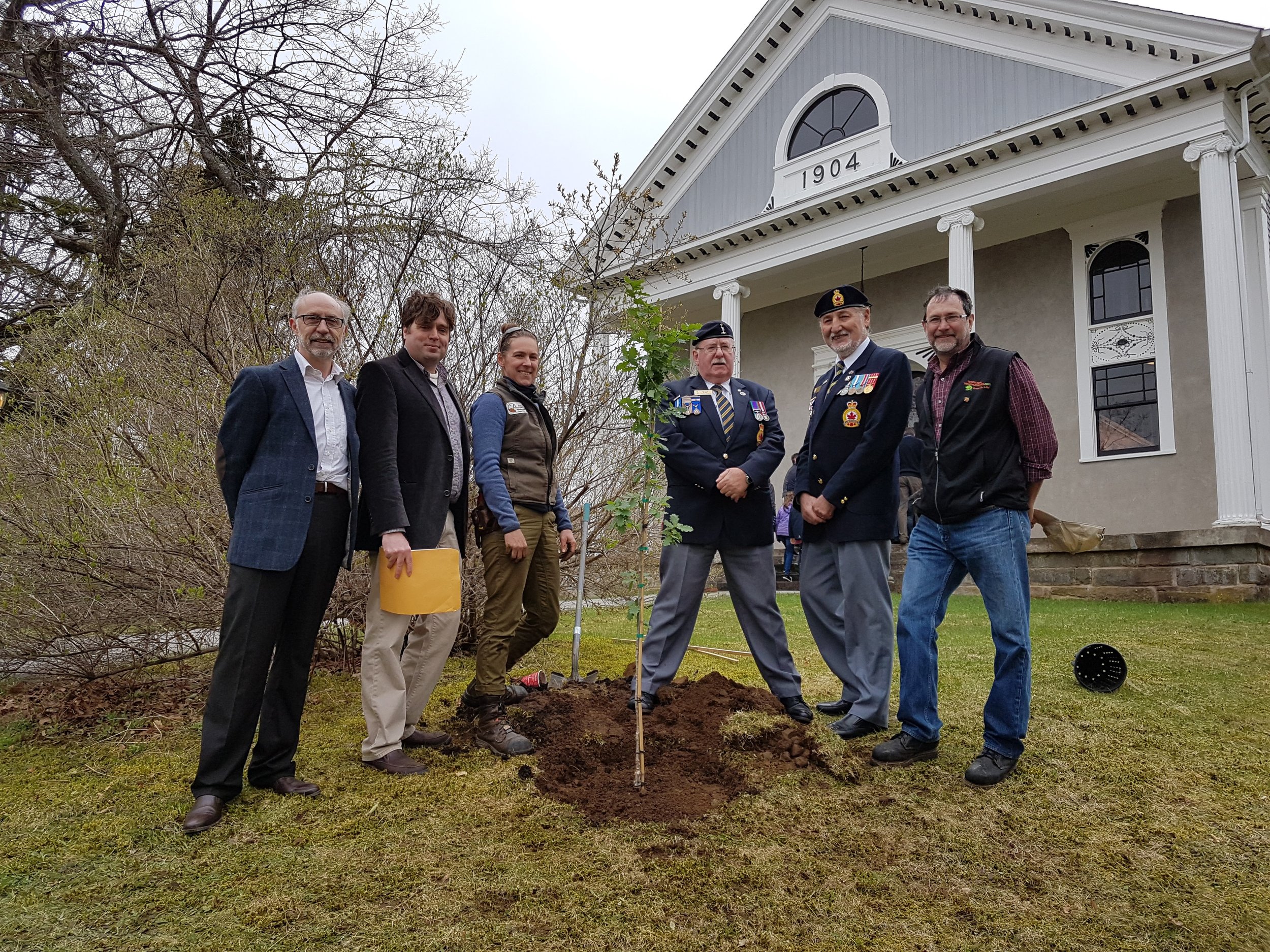
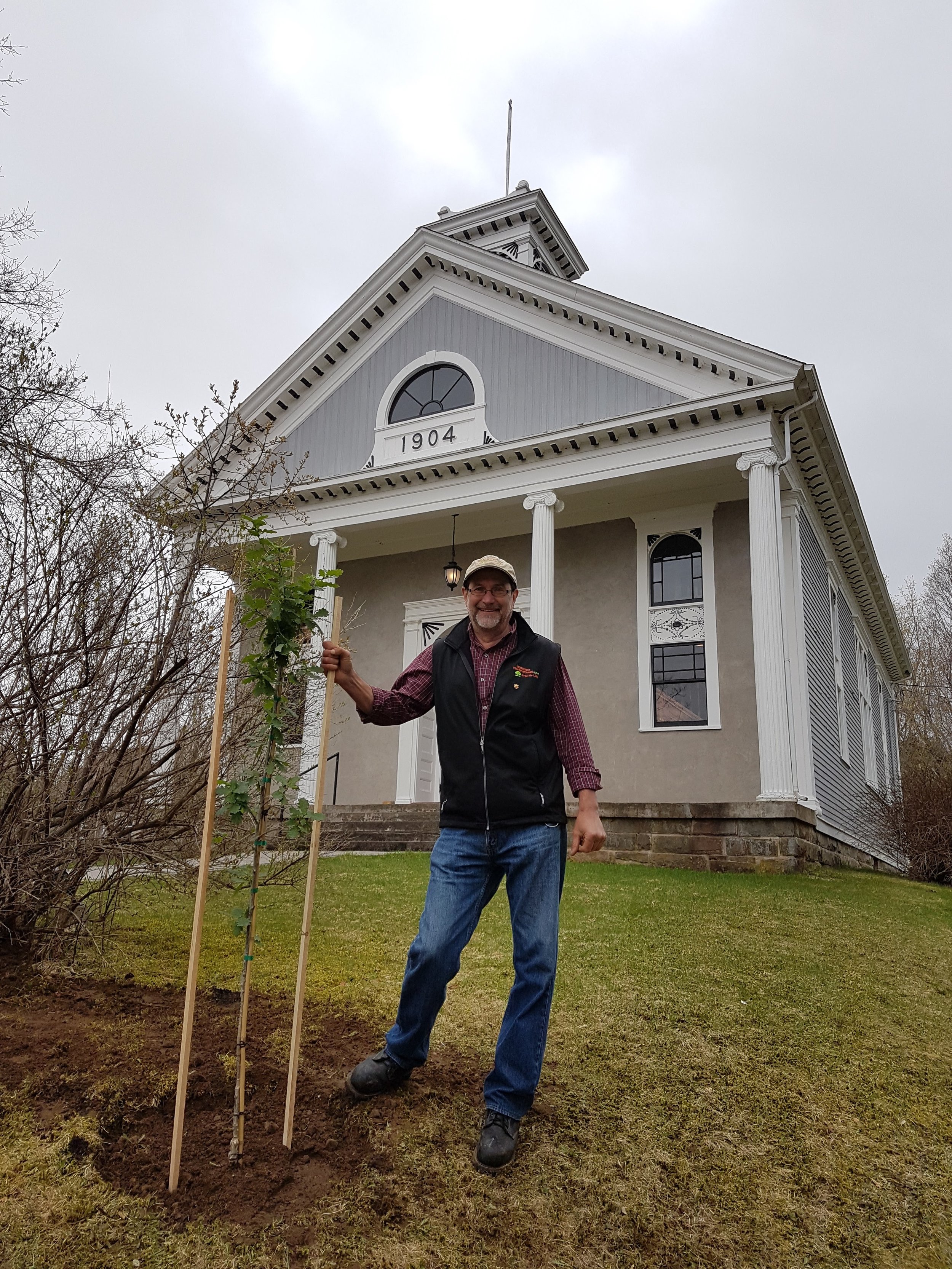
Jim Landry of Landscape NB/PEI with Vimy Oak in front of Albert County Courthouse
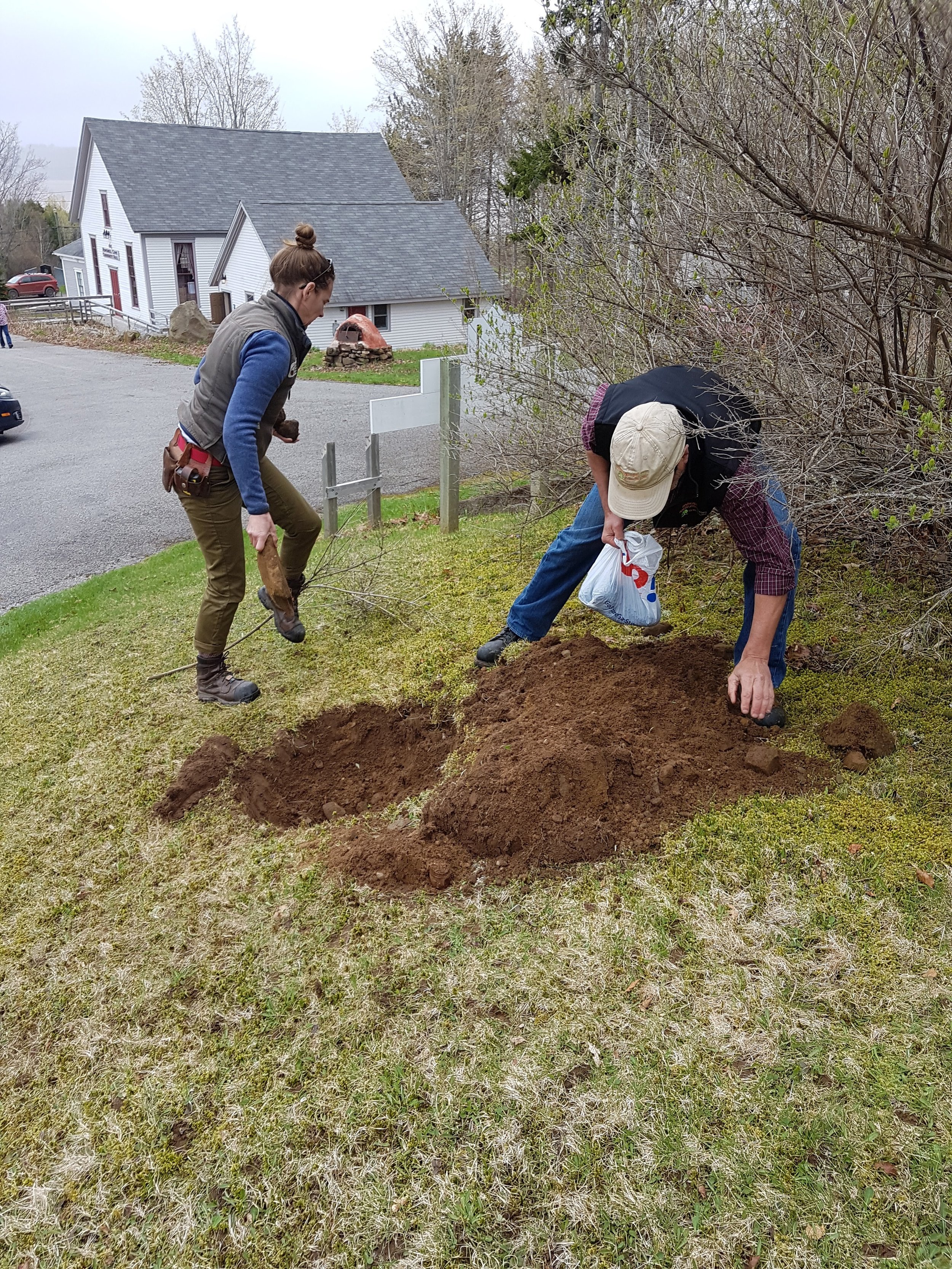
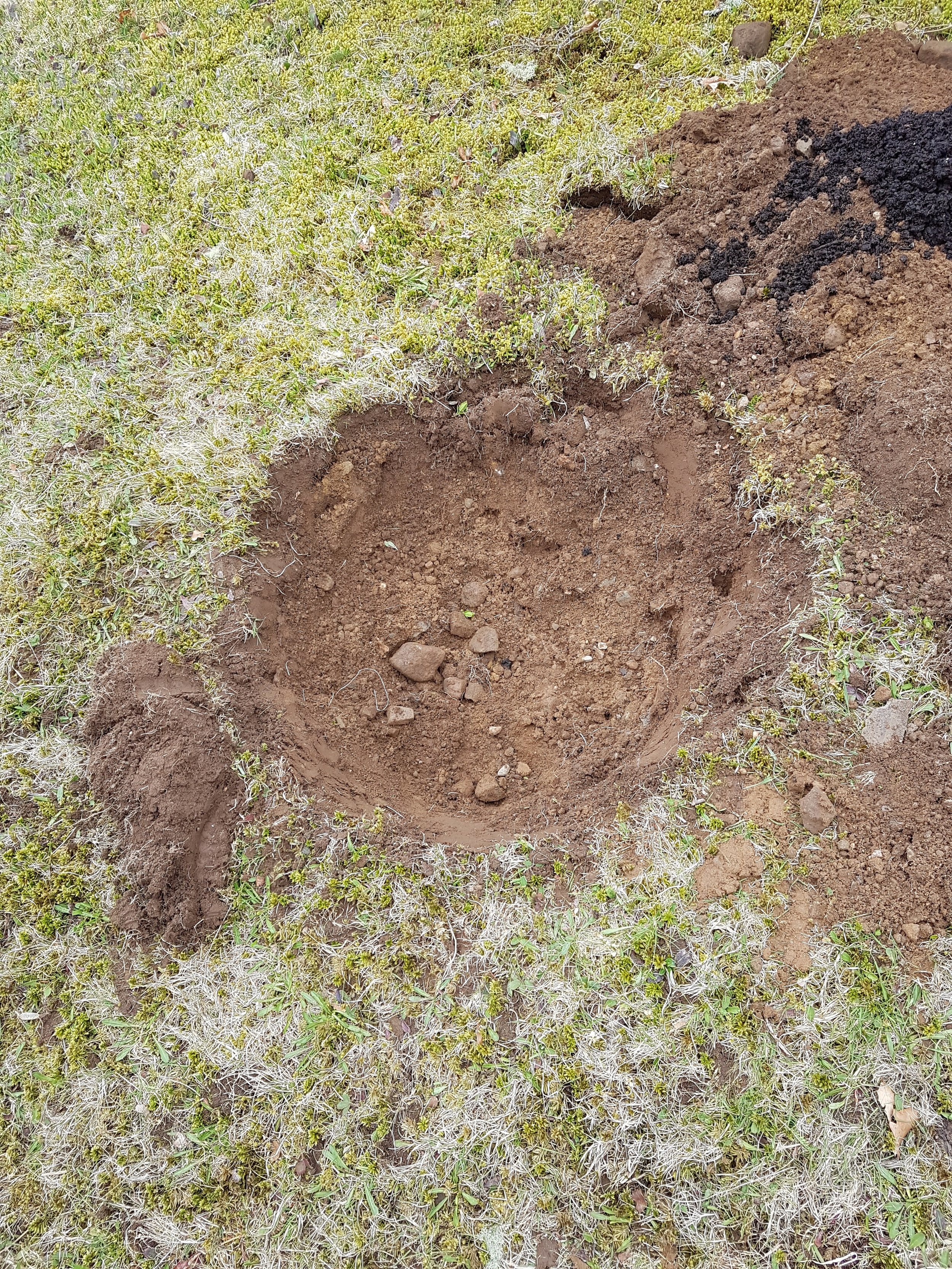
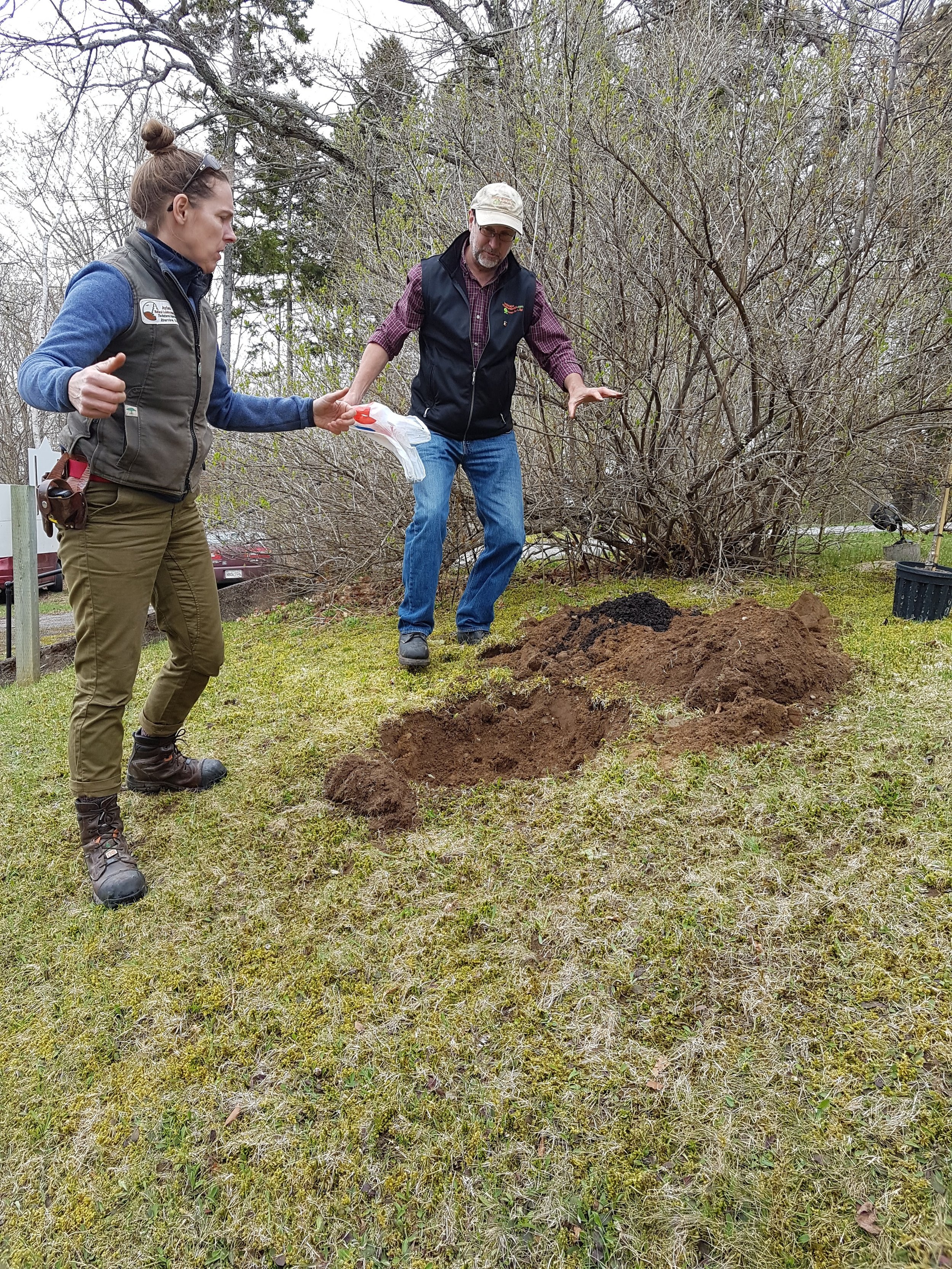
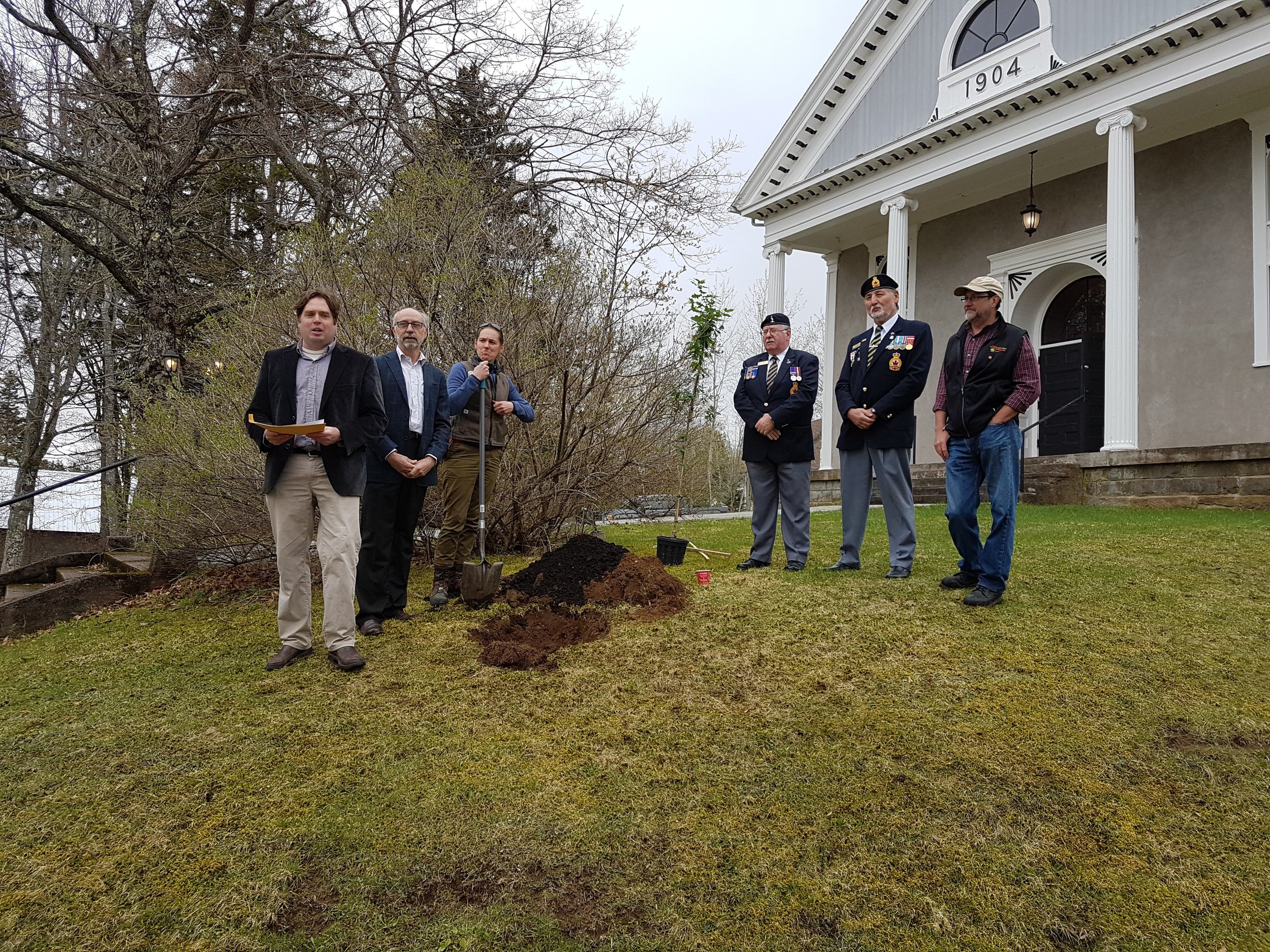
If you missed the planting of the Vimy Oak Tree yesterday at the Museum, not to fear you can still visit the oak tree at its new home on the museum grounds. We planted the tree across from the English Oak tree planted in 1937 in commemoration of the Coronation of King George VI in front of the majestic county courthouse. The tree is planted with a direct view of our gun which was captured at Vimy Ridge on April 9, 1917 and won by Albert County in the 1919 Victory Loans Campaign.
Our Vimy Oak was grown from scions cut from one of the original oak trees grown from acorns gathered at Vimy Ridge in 1917 by Lieutenant Leslie H. Miller. He planted his acorns at his farm in Ontario, which he eventually called Vimy Oaks Farm.
After the battle of Vimy Ridge all but one oak tree was destroyed, so the Vimy Oaks Legacy Corporation was formed and began the project to repatriate the Vimy Oaks to Vimy Ridge in 2015. Our tree was originally slated to be planted at Vimy Ridge, but due to soil regulations was unable to be planted there. The project then sent over acorns from the Vimy Oaks in Ontario to France and and are growing them there. Our Vimy Oak tree is one of 250 that are going to be planted across Canada, and was the first to be planted in New Brunswick.
The day was made more profound as it was 100 years to the day that Lieutenant Louis Stanley Edgett from Hillsborough, NB died of wounds suffered from a counter-attack at Vimy Ridge on May 10, 1917. You can read more about him here.
With special thanks to the people who made this project possible: The Liptay Family for purchasing the tree, Jim Landry at Landscape NB/PEI for having the foresight to obtain 40 trees for NB and PEI, Kim Wilmot of Ayles Natural Landscaping from Riverview for helping with the planting and subsequent care of the tree and the Vimy Oaks Legacy Corporation for making the whole thing possible.
Thanks to the large number of people who attended the planting, along with the dignitaries present, our MLA Brian Kierstead, and representatives from the Hillsborough Legion Branch 132 President Keith Steeves, and Riverview Veterans Association President Peter Jubb.
Come Help Us Plant a VIMY RIDGE Oak Tree - Wednesday, May 10 @ 3pm
We're pleased to announce that on Wednesday, May 10, 2017 we will be planting a Vimy Oak tree in commemoration of the 100th Anniversary of the Battle of Vimy Ridge. The tree was made available through the Vimy Oaks Legacy Project with the cooperation of Landscape NB/PEI. The Vimy Oak Trees were grown from scions cut from oak trees grown from acorns gathered on the Vimy Battlefield by Lieutenant Leslie H. Miller in 1917. The planting will take place during the Anglophone East School District Heritage Fair.
After the Battle at Vimy Ridge was won, many soldiers realized that they had been part of something truly great. Lieutenant Leslie H. Miller, born in 1889 in Milliken, ON, looked around for a souvenir on the Ridge, which was completely devoid of structures or vegetation due to shell fire but he did find a half buried oak tree. He gathered up a handful of acorns.
Those acorns were subsequently planted by him on his farm which he called ‘Vimy Oaks Farm’ and are now large majestic oaks. The First World War wiped out all but one native oak in the Vimy region, and the Vimy Oaks Legacy Project was created to repatriate the native oaks to Vimy Ridge to create a living memorial to honour the memory of all those who fought, connecting modern Canada and modern France, and reaffirming our comradeship with France and her people.
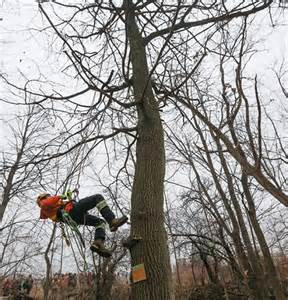
Arborist collecting scions.
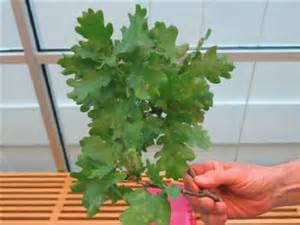
In January 2015, the process began with professional arborists taking cuttings (scions) from the crowns of the oaks which were grafted onto base root stock – Quercus robur. Today, the trees are almost 5 feet tall and are ready for their journey back to France and to various places across Canada.
Landscape NB & PEI was able to obtain 40 trees out of a stock of 200 from the foundation and brought them to New Brunswick to be shared across the two provinces. In April, they sent out a request for appropriate locations to plant them and were overwhelmed with requests.
When asked about the Vimy Oaks Legacy project, Executive Director of Landscape NB&PEI, Jim Landry said, “Last June I had the opportunity to visit the grave of my great uncle and his best friend who were both killed at the battle. Also, I have worked my entire life in the horticulture industry. This project links those two things together so beautifully. “.
A Vimy Oak at the Nursery
Stuart Liptay, President of the Albert County Historical Society says, “We were fortunate that Brunswick Limestone out of Hillsborough, NB contacted us about the potential for getting one of the Vimy Oaks through Landscape NB&PEI, as we had no idea some were even available. I immediately called Jim Landry at Landscape NB&PEI and asked him for a tree. Once Jim heard the story about our Vimy Ridge gun he was really excited about the prospect.” Liptay went on to say,” The museum is in the process of restoring a gun that was captured at Vimy Ridge on April 9, 1917. The gun was captured by the 27th Battalion at Vimy Ridge and was awarded to Albert County in the 1919 Victory Loans Competition. The addition of a living oak tree descended from the great oak trees at Vimy Ridge is an amazing addition to the story of our Vimy Gun.”
The oak tree is going to be planted across from an English Oak which was planted in 1939 to commemorate the Royal Visit of King George VI and his wife, Queen Elizabeth when they toured across Canada by train. The two oak trees, one from England and one with roots at Canada’s great battle in France are a great symbol of unity for our country in its 150th year.
The planting ceremony will take place at the Albert County Museum on Wednesday, May 10 at 3pm just before the awards ceremony for the Anglophone East School District Regional Heritage Fair. Viewing of the Heritage Fair projects begins at 2pm and is open to the public. The Heritage Fair highlights projects developed by middle school students around historical and heritage related themes.
We hope to see a crowd out on Wednesday afternoon!
Excellent Time-line Photos of the Vimy Gun! Adding to the story!
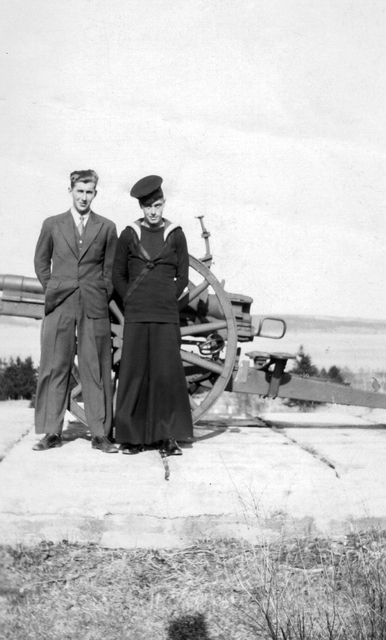
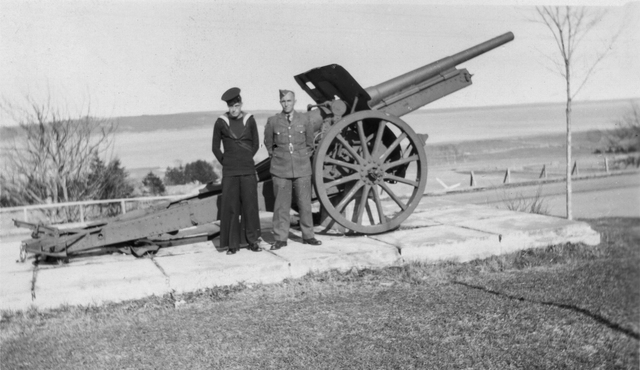
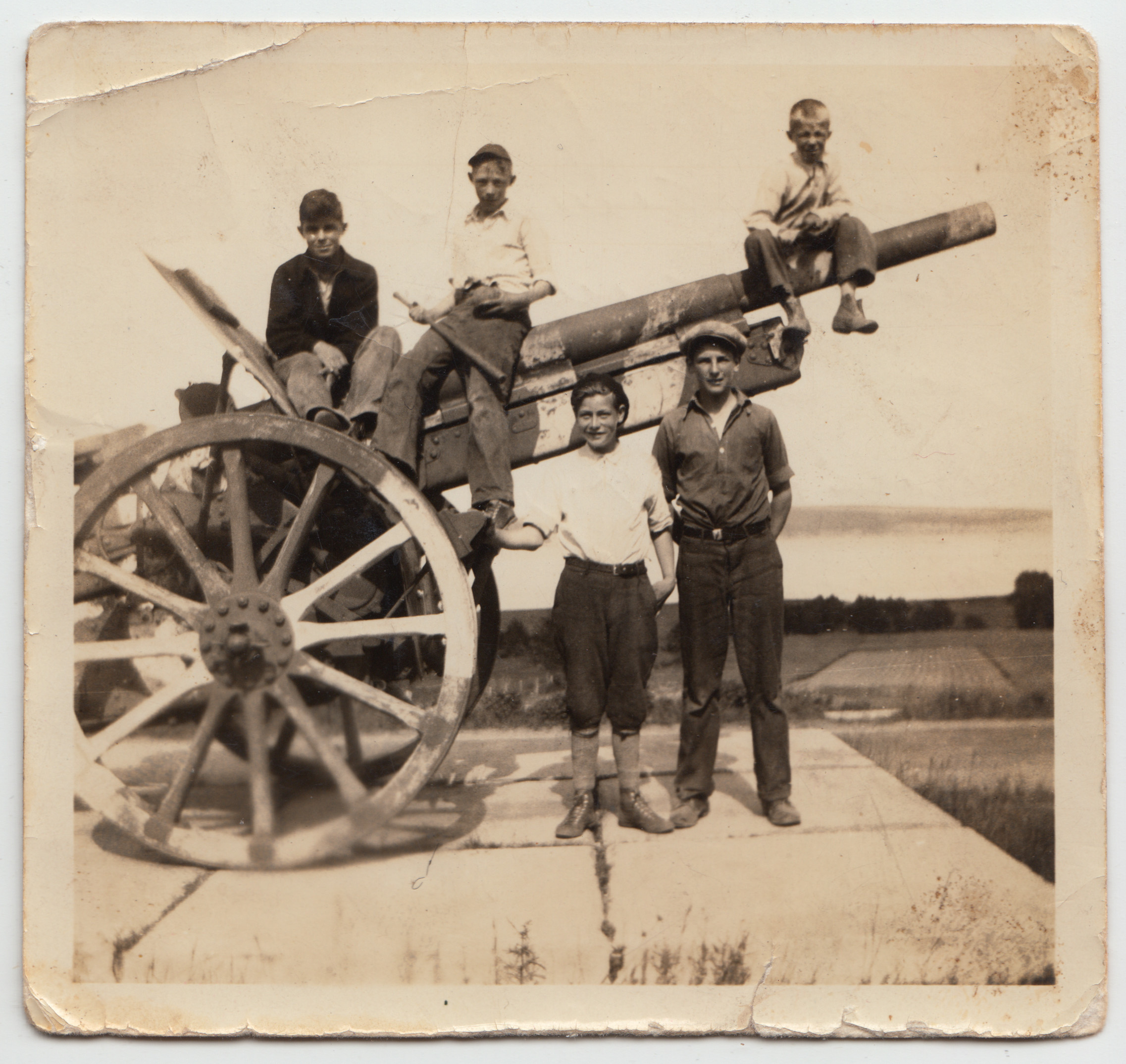
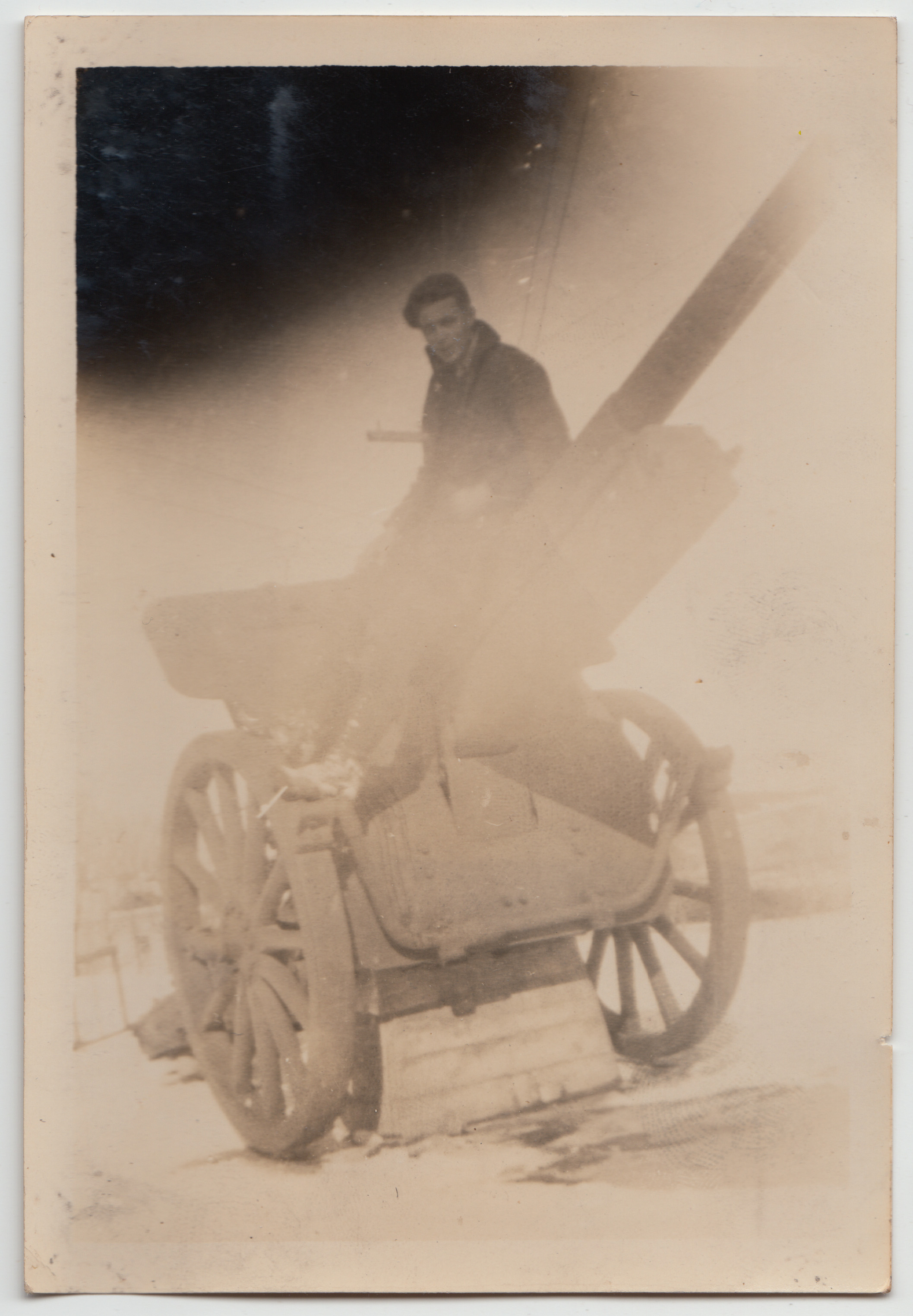
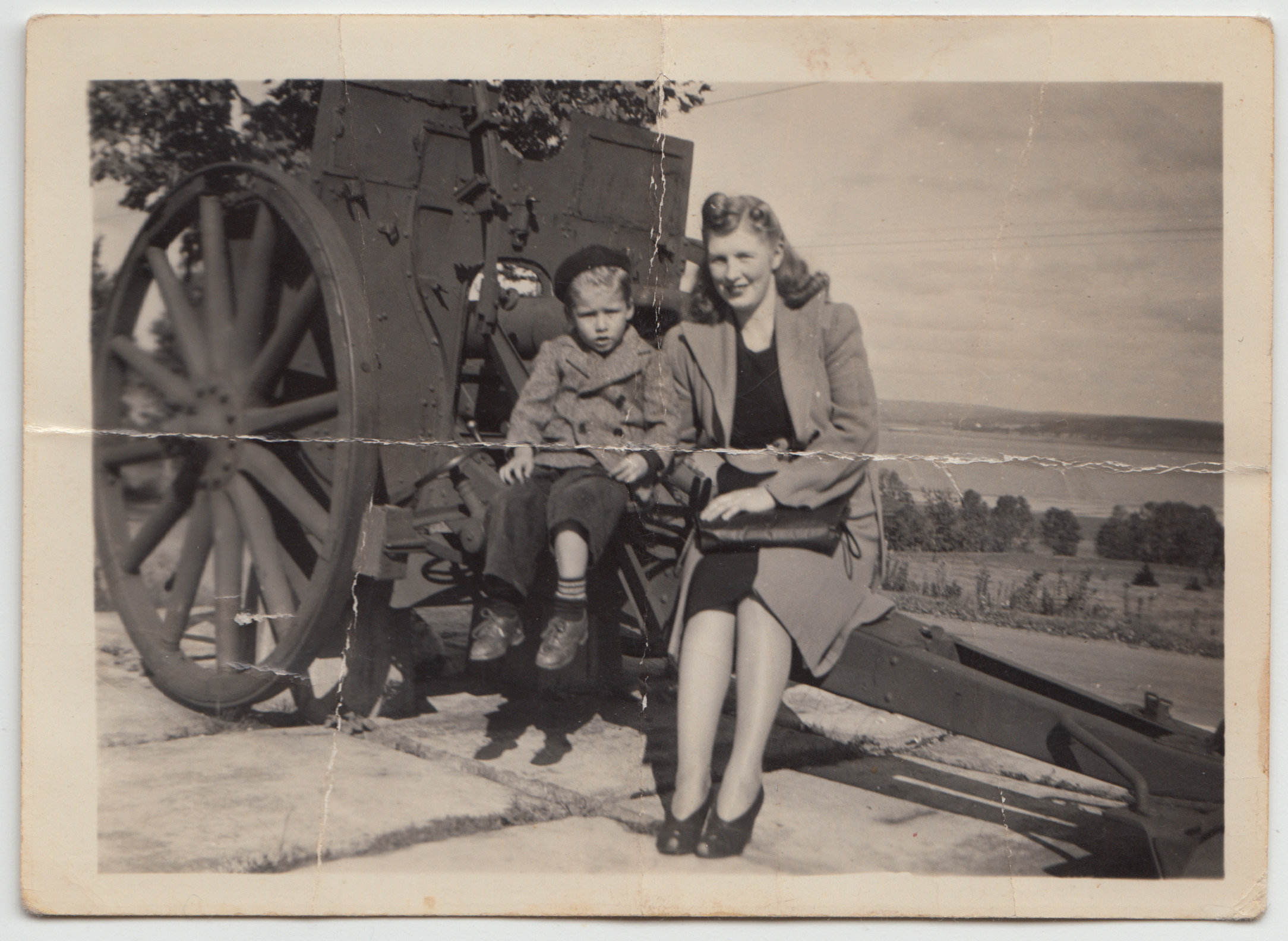
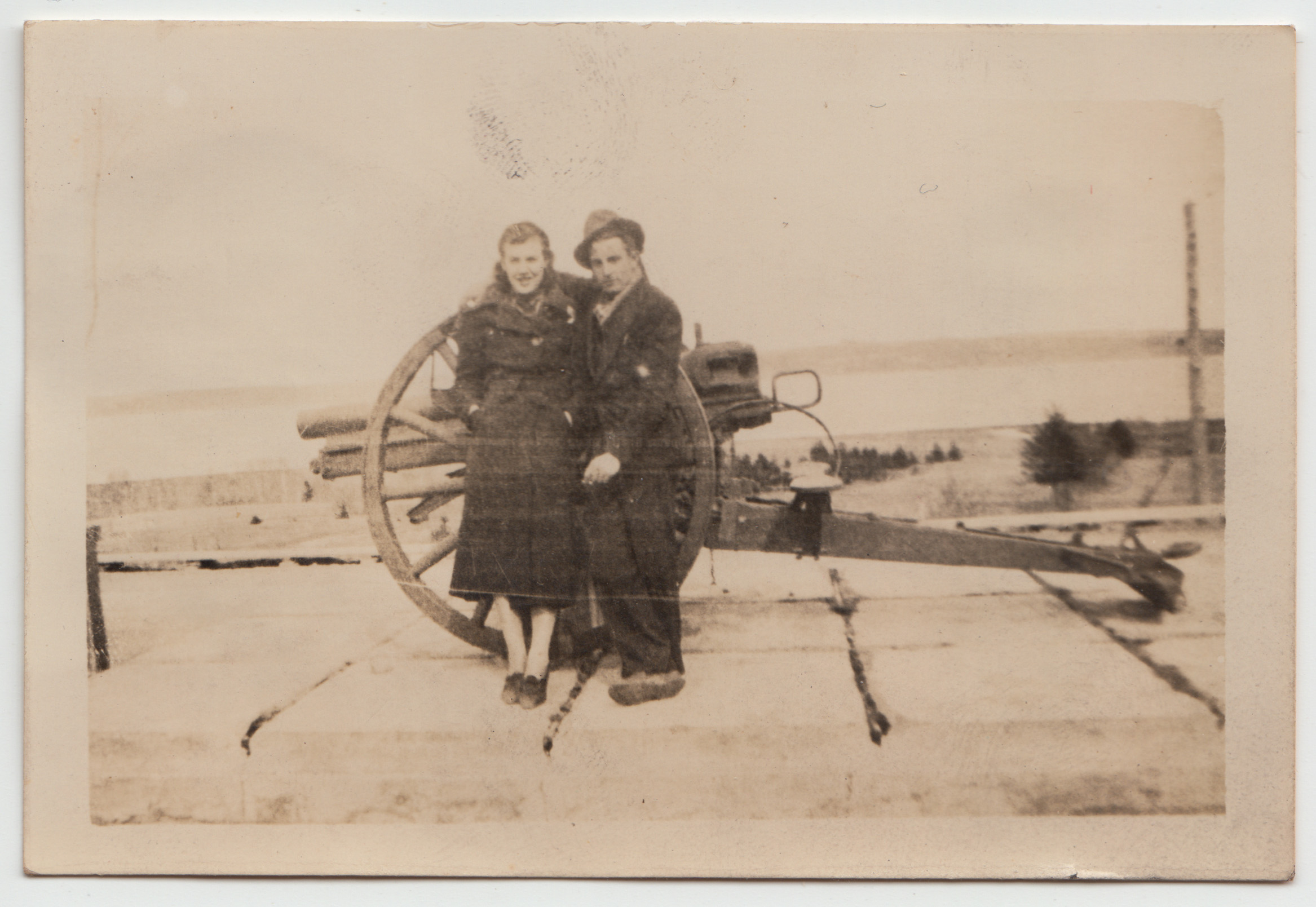
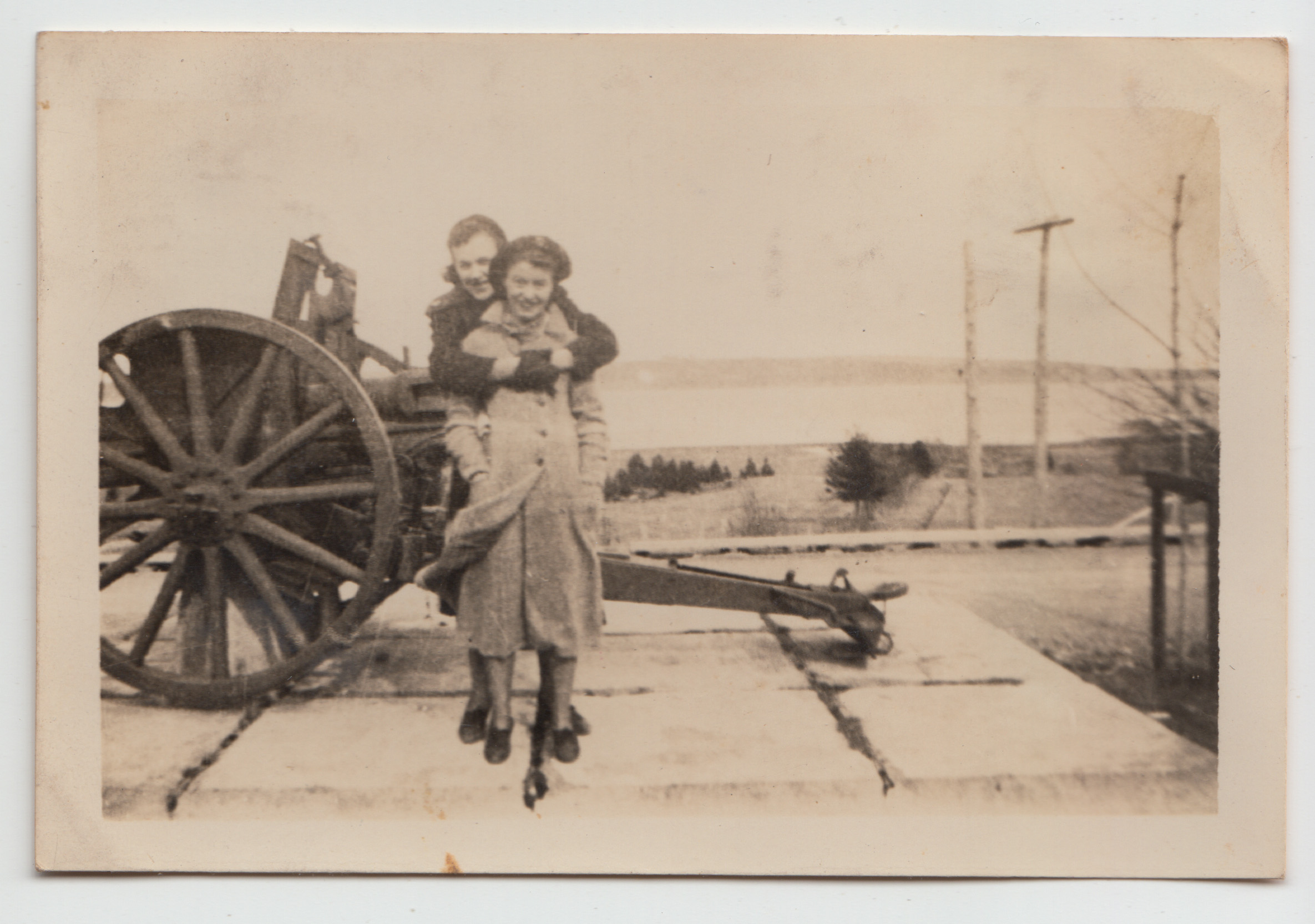
We have recently received some amazing photos of the Guns in Hopewell Cape which really helps in the guns timeline! One in particular from the photo collection of Verna Beaumont shows the Vimy Gun on May 9, 1943 sporting its green coat of paint. So we know from two dated photos the cannon was painted between 1935 and 1943 from the original camouflage colors to an army green. The cannons would stay green until they were refurbished at Gagetown in 1989 when they were painted grey.
Cyril Cook in Seaman's Uniform, May 9, 1943 with unidentified man in Air Force uniform.
Hopewell Vimy Gun Circa 1935 - Cyril Cook is in this Photo
Early Photos Circa 1920 of the Vimy Cannon in Hopewell Cape.
Special thanks to Justin Raworth who shared the images of the cannon from 1920 and Terry Smith, who shared the pictures of Cyril Cook from his Mother's photo collection (Verna Beaumont). Cyril Cook was her uncle. Both pictures are dated 9 May 1943.
Amazing Photo Collection of Vimy Gun in Hopewell Cape - Circa 1935
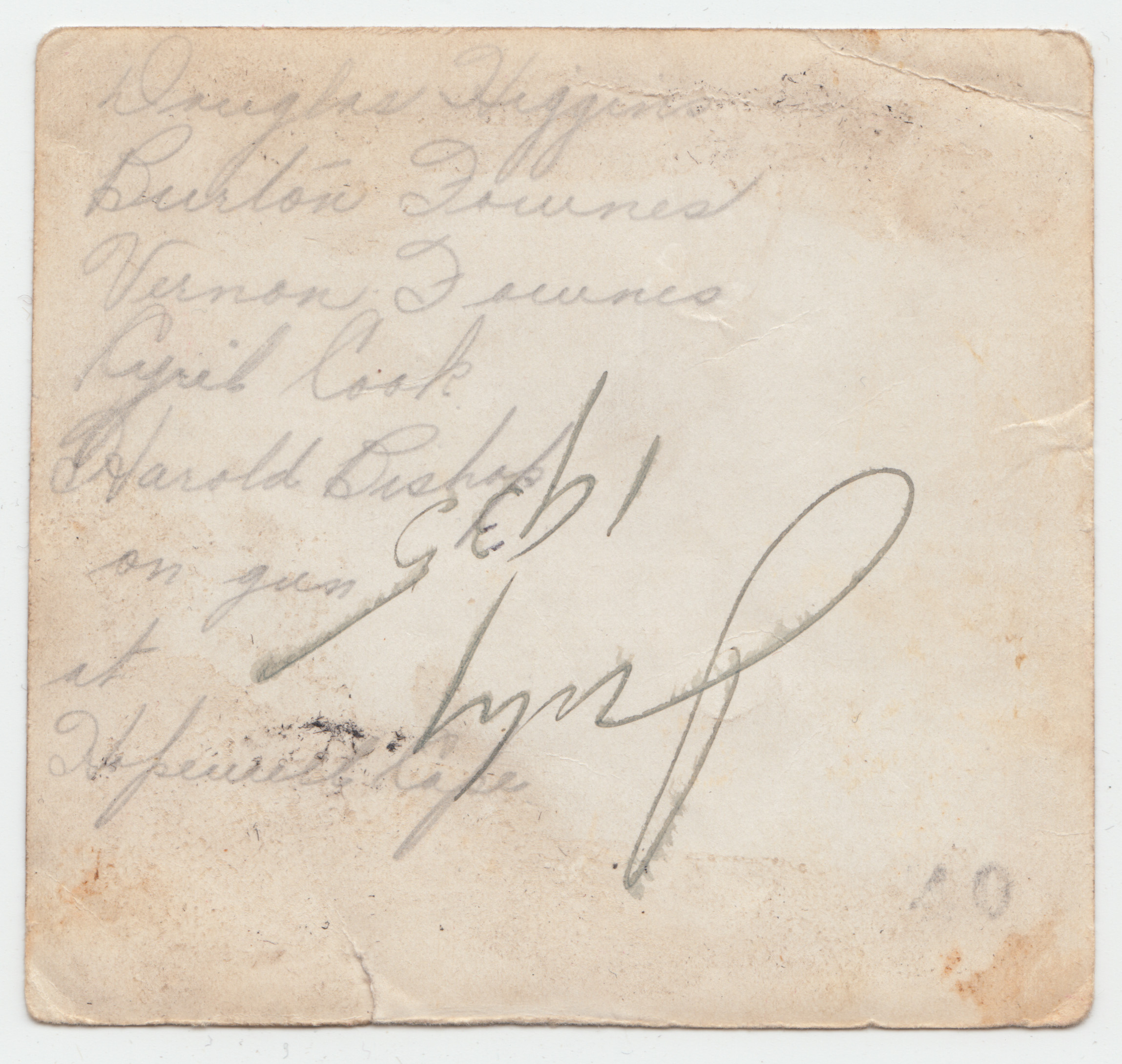
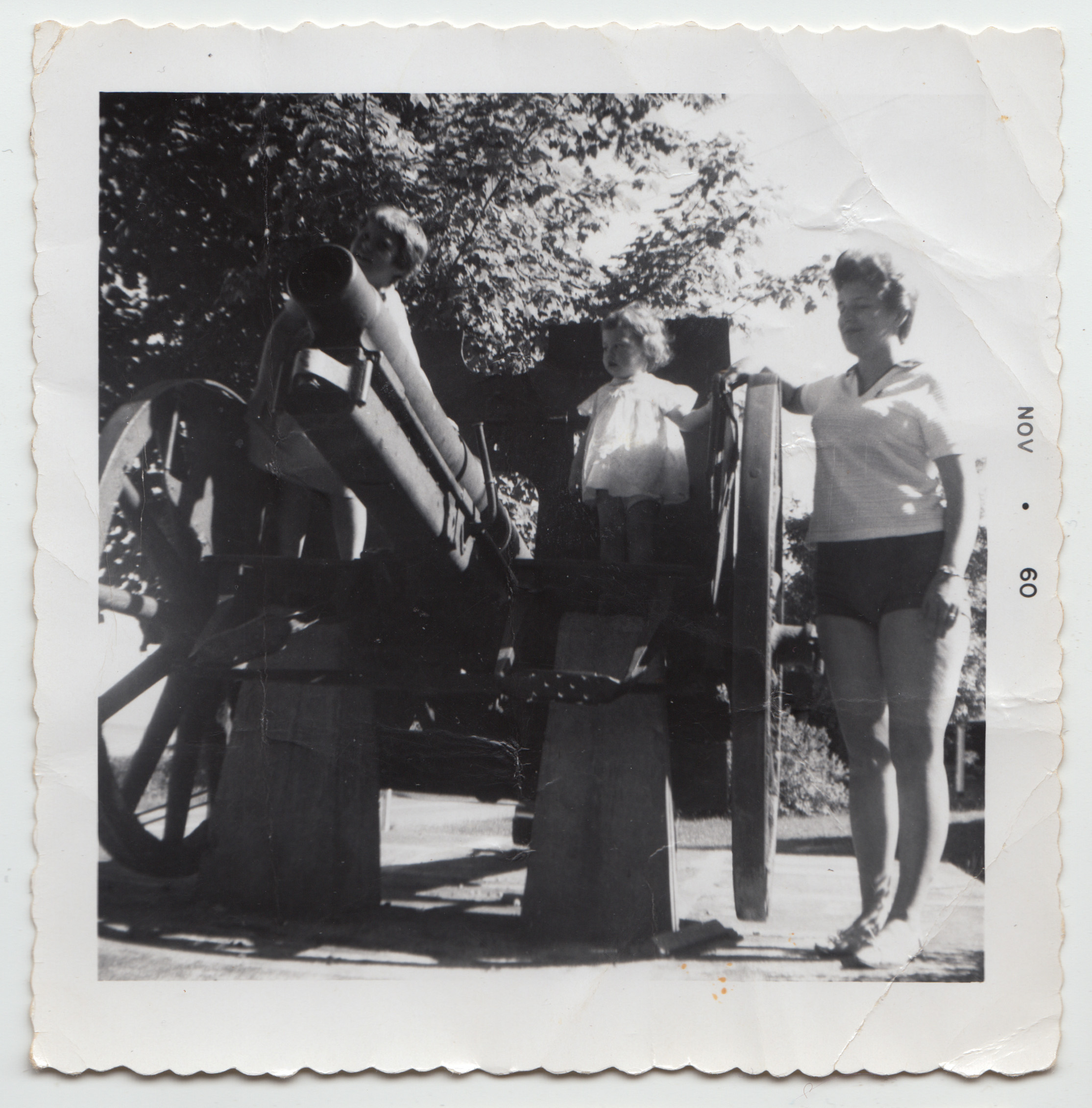
We have just received some amazing photos of the Hopewell Cape Vimy Gun from the family photo collection of Susan Richardson. With special thanks to Kevin Snair of Creative Imagery for scanning and sending them to us! Five are from the 1930s and one from the 1960s. The photo of the five boys on the Hopewell Cape Vimy Ridge Gun is from 1935 and shows Douglas Higgins, Burton Fownes, Vernon Fownes, Cyril Cook and Harold Bishop on the gun. Isn't the camouflage paint job amazing!
Douglas Higgins, Burton Fownes, Vernon Fownes, Cyril Cook and Harold Bishop Circa 1935
Come join us LIVE tomorrow on Facebook as we walk through the capture of our Vimy Ridge Gun at 12 Noon
Come join us LIVE tomorrow April 9, 2017 on Facebook as we walk through the capture of our Vimy Ridge Gun at 12 Noon. We will discuss the capture and how the gun arrived in Hopewell Cape, and the amazing story behind it. The Hopewell Cape Vimy Ridge Victory Cannon is one amazing story, don't miss it!
The 2016 Victory Cannon Campaign Fundraiser
We are very pleased to introduce our 2016 fundraising effort for the Victory Cannon Campaign. Our goal is to raise the remaining $5000.00 of the total goal of $15,000.00. The Victory Cannon Campaign is raising funds to restore the First World War cannons located in the Square in Hopewell Cape. The two cannons were captured by Canadians during the First World War and awarded to the people of Albert County. The large cannon was won in the Victory Loans Campaign of 1919, for raising the greatest percentage over our set goal. The second cannon was awarded for Albert County having the largest number of men per capita enlist in the CEF in Canada.
We were fortunate to have noted local artist, Norm Bradford agree to paint an original painting depicting our cannons, which we will be raffling off. Tickets will be $10.00 each with a limit of 600 tickets sold, and will go on sale Opening Day at the Museum (May 21), with sales continuing until all are sold or the draw date at our at our Annual General Meeting in October. The odds of winning are fantastic! (1 in 600 if all the tickets sell).
Here is Norm's amazing painting, and below it are his comments on it. Please be generous and buy tickets!
“The Spoils of War
As an artist who needs to convey a message and emotion through his art, I had to take my time to study how we got to have these cannons, why they’re here in Hopewell Cape Museum and how much it cost us. I was overwhelmed by the cost and the bravery of our local boys who captured these cannons. Below is a description of some of the symbolism in my creation. It took me a long time to plan this painting. I took lots of pictures, visits and composition planning to bring this painting to fruition.
The Cannons: As a realist, the cannons are recognizable, detailed and are central to this work. They are angled in such a way that your eye is drawn to the ghostly young WW1 soldier leaning on a strong maple tree, blowing taps in recognition of the of brave Albert County boys who gave their lives in the First World War, where these German Cannons were captured. The cannons were given to Albert County by Canada in recognition of those who fought, and from the 1919 Victory Loans Campaign.
The ghost: The young man is depicted as half ghost and half solid. He casts a shadow and the light reflects off his clothing. His uniform is what he would have worn at the time of the capture of these cannons. He is gone, but he is still here “lest we forget” the cost in human lives it took to have these “spoils”. He is standing straight and proud against a straight and proud maple tree (a symbolism for Canada).
The dramatic sky: The dark purple, threatening, ominous clouds of war are broken by a ray of hope lighting up the landscape and separating the foreground from the darker background. This ray in a small patch of blue sky signifies victory, hope, pride, freedom, and a brighter future thanks to our young men’s sacrificed and triumph. This light is of utmost importance in this painting. This sky was captured in a picture taken by Doran Milton recently just after a terrible downpour that flooded roads and fields. The light that it cast on the foreground (cows) helped me bring this whole painting together. It was central to bringing the emotion, the drama and the story together.
The background: Although the background is dark and treed, the buildings of the shire are recognizable although not to scale, not in the proper disposition. This an artist can do and no photographer can. The buildings have the light of the illusive sun also separating them from the dark green background. Bennett’s monument and plaques are also in view and centrally located.
The red poppies: although, there are no poppies in reality, they are in the painting to again remind the visitors that these cannons were not easy spoil, but won by many sacrifices.
Respectfully,
Norm Bradford”
The Top Ten Things You Didn't Know About Albert County - How many did you know?
A fun list for Friday, the Top Ten Things You Didn't Know About Albert County. How many did you know? Do you know of any other interesting facts that we missed? Try and trump us!
In no particular order:
On June 4, 1903, at a meeting of the "Albert County Teachers' Institute" in Surrey, Albert County, the "New Brunswick Teachers' Union" was established with an approved constitution and membership. The initiative and leadership towards the teachers' union came from two teachers at the Hopewell Hill Superior School. So, the present New Brunswick Teachers' Association began in Albert County!
Albert County was the location of New Brunswick’s Government House while Abner Reid McClelan was Lieutenant Governor.
Albert County has more natural resources to the square foot than any other county in New Brunswick.
Harvey, Hopewell Cape and Hillsborough all had wooden sidewalks.
Albert County has 99 known cemeteries.
Albertite has only ever been found in Albert County, nowhere else in the world.
The population of Albert County once far exceeded that of Moncton.
The moose population in Newfoundland is courtesy of Albert County. That's right it all started here, with 2 captured moose.
When it was in operation, the Aptus Veneer Factory at West River was the only factory of its kind in Canada.
1851 Census shows 32,378 yards (29.6 Km) of woolen fabric woven on 365 hand looms.
The Top Ten People of Albert County that Everyone should Know About Are... Drum Roll Please!
With over 2000 votes cast we have a final list of 10 people who everyone from Albert County should know about. It's a wide range of people from a Prime Minster to a Father of Confederation, Entrepreneurs and Pioneers, War Heroes and Architects, and our own Trail Blazing Ship's Captain. A list spanning 300 years and one to be proud of and emulate! The Ten People chosen will form a new exhibit which will open this May, be sure to come by the Museum and see it. So, without further ado, I give you the Top Ten People of Albert County Everyone Should Know About listed in order of number of votes received.
1. Myrtle 'Molly' Kool (February 23, 1916 – February 25, 2009) was a Canadian-born American sea captain. She is recognized as being North America's first registered female sea captain or ship master.
2. Richard Bedford Bennett, 1st Viscount Bennett, PC KC (3 July 1870 – 26 June 1947) was a Canadian lawyer, businessman, politician, and philanthropist. He served as the 11th Prime Minister of Canada from 7 August 1930, to 23 October 1935, during the worst of the Great Depression years. Following his defeat as prime minister, Bennett moved to England, and was elevated to the peerage as Viscount Bennett.
3. Mary Majka - Born in Poland in 1925 (d.2014) to a Czechoslovakian countess and a Polish school principal, It was in New Brunswick that she would finally feel at home and it was there that Mary would begin her life’s work, saving wildlife environments, preserving historic sites, and educating Canadians about the natural world.
4. Fred Colpitts (1887-1963) a keenly community minded citizen, spearheaded the breeding of Black, Silver and Platinum foxes in North America. Born in 1887 at Little River, Fred Colpitts spent only a few years at the small country school, then moved to Salsibury. In 1913 he bought three Black foxes and from this small beginning he developed the largest ranch in the British Empire.Through selection and inbreeding, Fred developed the Platinum fox. This breed gained world recognition and attracted visitors from many countries. His Platinum foxes received top sales figures in Montreal, New York and London. One matched pair sold for $5,000.00, winning the highest awards at many major shows across Canada. In 1927 he bought an Alberta dairy farm and moved the registered Holstein herd East. The herd still continues today as the "Little River Holsteins". He was also a founding member of the New Brunswick Branch Holstein-Friesian Association.Colpitts was also a well known lumberman, and during World War II he employed hundreds of men in cutting pitprops for the British Ministry of Supply. Colpitts represented his county as a member of the Legislative Assembly of New Brunswick from 1930 to 1939. Colpitts was also instrumental in having Fundy National Park located in Albert County.
5. William Henry Steeves (May 20, 1814 - December 9, 1873) was a merchant, lumberman, politician and Father of Canadian Confederation.
6. Heinrich Stief (son of Augustin Stief and Anna Barbara Worner) was born 12 Dec., 1718 in Sirchingen, Wurttemberg, and died between 1778 and 1780 in Hillsborough, Albert Co., New Brunswick. He married Regina Stahleker Feb 25, 1745 in Münsingen, Wurttemberg. The couple are the progenitors of upwards of 250,000 descendants around the world.
7. Reid Bros (3) Architects- Were Canadian architects, who founded the California architectural firm, Reid & Reid. Born in Harvey, New Brunswick to William J. Reid and Lucinda Robinson. They were James W. Reid (1851-1943), Merritt J. Reid (1855-1932), and Watson Elkinah Reid (1858-1944) Notable buildings are the Hotel del Coronado, the Riverside-Albert Consolidated School, the Albert County Court House and Victoria Manor (home of Lt. Gov AR McClelan).
8. Lt Col. Cyrus Peck - VC, DSO & Bar (26 April 1871 – 27 September 1956) was a Canadian recipient of the Victoria Cross, the highest award for gallantry in the face of the enemy that can be awarded to British and Commonwealth forces. Peck was one of the seven Canadians to be awarded the Victoria Cross for their actions on one single day, 2 September 1918, for actions across the 30 km long Drocourt-Quéant Line near Arras, France. Peck is the only VC winner to be a sitting member of Parliment.
9. Judge Albert Watson Bennett was born in Hopewell Cape in 1864.He attended school there and went on to study law in Dorchester. He was admitted to the bar of New Brunswick in 1885 and practiced in the town of Sackville. Several years later he was appointed to the County Court of Westmorland and Kent. Throughout his career he saw many different life situations and witnessed the inequality of health services. When he retired in 1945 he began to seriously consider the state of healthcare in this region. He decided to make a difference by contributing towards creating equally accessible medical treatment for every one. He did this through making a large bequest to the Albert County Hospital. Upon his death in 1963, his estate went to his wife and it was not until she passed away in 1973 that the contribution was bequeathed to the hospital in the amount of $232,000. The following year the fund had accumulated to $359,286.63 with interest. Many improvements, equipment purchases, scholarships and educational opportunities have been made in the spirit of Judge Albert Bennett's vision of improved and quality healthcare for the residents of Albert County through the Bennett and Albert County Health Care Foundation Inc. (formerly the Bennett and Albert County Hospital Foundation).
10. Gaius Samuel Turner (August 12, 1838 – April 25, 1892) was a businessman and political figure in New Brunswick, Canada. He represented Albert County in the Legislative Assembly of New Brunswick from 1879 to 1892 as a Liberal-Conservative. He was born and educated in Albert County, New Brunswick, the son of Isaac Turner and Elizabeth Colpitts. In 1876, he married Lucy E. Stiles. He was a justice of the peace. Turner was a ship builder in Harvey, New Brunswick, and also was a director for the Albert Railway. He was named to the province's Executive Council in 1883 but resigned later that year. He died in office at Fredericton at the age of 53 after a long illness.