On June 13, 1915, the 26th Battalion - which contained many men from Albert County - set off for England and the First World War. On June 12 and 13, 2015, the Albert County Museum in Hopewell Cape commemorated the 100th anniversary of this sailing with a celebratory dinner and parade.
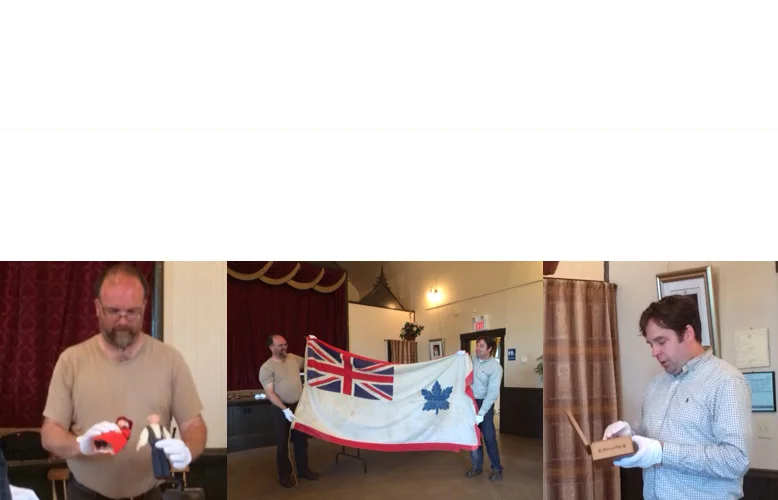
What to expect at tonight's Mystery Box Talk
VICTORY CANNON CAMPAIGN JUST PASSED $10,000 - 2/3 the way there!
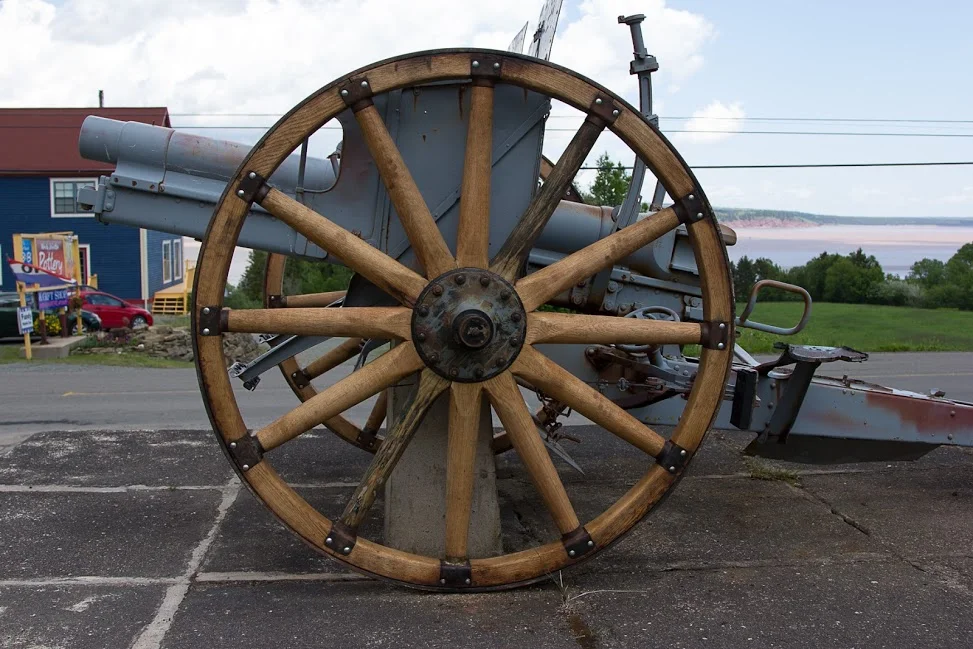
The Victory Cannon Campaign just passed the 2/3 mark in the goal to restore the Hopewell Cape War Trophy Cannons, by going past $10000.00. Fundraising efforts during the two day Commemoration of the 100th Anniversary of the Sailing of the 26th Battalion June 13, 1915 raised $5258.20 bringing the campaign within $5000.00 of the final goal of $15000.00.
Commemoration of 100 Years to the Day Sailing of the 26th NB Battalion a ROARING Success!
PARADE! PARADE! PARADE! THIS SATURDAY, JUNE 13 - 2-5:30 PM - 100 YEARS 26th NB BATTALION CEF - HOPEWELL CAPE, NB
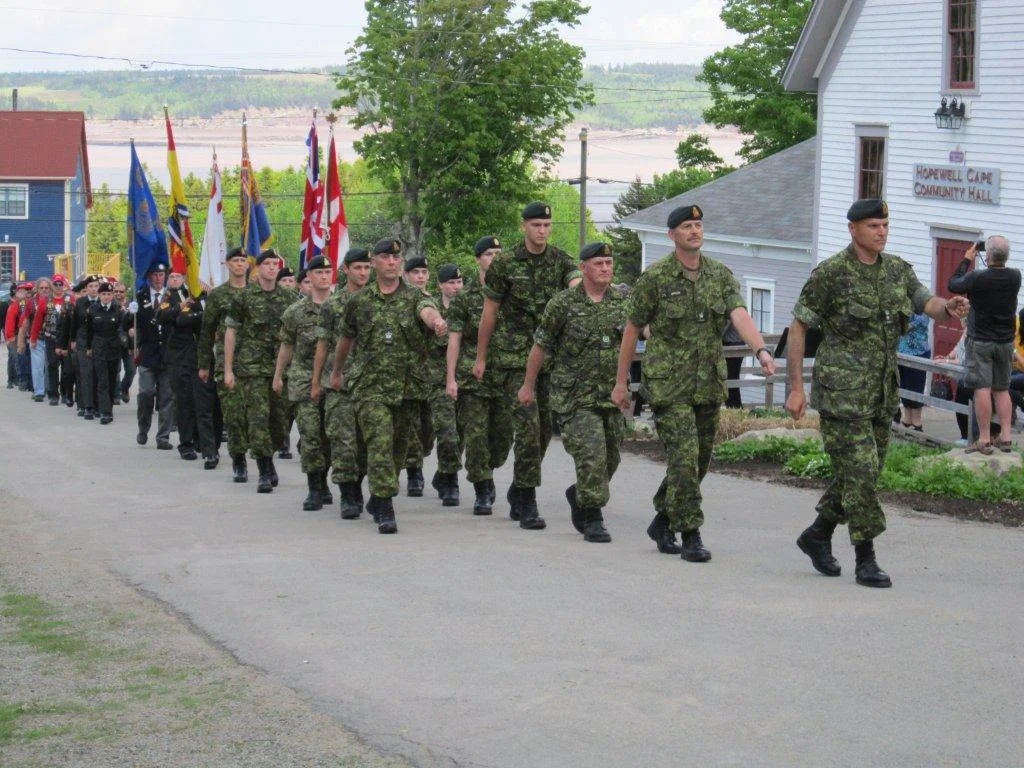
Did I say PARADE? This Saturday (June 13) at the Albert County Museum featuring the Royal New Brunswick Regiment, the RCMP Pipes and Drums, the Royal Canadian Legion Branch 32, the Riverview Veteran's Association, the 560 Moncton Army Cadets and others; in a COLOUR PARADE - Commemorating the Sailing of the 26th New Brunswick Battalion 100 Years-to-the-Day, June 13, 1915. The events begin at 2:00 pm with a General Call to Assembly, followed by presentations on the 26th New Brunswick Battalion, known as the Fighting 26th and continues until the highlight of the day, the Colour Parade at 4:15 pm (sharp).
SPECIAL SURPRISE EVENT TO START PARADE!
PLEASE SHARE! INVITE EVERYONE!
For more details call the museum 506-734-2003, or click here.
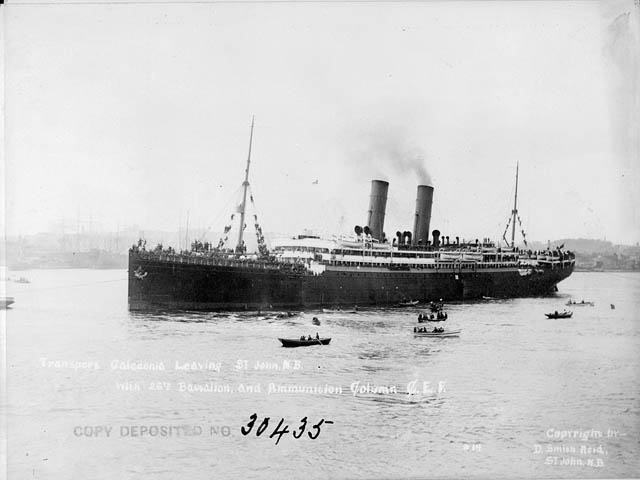
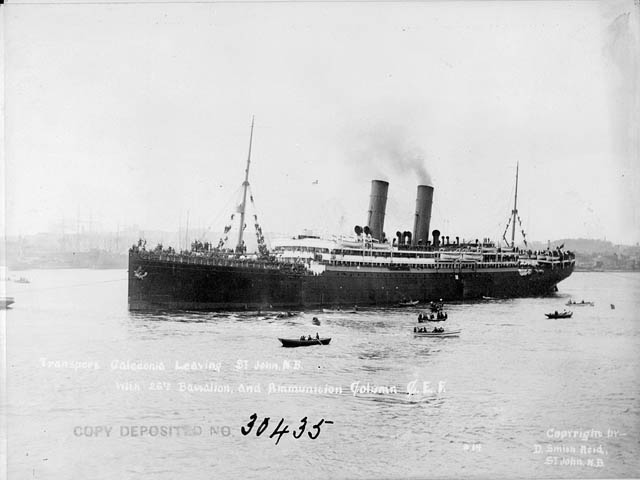
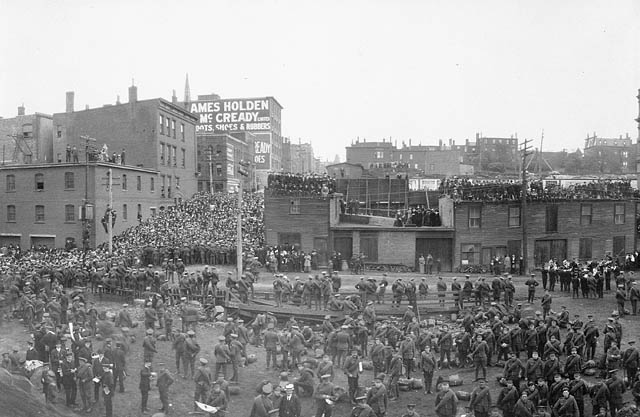
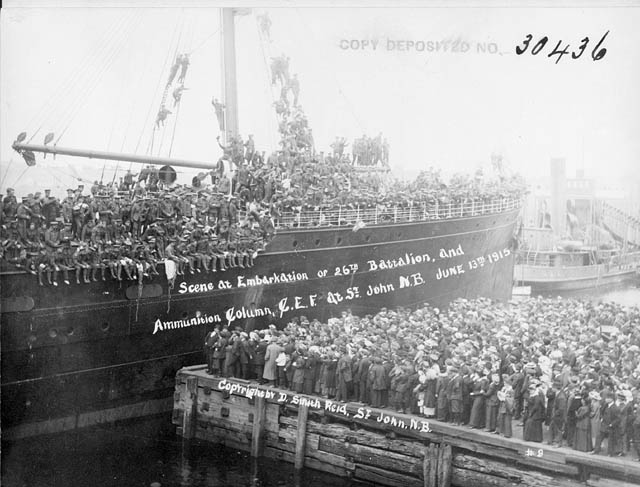
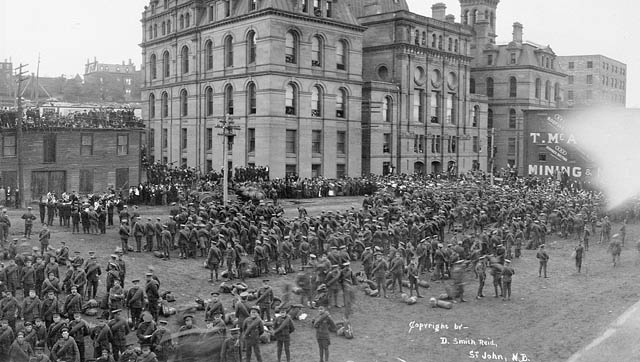
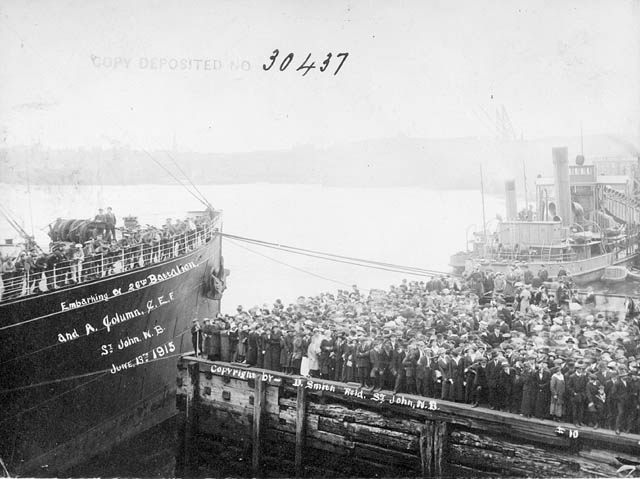

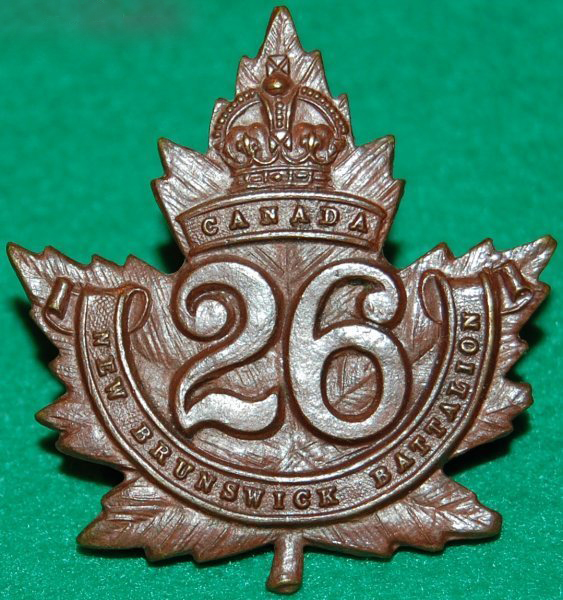
Honouring a Few Brave Men - The 26th New Brunswick Battalion 100 Years 1915-2015
This Saturday, June 13, 2015 we're commemorating the Sailing of the 26th New Brunswick Battalion, 100 years to the day they left for the battlefields of Europe on June 13, 1915. On that day 1148 men set sail, comprised of 42 officers and 1106 other ranks, many would not return, and those that did were forever changed.
When the battalion returned home at the end of the war, only 4 officers of the original 42 and 113 of the original 1106 other ranks were still with the battalion, the others being killed, wounded or transferred to other battalions. Over all about 6,000 men served with the 26th Battalion over the course of the war.
It should be noted that the first member of the battalion to die was Lance Corporal George McKee of Fredericton. He died of pneumonia on April 21, 1915 and was buried in the Fredericton Rural Cemetery with full military honours. He was also the first resident of Fredericton to die on active service.
The first member of the battalion to die in action was Private Moses Gallant from PEI. He was killed on September 28, 1915 during the 26th’s first tour in the trenches near Ypres in Belgium. The first officer from the battalion to die in action was Lieutenant Charles M. Lawson, who was a teacher at Saint John High School before the war. On November 26, 1915 he died of his wounds received during a patrol in No Man’s Land.
Lieutenant Colonel A.E.G. McKenzie, the commanding officer of the battalion, was killed in action on August 28, 1918. The battalion losses on that day were 57 men killed and 199 wounded. The worst single day of the war for the 26th was September 15, 1916 when they lost 325 all ranks (killed, wounded and missing) helping to capture the village of Courcelette on the Somme.
The 26th Battalion never lost a battle the entire war.
What follows is a condensed history of the "26th New Brunswick Battalion 1914-1919":
October 25th 1914 Lt. Col. J.L. McAvity received word to recruit a Battalion for the Expeditionary Force to be known as the 26th.
November 1914 Recruiting carried on throughout the Province, Battalion well over strength.
December 1914 Battalion Billeted in Armouries, Saint John.
June 1915 Training carried on intensively.
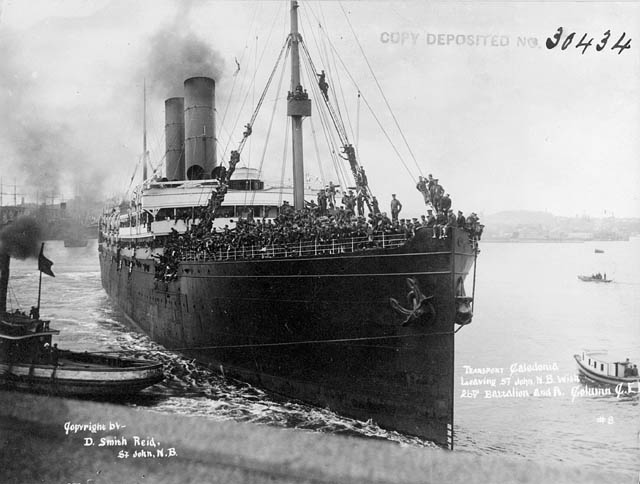
June 13th, 1915 Battalion Sailed from Saint John on Anchor Line Caledonia.
June 24th, 1915 Landed at Davenport, England, proceeded by train to East Sandling in the Shorncliffe Area.
June to Sept. 13, 1915 Intensive training in England.
Sept. 13th, 1915 Advance Party of Battalion left for France including the Transport.
Sept. 15th, 1915 Battalion marched to Folkstone and embarked landing at Bolougne, France.
Sept. 15 – 18, 1915 Moved toward Firing Line.
Sept. 25th, 1915 Took over Front, East of Kemmel Vierstraat Road from 22nd Batt.
Oct. 13, 1915 Crater Fight Reconnaissance in Force, really one of the first daylight raids, heavy Casualties. Sgt. Ryder received D.C.M., first decoration in 2nd Canadian Division.
Oct. 1915 to Mar. 1916 Holding Line.
March 1916 Took over St. Eloi Front.
April 1916 Lt. Col. J.L. McAvity Invalided to England and command assumed by Lt. Col. A.E.G. MacKenzie.
April – May, 1916 Holding St. Eloi Front.
May 1916 Raid under Lt. Winter who was later decorated with the M.C.
June 3rd, 1916 Heavy German Attack on left of Battalion.
June 6 – 12, 1916 Holding Front prior to and after Counter Attack, heavy casualties.
June 15 to Aug 15 Back on St. Eloi Front, holding line.
Aug. 1916 Out of Line for Reorganization.
Sept. 1916 Move to Somme Area.
Sept. 15th, 1916 Attack on Courcelette, Battalion went in 555 all ranks and came out 174.
Sept. 28th, 1916 Second Tour in Somme, Battalion went in 374 all ranks and came out 78.
Oct. 2 to 9, 1916 Rest and reorganization Bertacourt.
Oct. 9 to 15, 1916 Move by route march north to Bully Grenay Front.
Oct. to Dec. 1916 Holding Line Bully Grenay Front.
Jan. 1917 Raid Enemy Lines for Identification Purposes.
Jan. 1917 Out of Line to Army Reserve for a month at Bruay.
Feb. to Mar. 1917 New Front East of Neuville, St. Vaast. Preperations for Vimy attack.
April 9th, 1917 Attack on Vimy Ridge, Battalion in first place.
April 14th, 1917 Attack East of Vimy Ridge, Battalion established most forward line on British Front which was named New Brunswick Trench.
April to May 1917 Holding Front East of Vimy.
June 1917 Army Reserve in Estree Couche.
July 1st, 1917 Took over New Front East of Lievan towards Lens.
July 1917 Lt. Col. MacKenzie, D.S.O. goes on course to England and command assumed by Lt. Col. W.R. Brown, D.S.O.
Aug. 15th, 1917 Attack from St. Pierre towards Lens, very heavy casualties.
Aug. 20 – Sept. 8 Rest and Refit Maison Bouche.
Sept. – Oct. 1917 Holding Front East of Vimy.
Oct. 1917 Lt. Col. MacKenzie returns and takes command of Battalion, Col. Brown goes to England to command the reserve.
Nov. 1917 Move North to Ypres Salient.
Nov. 6th, 1917 Attack and Capture of Passchendaele.
Nov. 1917 Move back to Vimy Front.
Dec. 1917 Lt. Col. MacKenzie, D.S.O. Invalided to England. Maj. C.G. Porter, D.S.O. assumes command.
Dec. 21st, 1917 Battalion moves to Army Reserve, first Xmas out of Line.
Jan. 1918 Take over Front East of Vimy.
Feb. 1918 Move back to Lens Front.
March 1918 Battalion out for rest and refit, cut short by German Attack South on the 21st.
Mar. 24, 1918 Move South to Bienvilliers Aubois.
Mar. 26th, 1918 Move North again, S.E. of Arras, take over Telegraph Hill Switch.
April 7th, 1918 Lt. Col. A.E.G. MacKenzie, D.S.O. returns to Battalion, Col. Porter assumes duties of 2 I/C.
Apr. – July 1918 Holding Front East of Neuville Vitasse, many raids carried out by the Battalion.
July 1918 Hauteville for rest and refit.
Aug. 1918 Moves to Amiens.
Aug. 8th, 1918 Attack East of Amiens, great depths gained, many prisoners taken.
Aug. 18th, 1918 Moved North to Arras Area.
Aug. 26th, 1918 Attack East of Arras beginning of the end.
Aug. 28th, 1918 Lt. Col. MacKenzie Killed, leading attack.
Sept., Oct. to Nov. 11th, 1918 Continue attacks towards Cambrai Valenciennes, with Battalion at Wancourt when Armistice Declared.
Nov. 15th, 1918 Detail from Battalion in Official Entry into Mons.
Nov. 20th, 1918 Start March to Germany with Army of Occupation.
Dec. 3rd, 1918 Cross Rhine at Bonn Dursen, Inspected by Gen. Currie at the Bridge.
Jan. 1919 Germany East of Bonn, move back to Tamines in Belgium.
Mar., April 1919 Tamines moved back to England.
May 10th, 1919 Sailed from England on Olympic.
May 17th, 1919 Landed in Halifax, Moved by train to Saint John, great reception.
May 17th, 19th, 1919 Demobilization.
This Saturday, we are honouring the men of the 26th Battalion with a Colour Parade, on June 12, 1915 in front of cheering crowds in excess of 20,000 people, the 26th Battalion marched from the Armoury in Saint John to the Harbour. In the early morning hours on June 13, 1915, the 26th Battalion boarded the troop ship, “Caledonia” and sailed for England.
In commemoration of this historic event, the Royal New Brunswick Regiment will parade in full dress uniforms, along with the RCMP Pipes and Drums Band and local cadet groups (the 560 Moncton Army Cadets). The parade will be inspected by Brigadier General Peter Atkinson (retired). BGen. Atkinson served with the Canadian Forces for over 35 years, and still has strong ties to Albert County. This parade has special meaning for the Royal New Brunswick Regiment for they are the living embodiment of the 26th Battalion and hold their battle honours, which are extensive.
Come out and help us remember the Fighting 26th!
The Inspiration for an Event: The 26th Battalion Overseas Club Dinners
They say there is nothing stronger than the bonds formed on the battlefield, and the men of the 26th Battalion, who were in the thick of every major battle the Canadian Corps faced in the First World War, kept true to theirs for the rest of their lives. The veterans of the 26th Battalion organized the 26th Battalion Overseas Club after the war and held their first reunion ten years later in 1928. They continued to hold them every June 13th, commemorating the day the Battalion sailed for war from Saint John (for at least another 40 years).
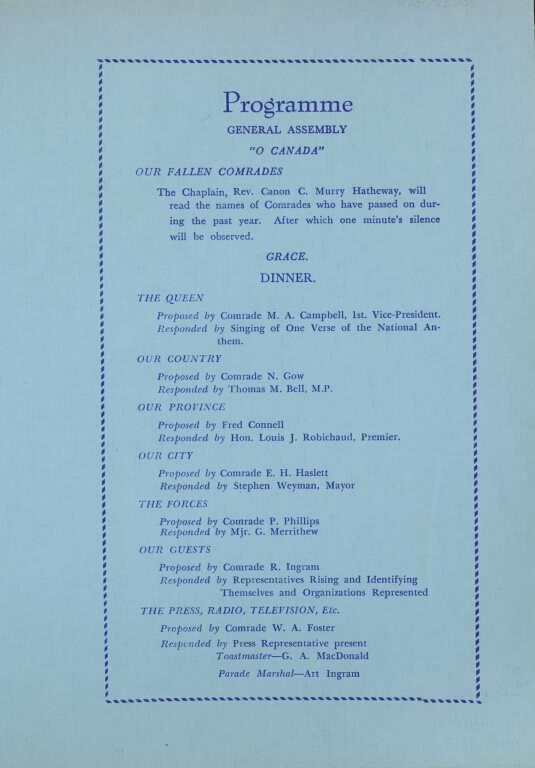
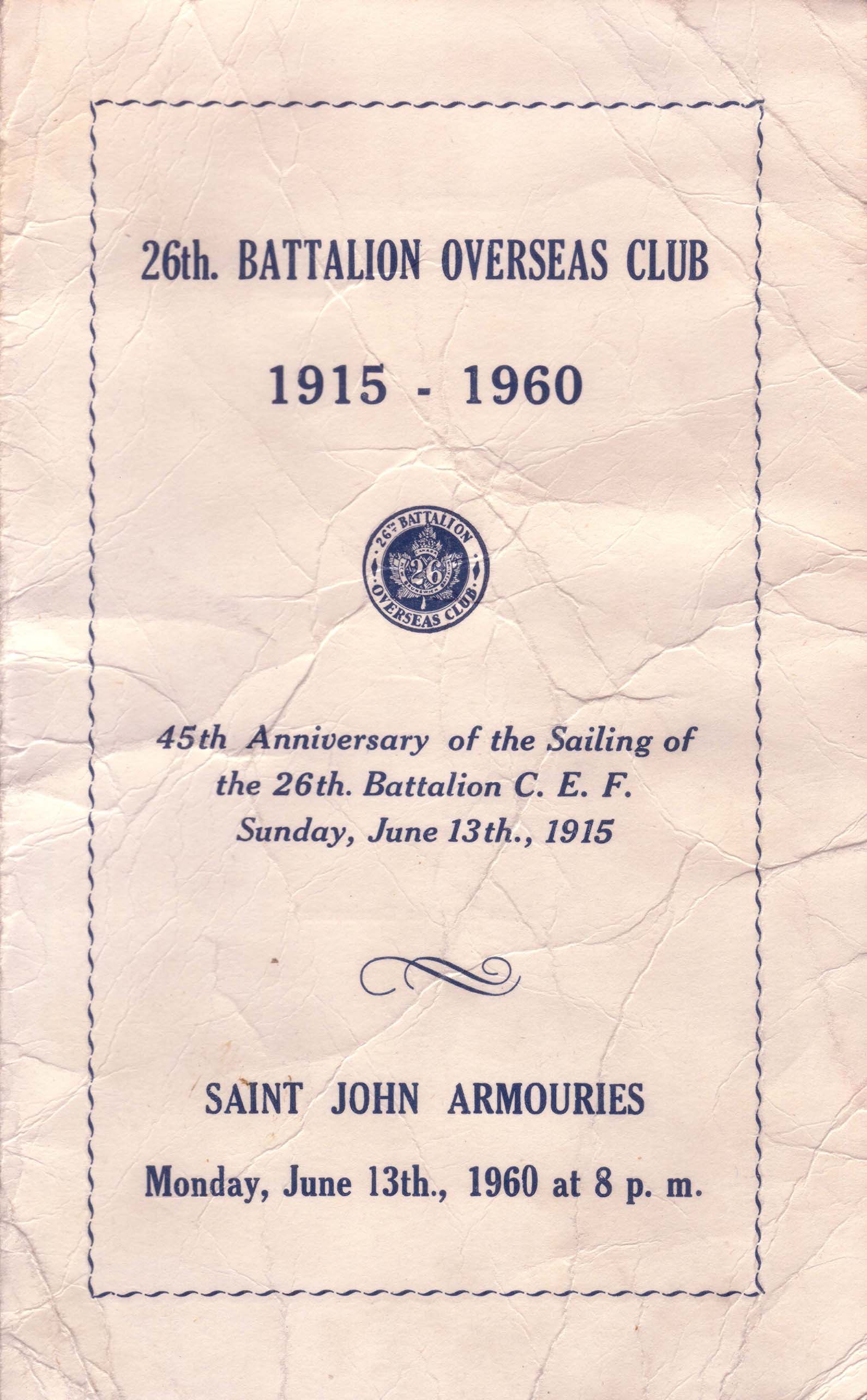
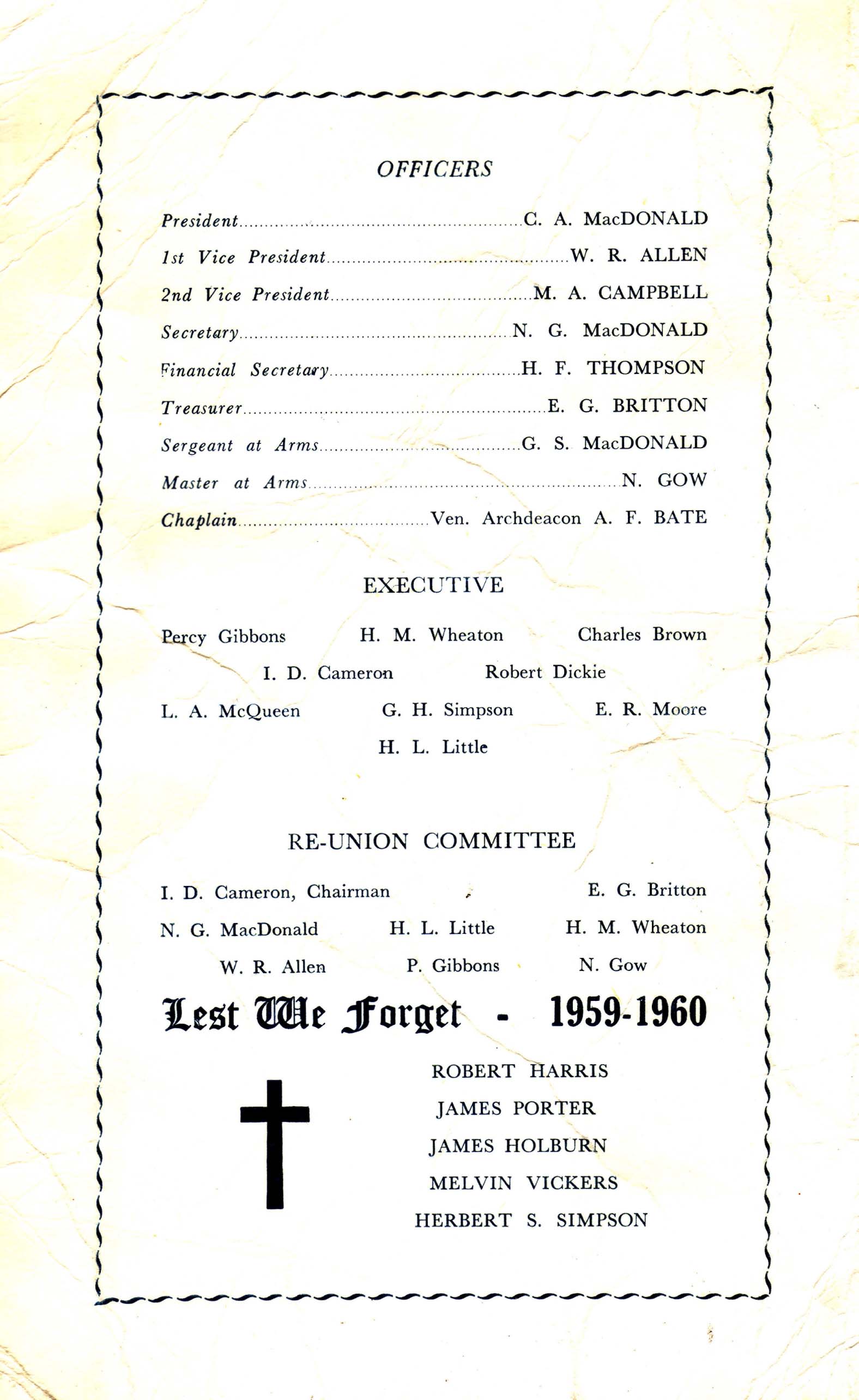
We have found two programs from these dinners: one from 1960 (the 45th year since the sailing) and the other from 1966 (the 51st year since the sailing). Both programs follow the traditions of the 26th Battalion and standard military protocol, with the prescribed singing of anthems, the prerequisite toasts and responses and the remembering of those lost to time. The menus included in the programs are similar and both ended with the S.R.D. (Seldom Reaches Destination). What is an S.R.D.? To find out you will have to attend the Commemoration Dinner on Friday, June 12 at 6pm.
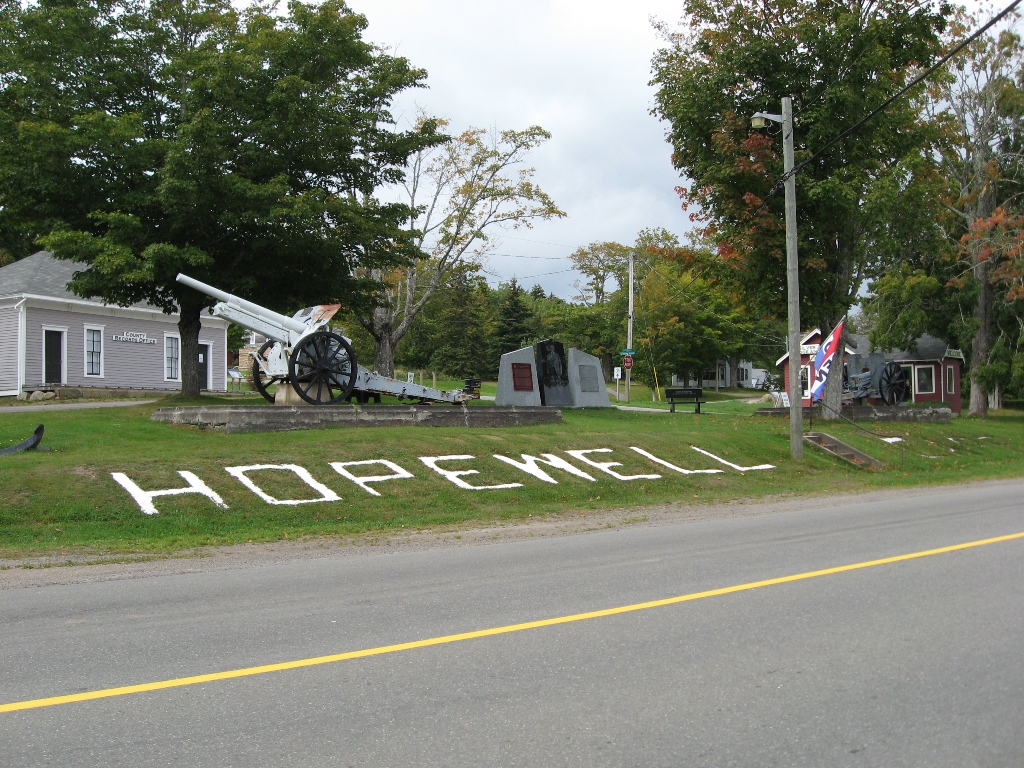
Our dinner, inspired by the 1960 45th Anniversary will be following the 1960 menu and program almost to the letter. It will give you a taste of what the men of the 26th Battalion experienced 55 years ago, along with a few additions that will liven up the evening. The Banquet is also a fund-raiser for the Victory Cannon Campaign, which will help restore the two captured German First World War cannons that sit in the square in Hopewell Cape.
Be sure to grab your tickets early as they are going fast, and seating is limited. It is a great chance to experience a unique dinner and program honouring an important historical event.
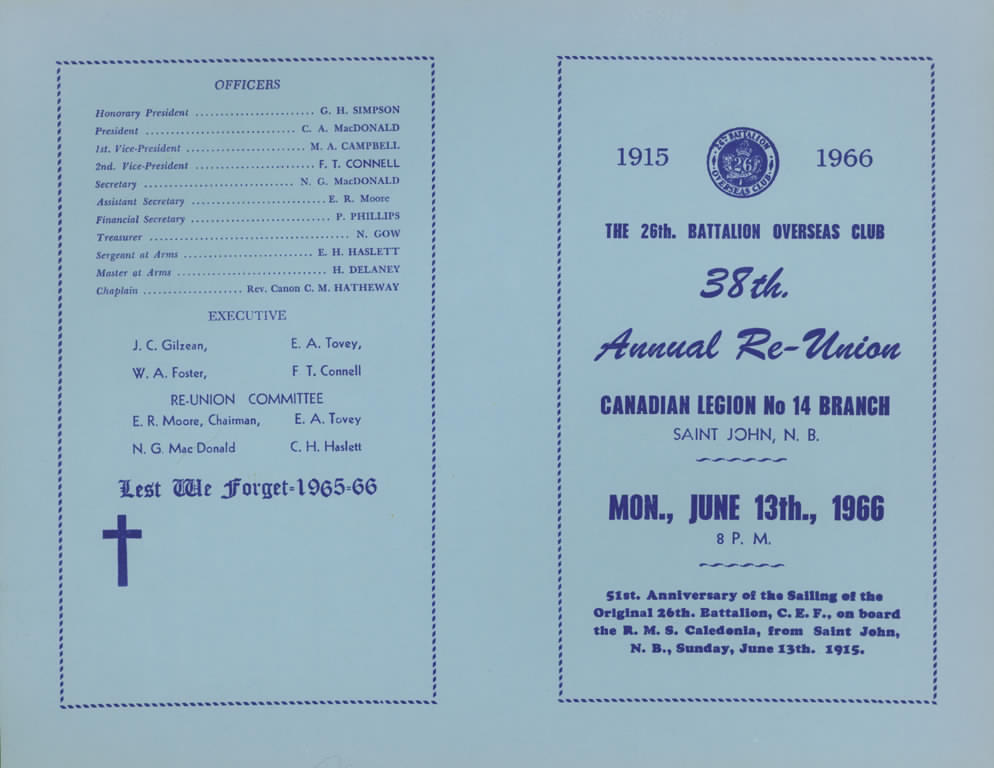


PS Tickets are $25.00 each and can be purchased by calling the museum 506-734-2003
The Mystery Box Talks - What Treasures Does Our Vault Hold? The Last Friday of the Month - May to September

A Shipbuilding Past
The Bennett family came from England in 1635 and settled in the Saybrook Colony, a British colony established at the mouth of the Connecticut River. Zadack (Zadoc) Bennett left Lyme, Connecticut in 1761 with his wife Mary (Mercy) Hackett and their children to settle in Horton, near present day Wolfville, Nova Scotia. Their 500 acre land holdings included a town lot, a share of dyke land, and two farm lots.
In 1784 Benjamin Bennett, son of Zadoc Bennett, left his new wife in Horton while he went to Hopewell, New Brunswick, to clear land and build a home for his family. Unfortunately his wife died in 1788 and therefore she never made the journey to join Benjamin in Hopewell. In 1800 he married his second wife, Rebecca Stevens, of Harvey. They had several children together.

Half-Model of a Bennett vessel
Benjamin’s brother, George, was the first Bennett in what is now Albert County to build ships. The 61 ton Schooner ‘Mary and Eliza’ was launched in May 1818. Several members of the Bennett family followed in the shipbuilding tradition including Benjamin’s and Rebecca’s son, Nathan Murray Bennett. Nathan’s first registered vessel was the 75 ton Schooner ‘Hopewell’ that was launched in July 1835. Nathan’s son, Henry John Bennett, joined the family tradition and launched his first vessel, the 680 ton Barque ‘Enoch Arden’, in June 1867.

Half-Model of a Bennett vessel
In all, there were 44 registered vessels built by the Bennett family. 36 of them were built at the family shipyard in Hopewell Cape, 7 in Hillsborough and one in Harvey. The Bennett shipyard in Hopewell Cape was well equipped with a large boarding house, moulding copts, a blacksmith shop, barns and stables, and a general store.
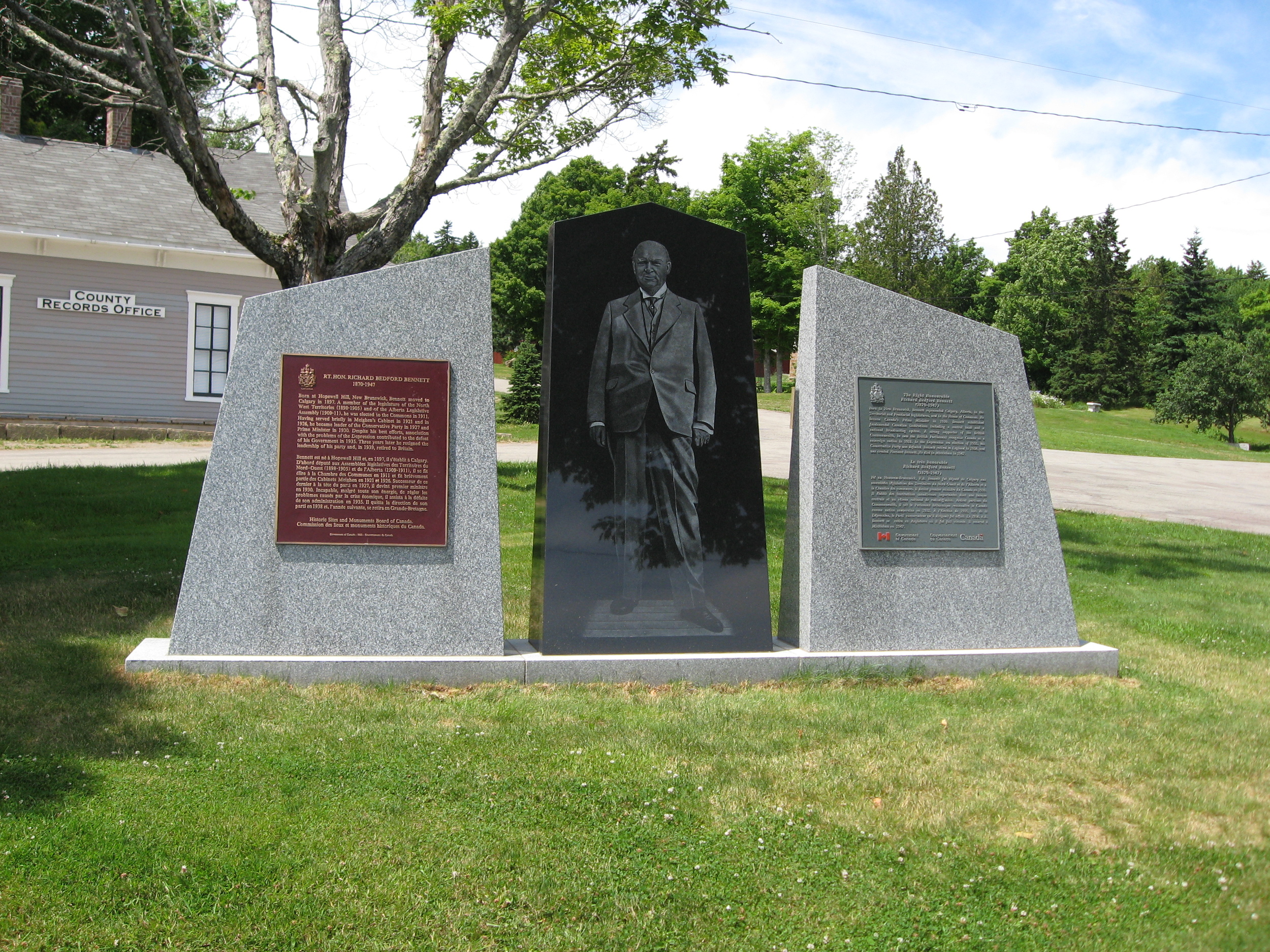
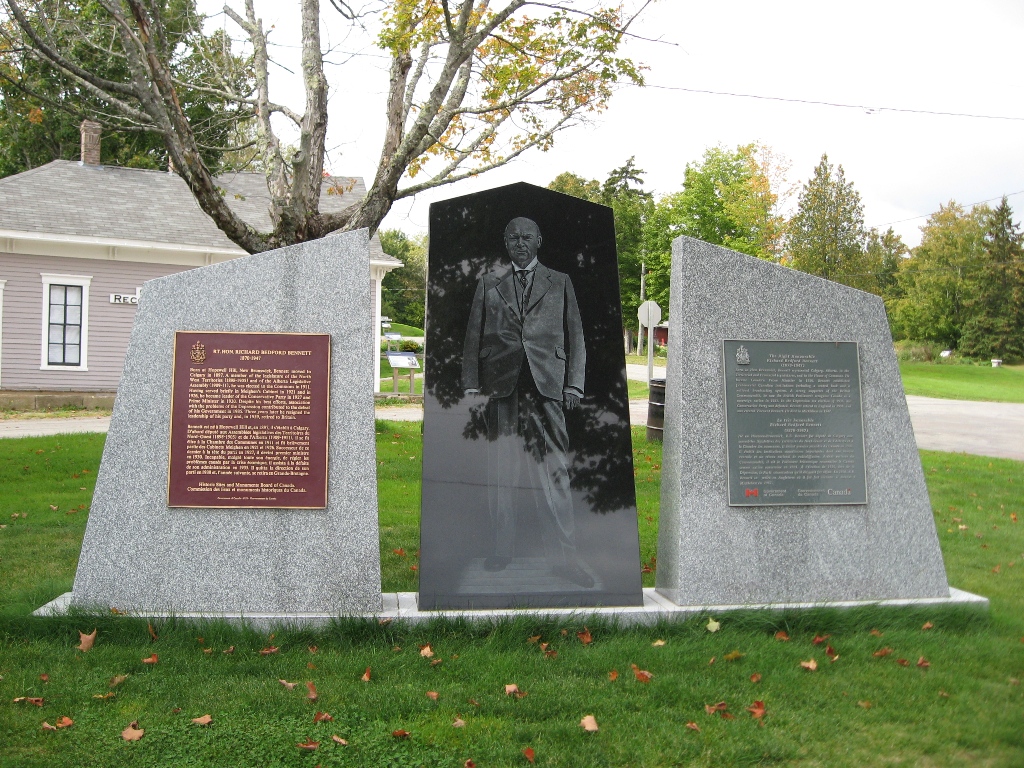
Henry Bennett, father of Richard Bedford Bennett, is credited as the builder of the last vessel constructed at the Bennett Shipyard, the 298 ton Brigantine ‘Romola’. It was launched in December 1874 and marked the end of an era for the Bennett family.
Origin of the Species
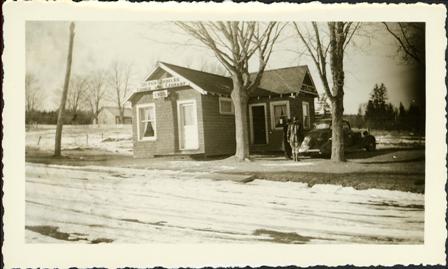
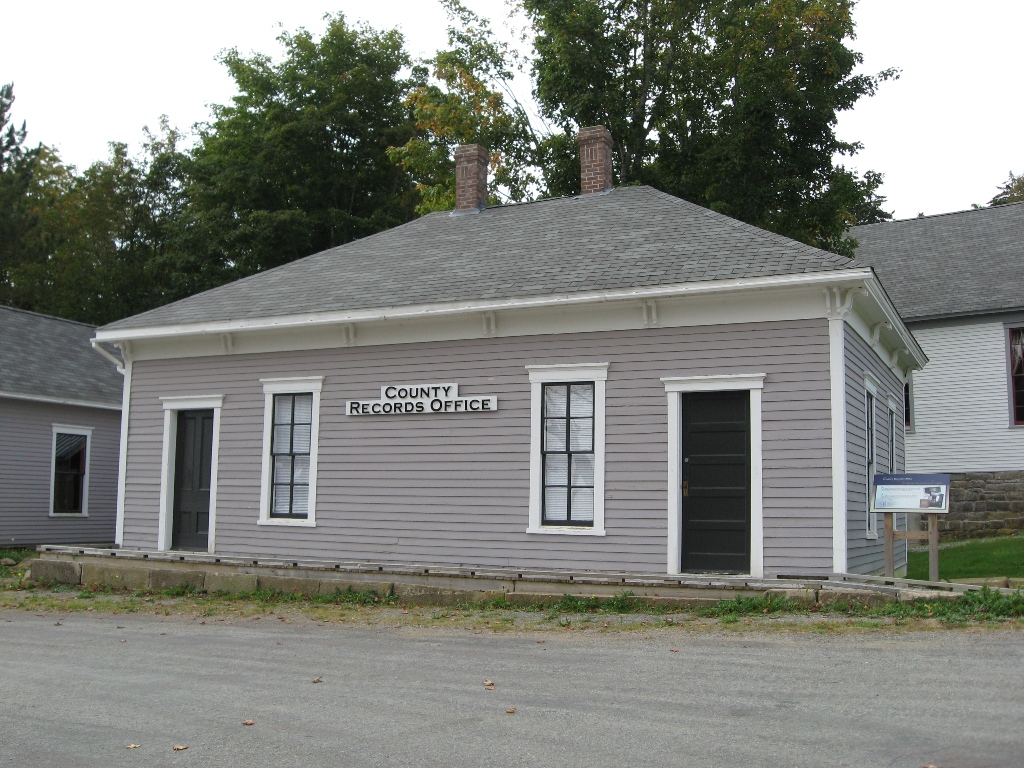
A group of history minded people from all over Albert County met in Alma to form a group called the Albert County Historical Society. The Albert County Historical Society was incorporated as a Non-profit organization in New Brunswick in 1957. The Society held regular meetings to decide how to best preserve the history of the county. They decided to establish a museum and chose a building in Hillsborough to look at. A short time later an opportunity arose in the shiretown of Hopewell Cape. The County Council had recently built a new Municipal Office building so the former offices were now surplus. It so happened that the President of the Historical Society, Judson Cleveland, was also a member of the County Council. Arrangements were made for the Historical Society to lease the former Records Office for use as a museum.

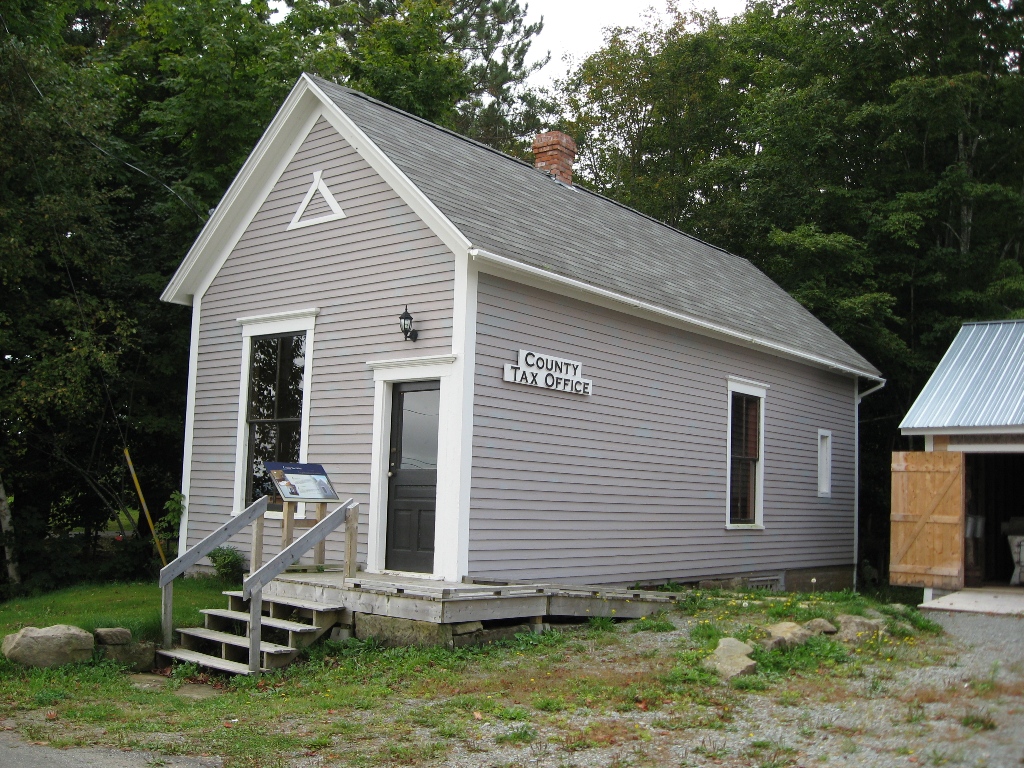
Pye Store, Tax Office and Records Office in Hopewell Cape
The Historical Society began collecting artefacts in 1960 to be on display in the museum. After some modifications were made to the Records Office, including removal of the stone wall between the two sections of the vault, the Albert County Museum was opened to the public in 1962.
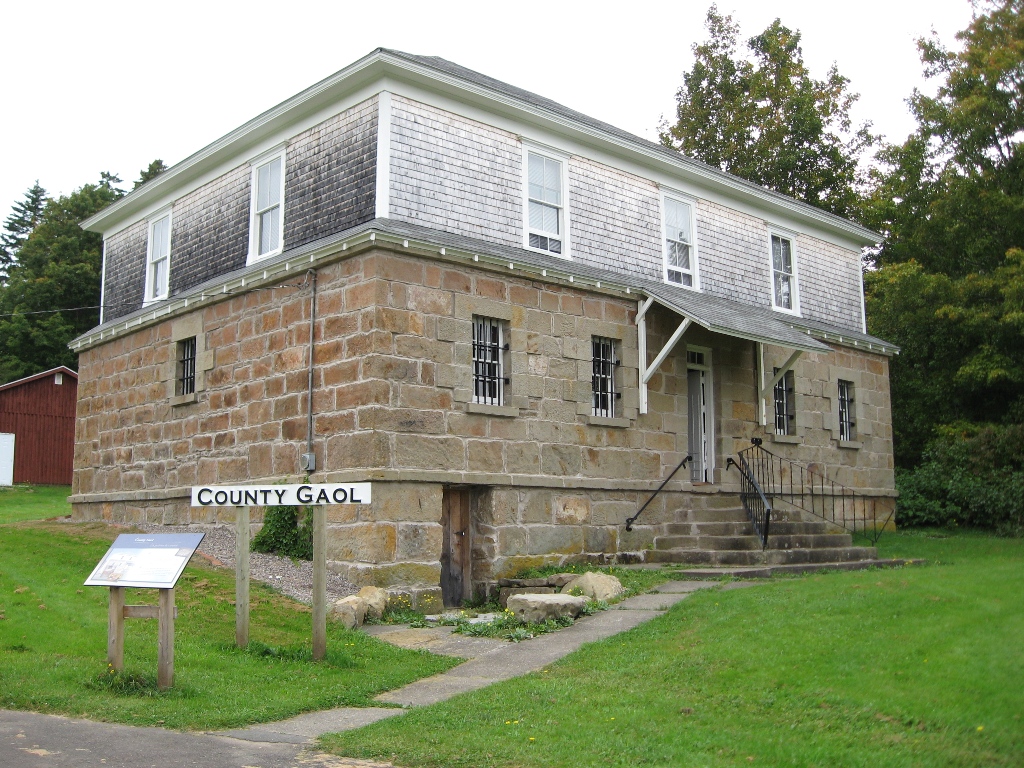
Later that year, after an act of council to exhume the body of Thomas F. Collins was completed, the Albert County Gaol was sold to the Society for use as a permanent museum. Modifications were made to open up the Gaolkeeper’s apartment rooms for use as galleries as well as upgrades to the electrical service. When the museum opened for the season in 1965, it was in the Gaol.
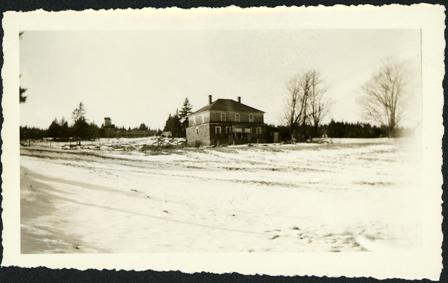
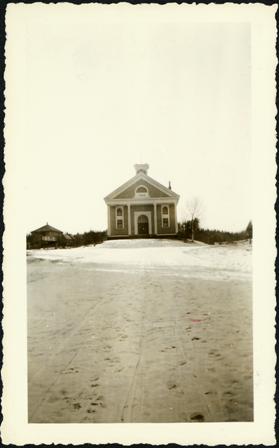
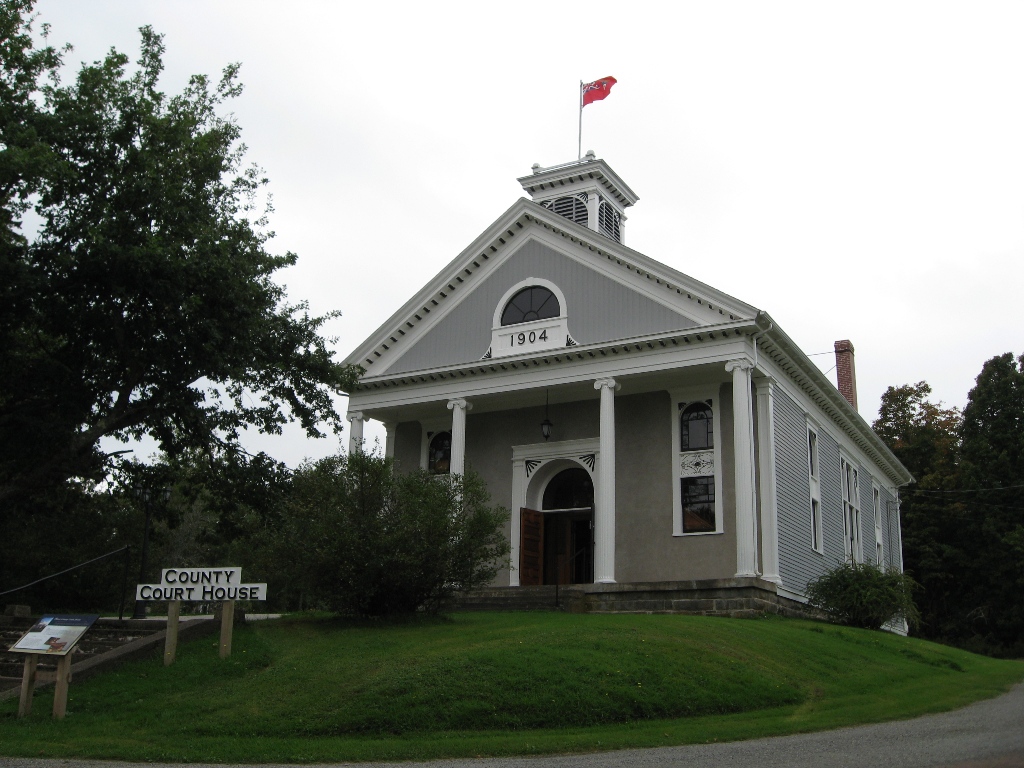
All County Councils were dissolved in December 1966 and all assets became the property of the province of New Brunswick. In 1972 the Albert County Court House was sold to the Historical Society and opened to the public as part of the museum in 1975. The County Records Office, Tax Office and the Carriage Shed associated with them was also sold to the Historical Society in 1972 in the same transaction as the Court House, but these other buildings were only used as storage.
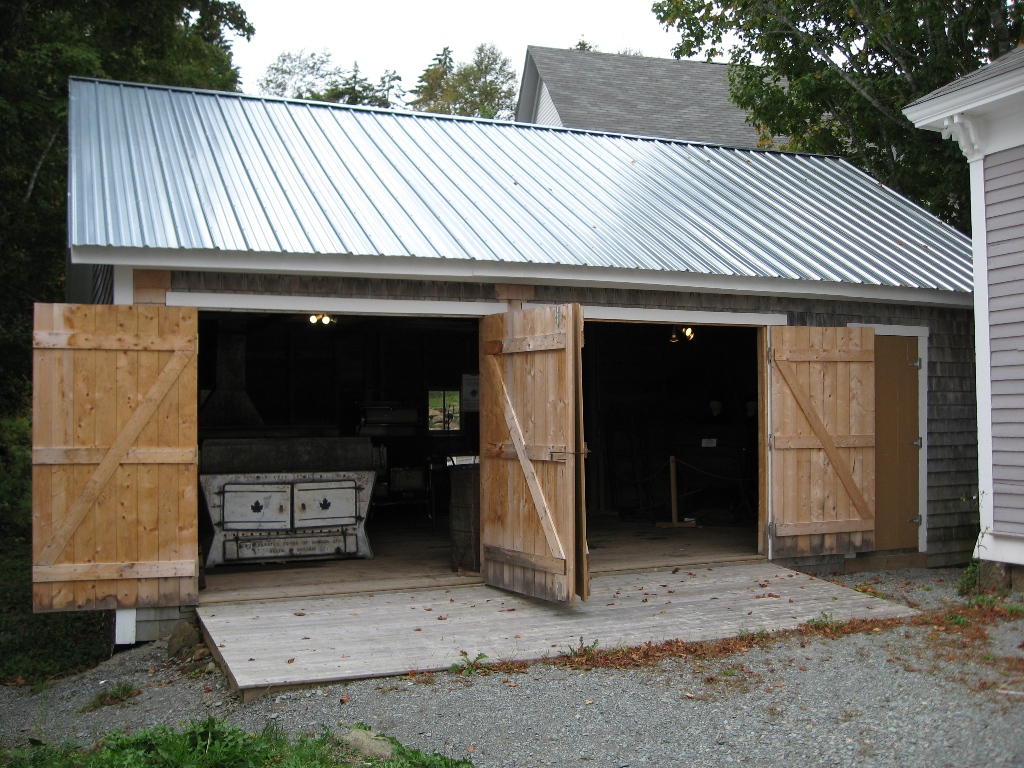
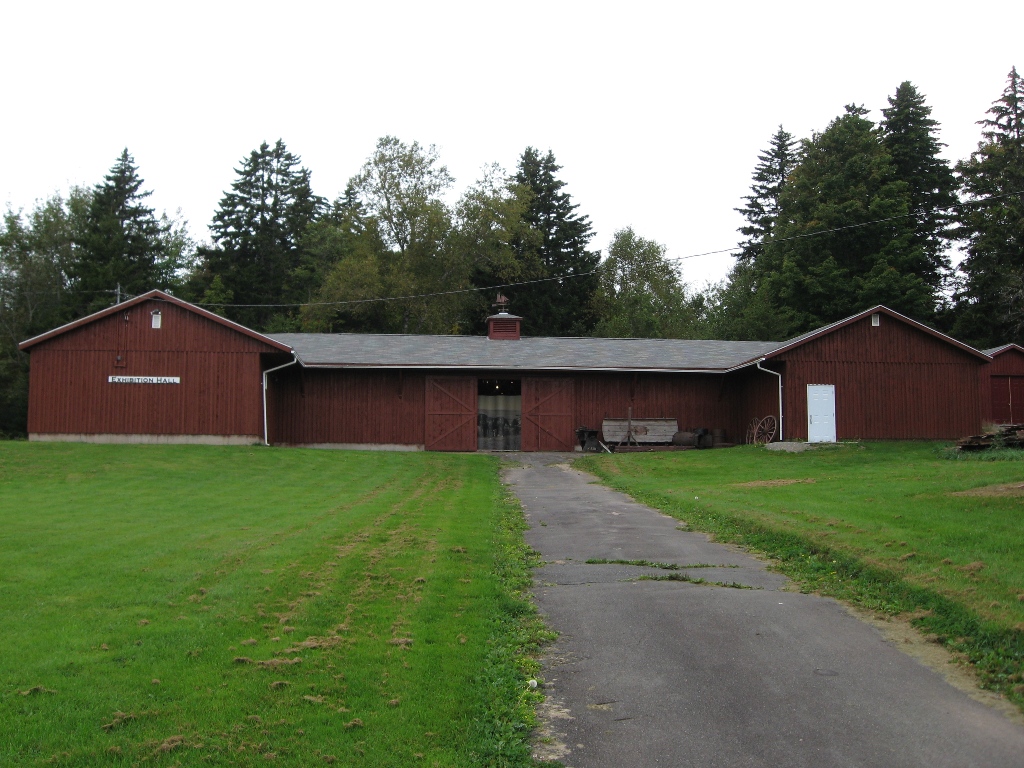
The Historical Society saw the growing need for space to properly display and interpret the industrial aspects of the county so they obtained funding over the first few years of the 1980’s to build the Exhibition Hall. It was built in three stages with the last piece completed in 1983.
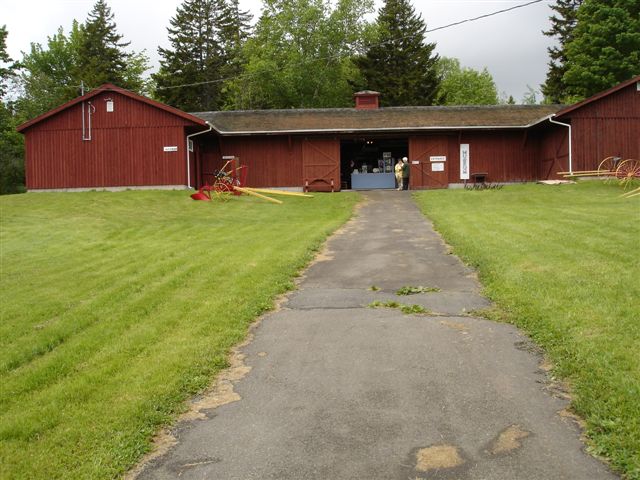
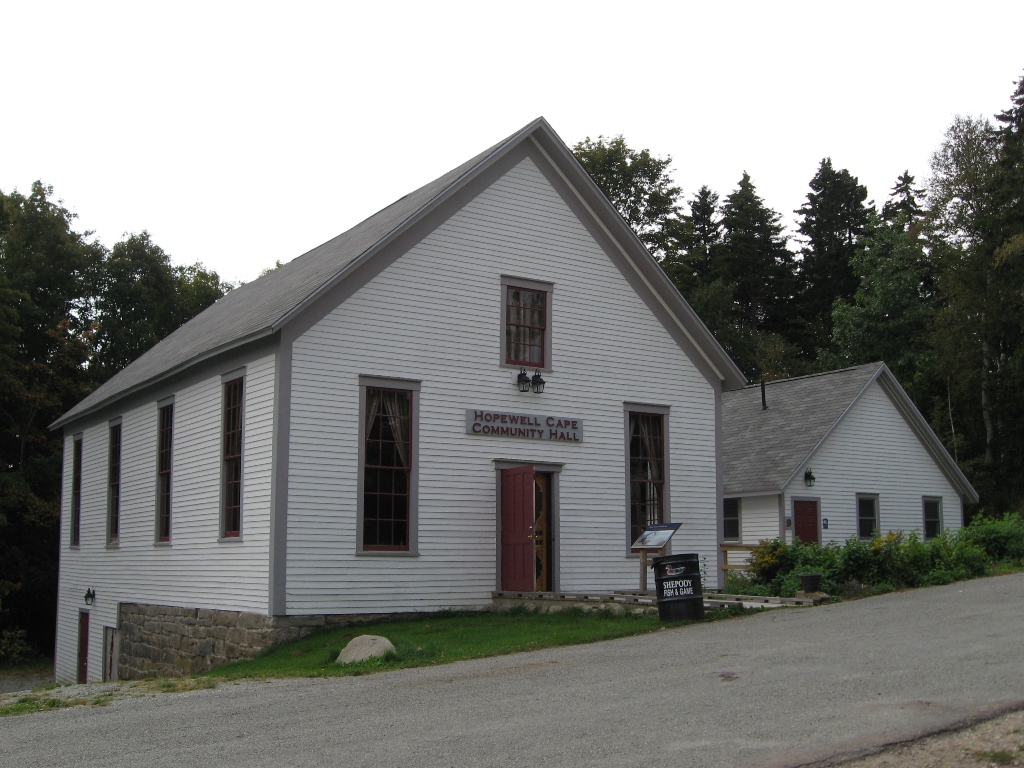
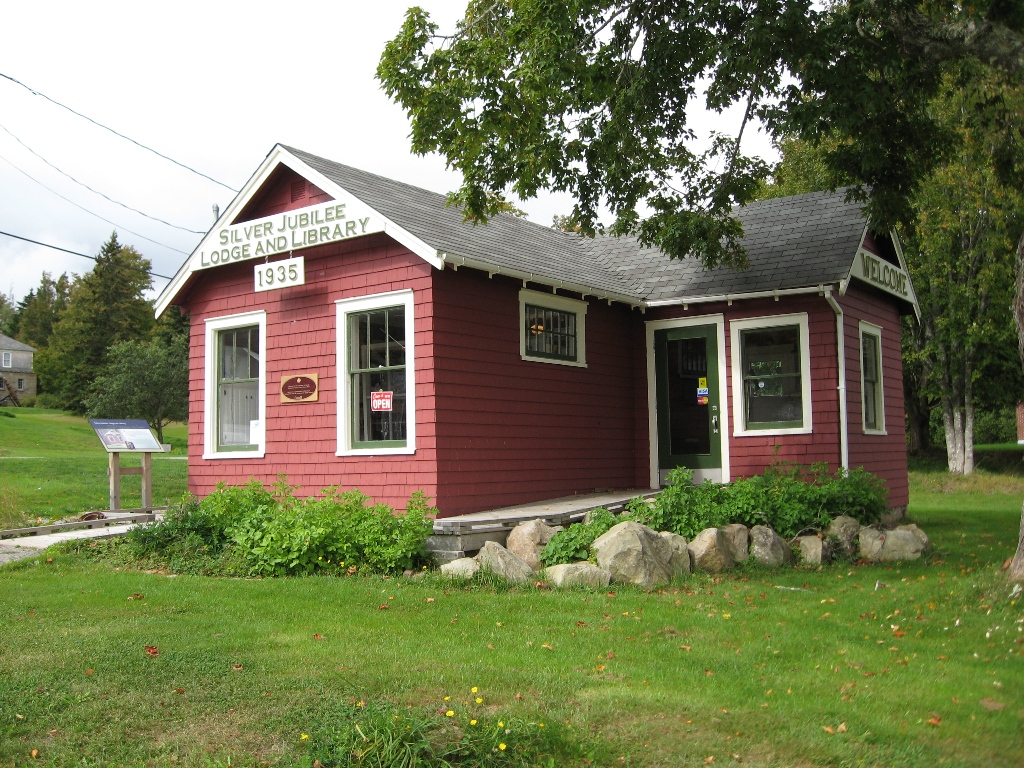
In 2003, the boards of directors for the Hopewell Cape Community Hall and the Silver Jubilee Lodge & Library both decided to merge with the Historical Society in the hope of being able to preserve the buildings.
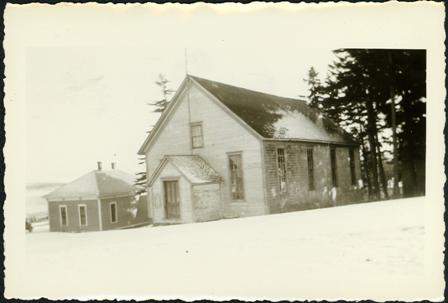
After several years of effort the Historical Society was finally able to secure funding for an entire site redevelopment in 2007. Over the next 3 years the $1.4 Million project saw all of the buildings refurbished. In 2010 the revitalized Albert County Museum was officially opened. It now consists of eight buildings featuring 22 themed galleries that tell the stories of “The People of the Tides” – the human and industrial history of Albert County.
The Symbols of New Brunswick
I was putting up the red ensign flag on top of the Court House today and realized something about it didn’t correspond to the information I had been told recently about the New Brunswick flag. To make this bizarre brainwave connection that occurred in my head easier to follow, I should back up a little and provide some background information.
The province of New Brunswick declared February 9 to 16, 2015 to be Heritage Week. The theme this year was “Hope Restored”, which is the English translation of the provincial Latin motto “Spem Reduxit.” 2015 marks the 50th anniversary of the proclamation of the national flag of Canada and the unveiling of the flag of New Brunswick. The poster for Heritage Week this year incorporates both the motto and flag.

Our provincial flag, unveiled in 1965, bears the unique ship atop blue and white waves and a yellow lion on a red background. These symbols also represent New Brunswick in the crest on the red ensign that was the flag of Canada from Confederation in 1868 until 1921. The dates don’t match up! So what’s the story?

Never wanting to let an educational opportunity pass by my son, I decided to ask him. He set upon the task and with his skills as a teenager and access to the internet he came back to me with the answer in less than three minutes.
The symbols depicted on the flag are taken from the Coat of Arms assigned by Royal Warrant of Queen Victoria on May 26, 1868. They are a gold lion on a red field across the top and an ancient galley with its oars in action across the base.
With a little more digging I found a bit more information about the origin of these symbols. In his book The Flags of Canada, Alistair B. Fraser states: “Many symbols of New Brunswick date from the arrival of the Loyalists in 1783 and its establishment as a separate colony in 1784. The great seal deputed to the new colony the following year bore the motto Spem Reduxit and an illustration of a ship, both of which spoke of the Loyalists' journey to return to life under the British crown.
By the time New Brunswick entered Confederation as one of the founding provinces in 1867, the symbol of the ship had taken on an additional meaning. The province now boasted a significant ship-building industry, so when arms were assigned in 1868 a conventional heraldic ship, or lymphad, was placed on them in apparent acknowledgment of this. The shield of arms also bore a golden lion identical to one of the royal lions of England, but with the possibly additional allusion to the same lion found on the arms of the German Duchy of Brunswick (at the time ruled by King George III), after which the province was named.
In 1870, the arms of New Brunswick were officially incorporated into not only the badge on the flag of the lieutenant-governor, but also on the quartered badges on the governor general's flag and the Canadian Blue Ensign. It also appeared unofficially on the Canadian Red Ensign until that too was approved in 1892.”
So now I understand why the symbols from the relatively new provincial flag also appears on the much older red ensign that flies proudly on top of the Albert County Court House.
On a side note, my son and I proceeded to discuss the fact that the symbols of New Brunswick include elements that are English, Scottish and German, but not French. Interesting.
It was this day 100 years ago that John McCrae Wrote his Immortal Poem
It was this day 100 years ago that Canadian physician Lieutenant Colonel John McCrae wrote his immortal peom. He was inspired to write it on May 3, 1915, after presiding over the funeral of friend and fellow soldier Alexis Helmer, who died in the Second Battle of Ypres. According to legend, fellow soldiers retrieved the poem after McCrae, initially dissatisfied with his work, discarded it. "In Flanders Fields" was first published on December 8 of that year in the London-based magazine Punch.
It is one of the most popular and most quoted poems from the war. As a result of its immediate popularity, parts of the poem were used in propaganda efforts and appeals to recruit soldiers and raise money selling war bonds. Its references to the red poppies that grew over the graves of fallen soldiers resulted in the remembrance poppy becoming one of the world's most recognized memorial symbols for soldiers who have died in conflict.
“In Flanders fields the poppies blow
Between the crosses, row on row,
That mark our place; and in the sky
The larks, still bravely singing, fly
Scarce heard amid the guns below.
We are the Dead. Short days ago
We lived, felt dawn, saw sunset glow,
Loved and were loved, and now we lie
In Flanders fields.
Take up our quarrel with the foe:
To you from failing hands we throw
The torch; be yours to hold it high.
If ye break faith with us who die
We shall not sleep, though poppies grow
In Flanders fields.”
Now that's a story worth sharing!
The Victory Cannon Campaign is raising funds to restore the two captured World War One cannons that sit in Hopewell Cape. These cannons were captured by Canadians during the Great War, and were awarded to the people of Albert County. You can donate online to the Victory Cannon Campaign here, and best of all you'll be sent a tax receipt! Click Here to Donate!