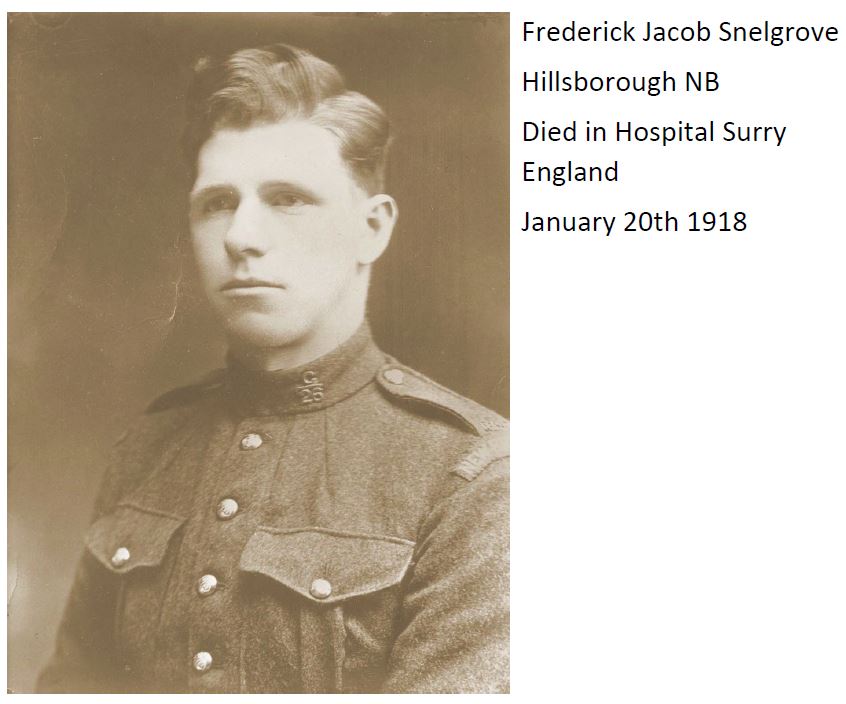
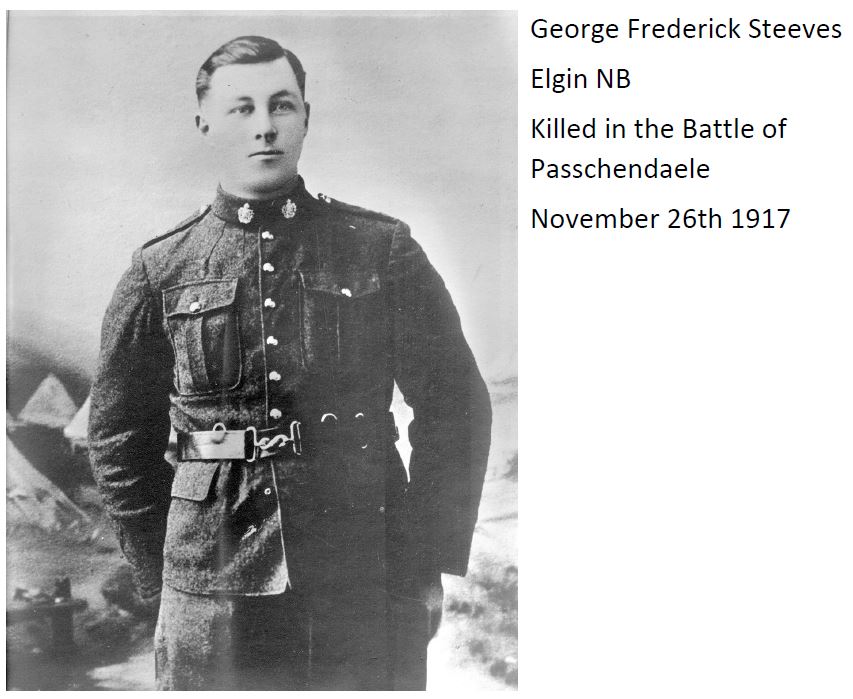
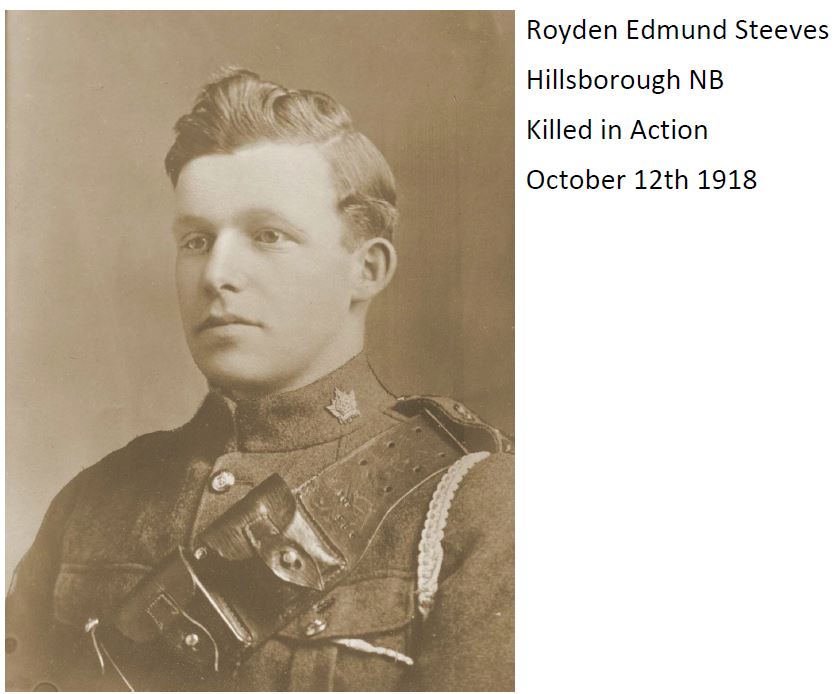
Did you hear the News? 250th Anniversary Steeves Family Reunion Record Breaking Attempt

The history of Albert County would not be the same without the Steeves Family and in 2016 there is a HUGE reunion planned for the 250th Anniversary of the family arriving in New Brunswick. With an estimated 300000 descendants of the original family scattered around the world the organizers are hoping to attract over 10000 of them to the reunion to set a Guiness Book of World Records for the most people with the same last name in one place at one time record. And in case you missed it, it's all over the news!

Global News Maritimes just did a nice report on it here. Click here to view. 

The official  website with all the action can be found here. 

If you want to learn more about the Steeves there are some excellent articles on our site already. You can search Steeves or click on the following links. 

http://www.albertcountymuseum.com/heinrich-regine-steif

http://www.albertcountymuseum.com/william-henry-steeves

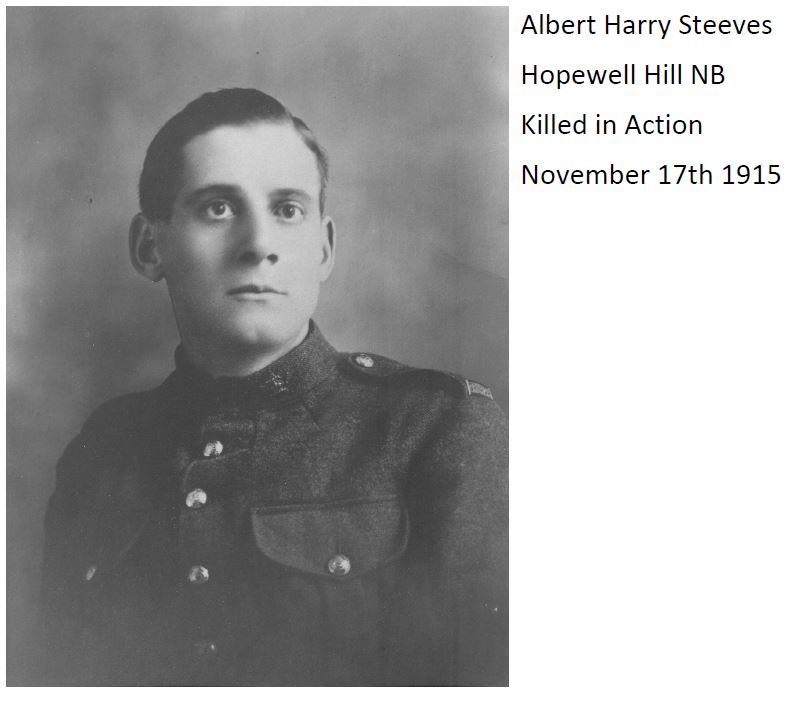
http://www.albertcountymuseum.com/news/2015/11/17/lest-we-forget-on-this-day-100-years-ago-albert-harry-steeves-was-killed-in-action-11171915


Lest We Forget - On this day 100 years ago Albert Harry Steeves was Killed in Action - 11.17.1915

Albert Harry Steeves was from Hopewell Hill, New Brunswick and was born January 7, 1892. He was the son of Mr. Judson W. Steeves. He enlisted with the 26th Battalion on November 5, 1914. He was Killed in Action in France. He is buried at the La Laiterie Military Cemetary in Belgium.

 You can find his complete service record by clicking here.

You can view his internment records here. 

You can view the 26th Battalions War Diary Entry for that day here. 

If anyone has any further information, photos or memories they would like to share please pass them along. 


The Answer is in the Search.


In our continued effort to improve our visitor experience we have just added the ability to Search the Museum's Website. If you look in the header of the site, just click on SEARCH and a new Search page will open. It's really amazing what you can find by a simple search. For example if you search Steif (the original spelling of Steeves), it brings up three different articles from the website. I encourage you to give it a try and see what amazing things we have hidden away online. 


Lest We Forget - Albert County's Honour Roll - Updated

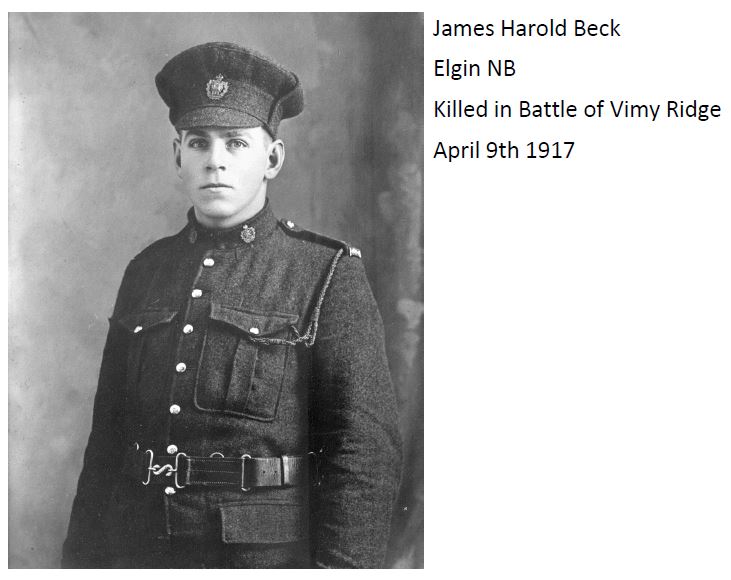
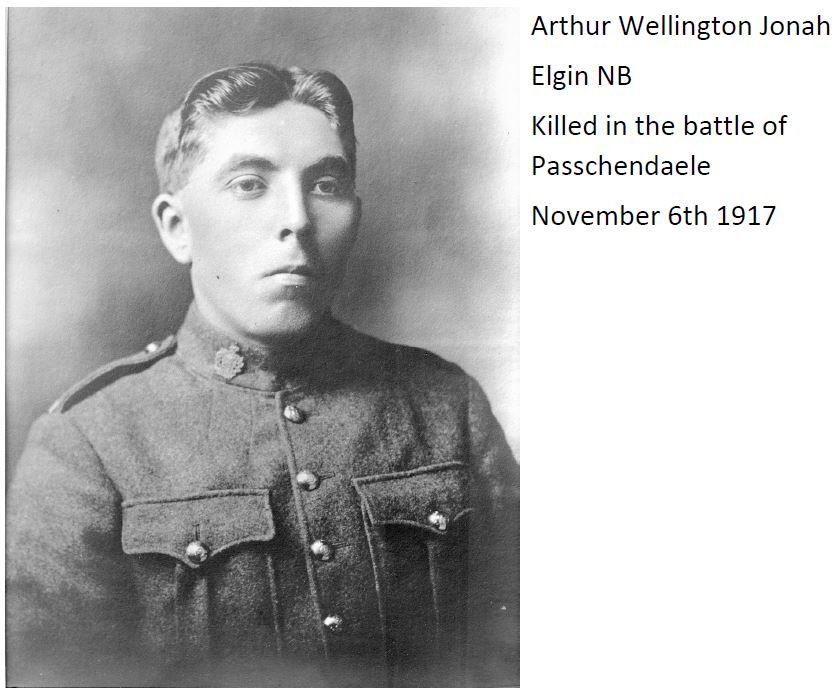
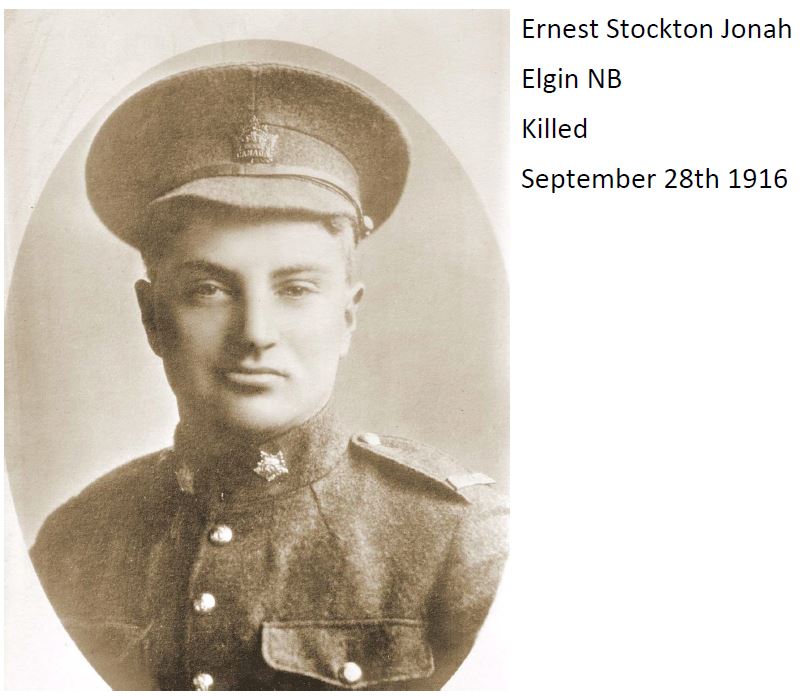
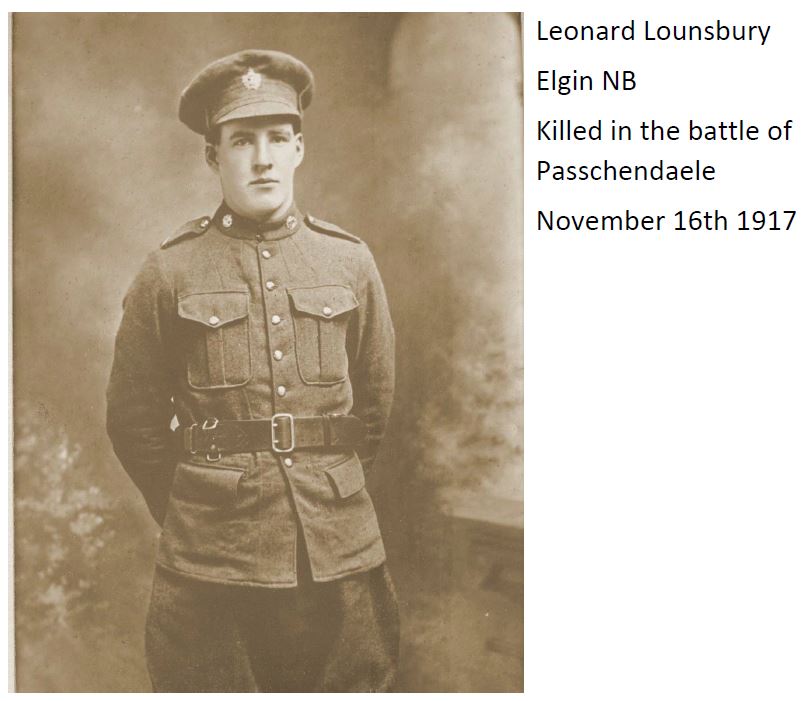
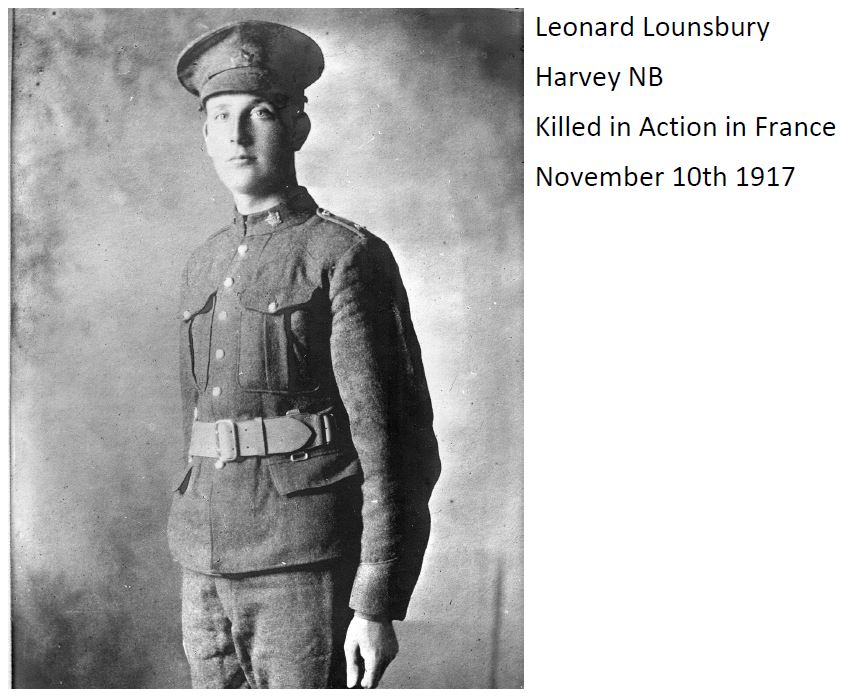
We have found two more Albert County men who paid the supreme sacrifice during the First World War. Both men from Elgin when they joined the 145th Battalion (Moncton, New Brunswick) and both fought with the 10th Battalion in France. 

Wiley Freeman Dives of Elgin, NB was killed in action July 16, 1917. 

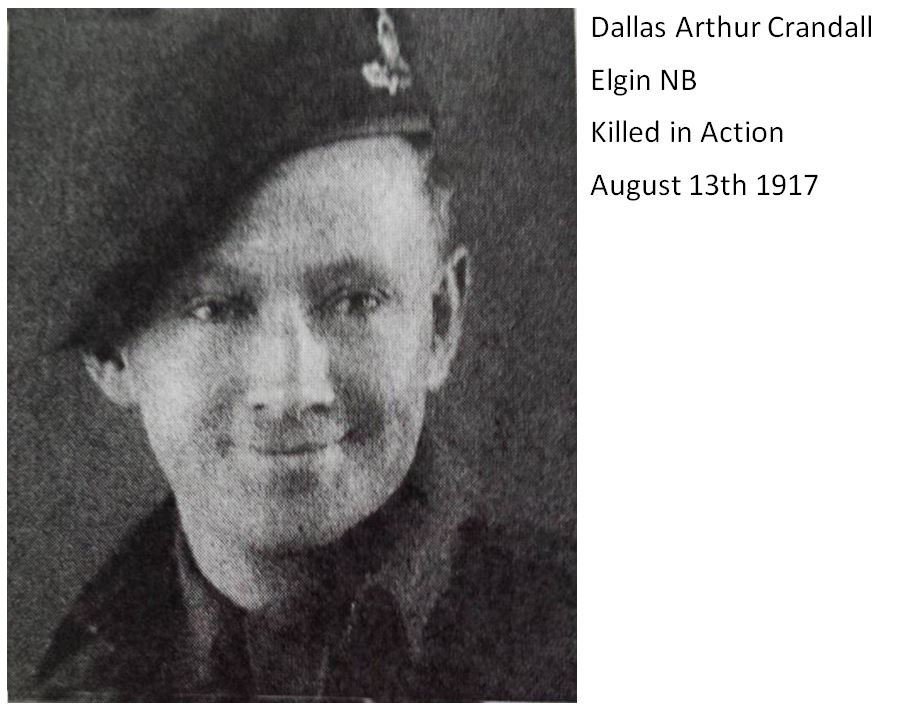
Dallas Alfred Crandall of Elgin, NB was killed in action August 13, 1917. 

The New Brunswick Connection Behind the Captured Vimy Ridge Cannon in Hopewell Cape Just Got Better

The New Brunswick connection to the First World War cannon captured at Vimy Ridge on April 9, 1917 and now found in Hopewell Cape, New Brunswick, just got better. Recent research completed on the German 105 mm K14 cannon, shows that the damage on the barrel of the cannon was probably caused by shells fired by the 4th or 6th New Brunswick Siege Batteries .

The exact location where the K14 was captured on Vimy Ridge is well documented in the war diaries of the 27th Winnipeg Battalion. In fact the diaries give the exact coordinates where the cannon was captured, and when checked against fire mission records for both NB batteries it was discovered that both New Brunswick Batteries fired heavy concentrations of 8 inch high explosive shells on those very German gun positions. Thus it is very possible that the fire that cut the gouge in the barrel was inflicted by New Brunswick's not nearly famous enough Heavy Artillery!

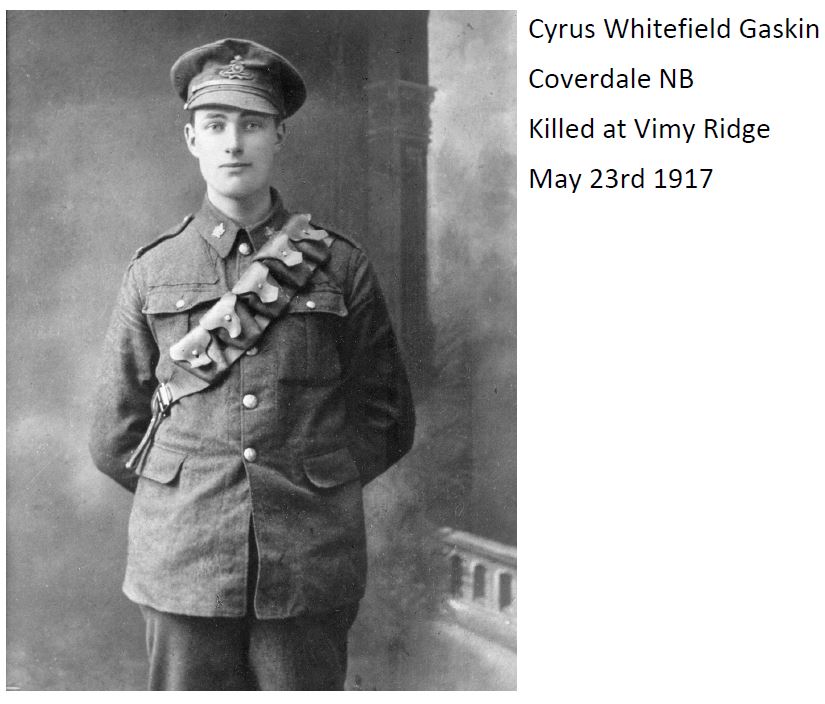
Those NB Siege Batteries were formed in Saint John and included many men from Albert County, including Cyrus Gaskin (d. April 11, 1917). Gaskin is commemorated in the museum's First World War Roll of Honour, and was killed with the 4th Siege Battery not long after Vimy Ridge was captured as the heavies moved forward to help defend it. 

The 4th and 6th New Brunswick Siege Batteries are perpetuated by the modern 3rd Field Artillery Regiment (The Loyal Company) in Saint John and Woodstock. 

The large German First World War 105 mm K14 Cannon that sits in the square in Hopewell Cape, was captured at Vimy Ridge, April 9, 1917, and won by the Citizens of Albert County during the Victory Loans Campaign of 1919 for raising the greatest percentage of monies over their set goal. The people of Albert County raised $347,000.00 tripling their goal of $110,000.00. That is a pretty impressive resume for a gun.

Now that's a story worth saving!

The Victory Cannon Campaign is raising funds to restore the two captured World War One cannons situated in the square in Hopewell Cape. These cannons were captured by Canadians during the Great War, and were awarded to the people of Albert County. You can donate online to the Victory Cannon Campaign here, and best of all you'll be sent a tax receipt!  Click Here to Donate!
 
This information was provided to us thanks to a joint research project between The Gregg Centre for the Study of War and Society at the University of New Brunswick and 3rd Field Artillery Regiment, RCA (The Loyal Company). The complete findings of this research project will be published in 2016 as a book tentatively titled “Loyal Gunners: A History of 3rd Field Artillery Regiment (The Loyal Company and New Brunswick’s Artillery, 1893-2012.” Once it is published we’ll do a Blog on it.

The Sparks Were Flying in Hopewell Cape this Week!

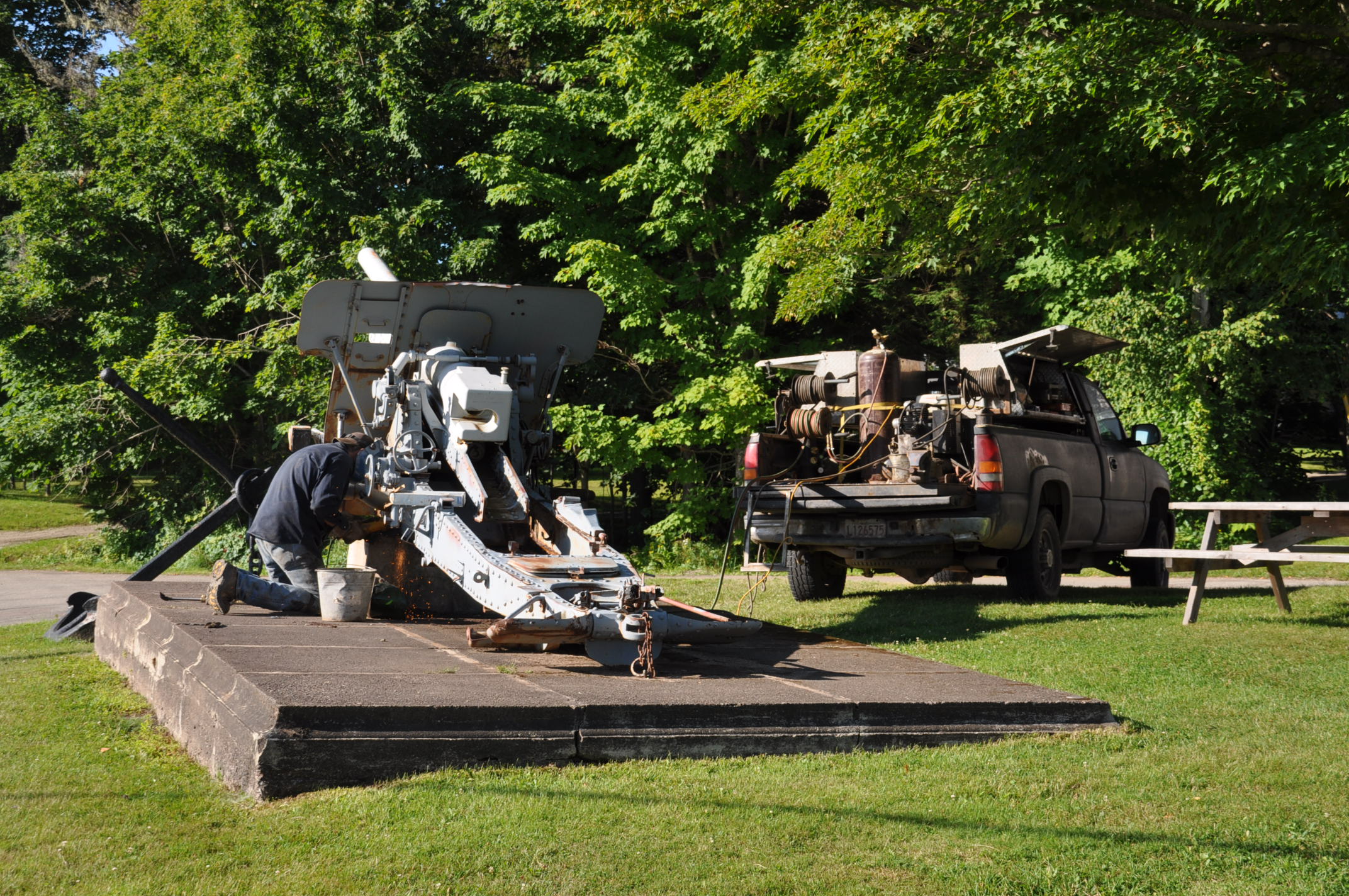
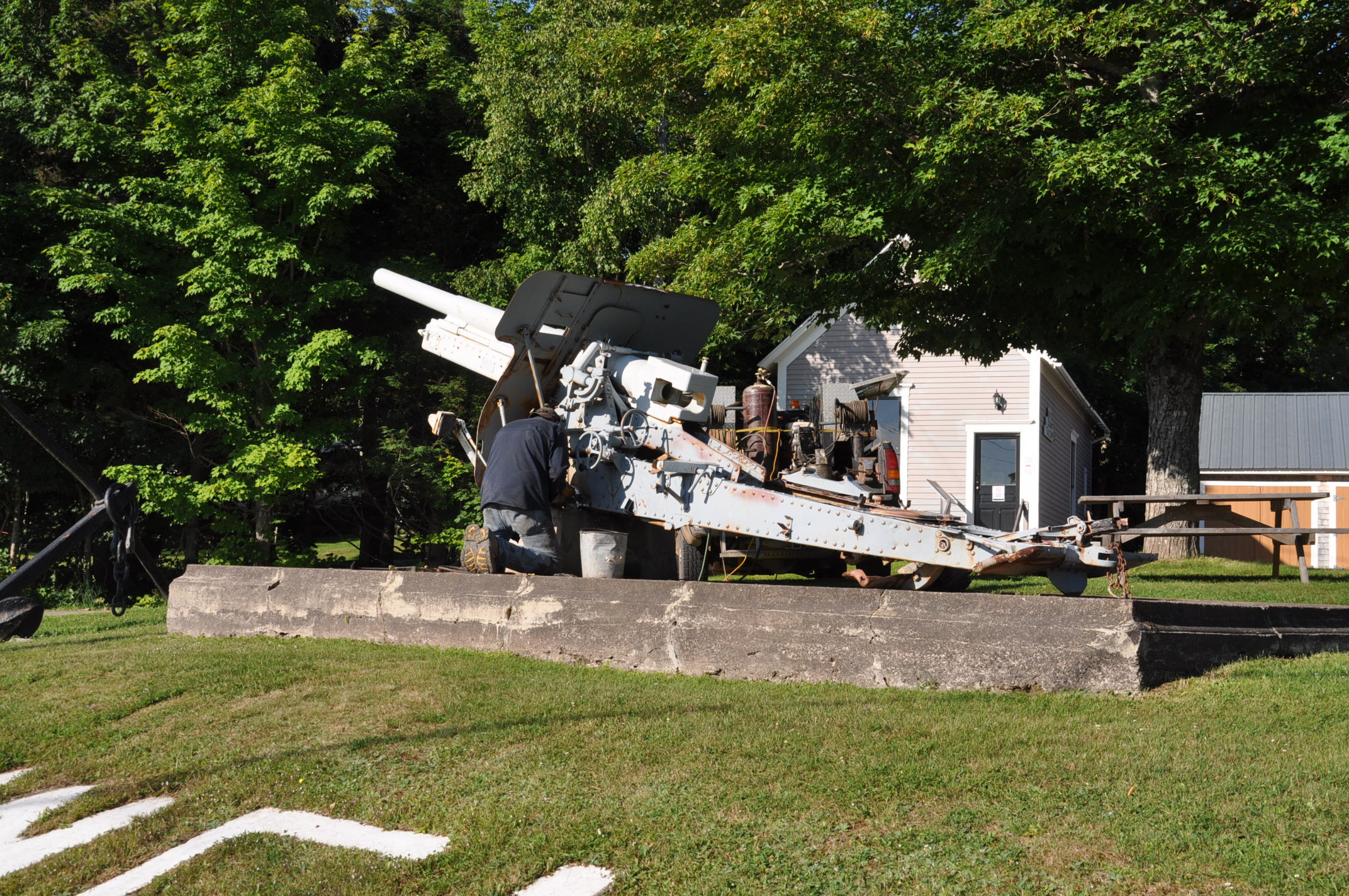
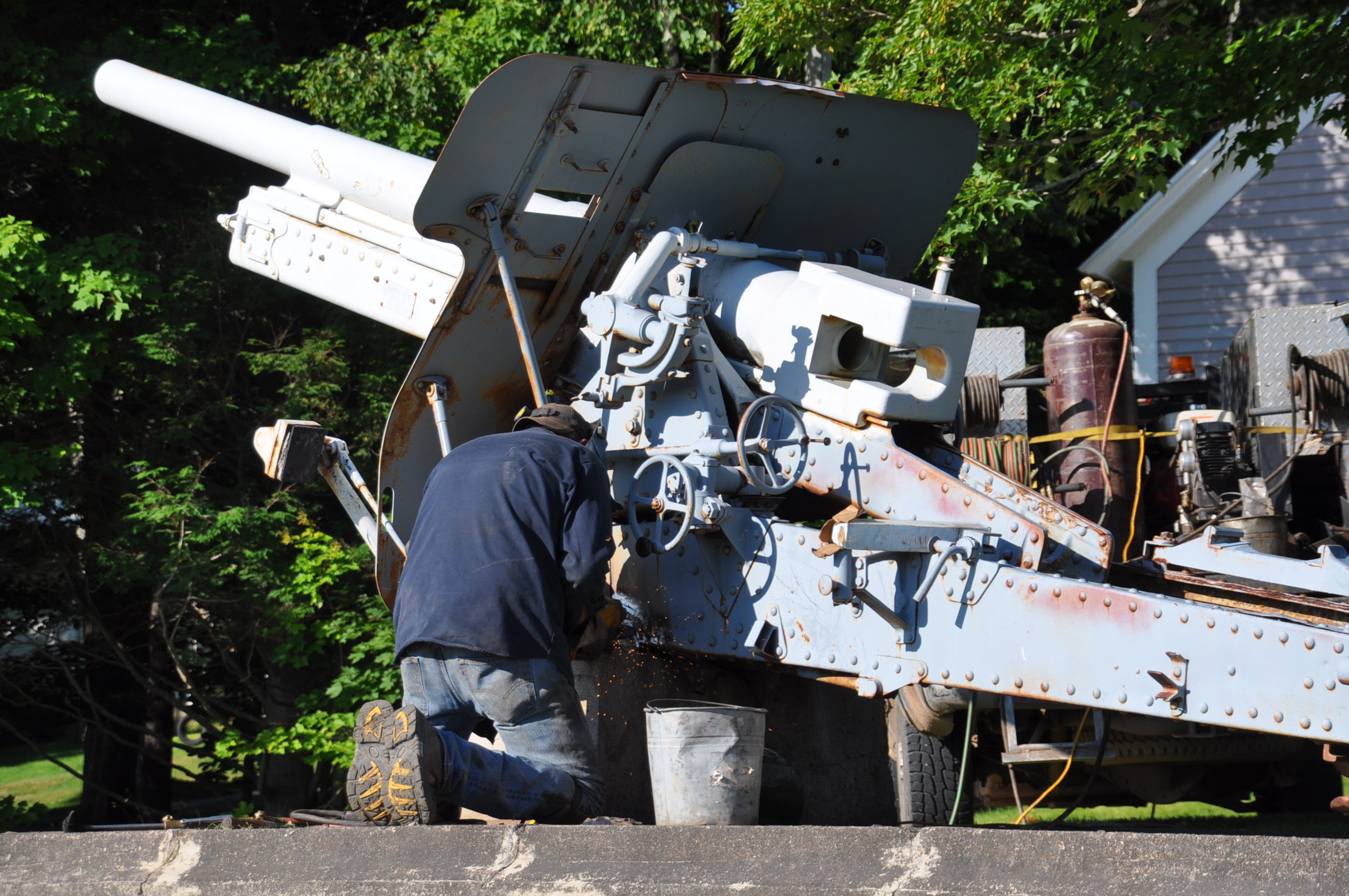
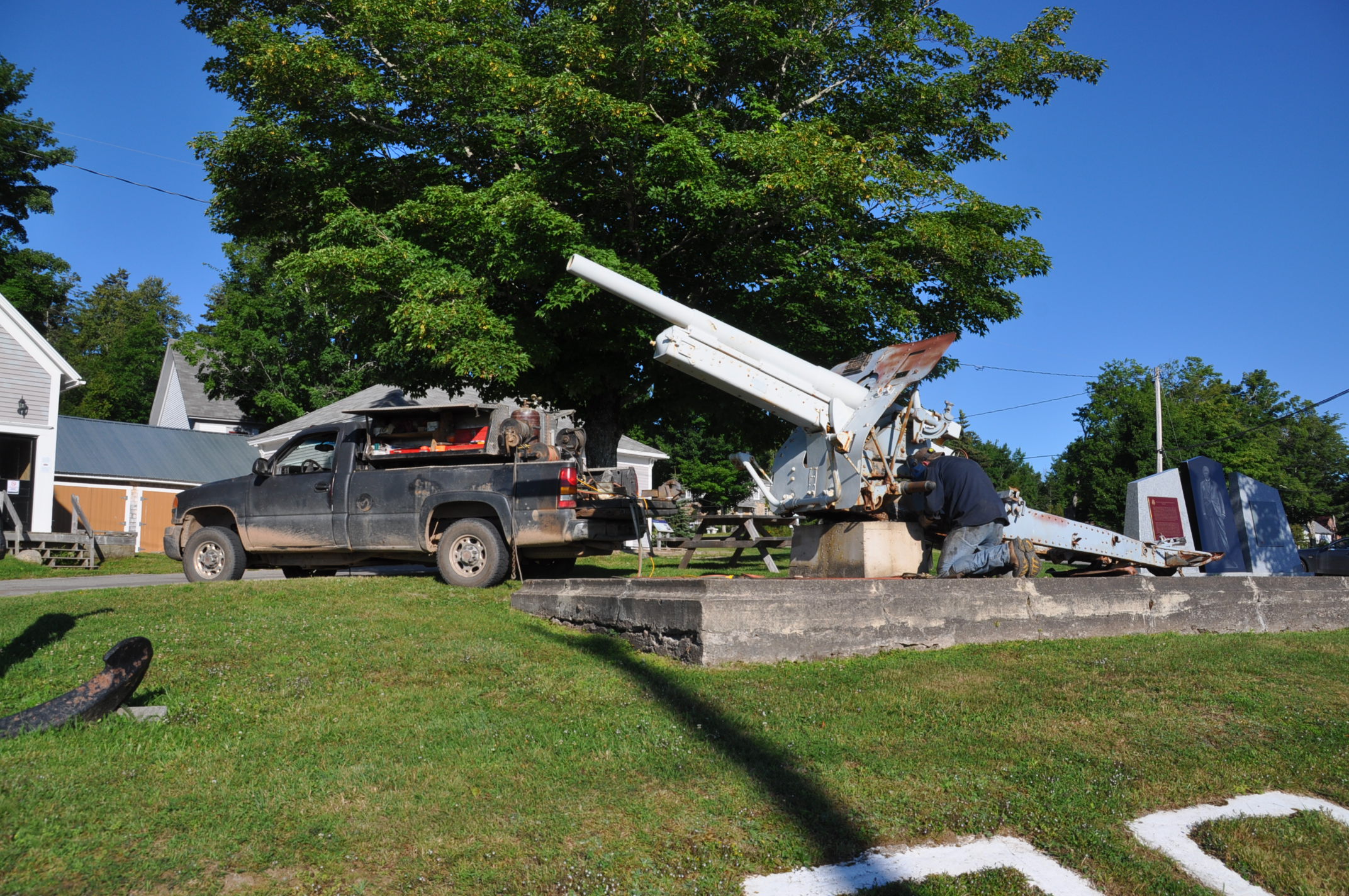
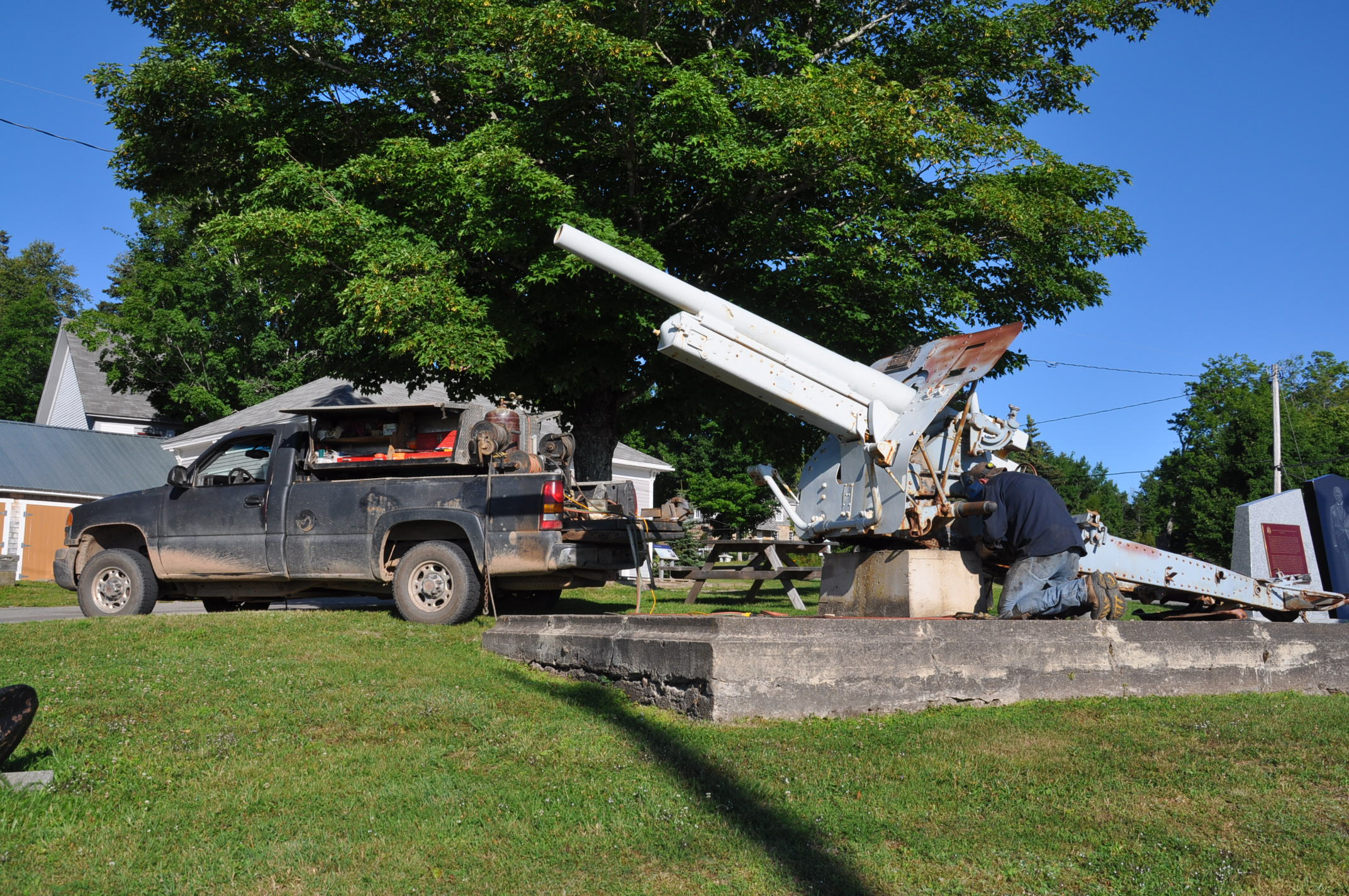
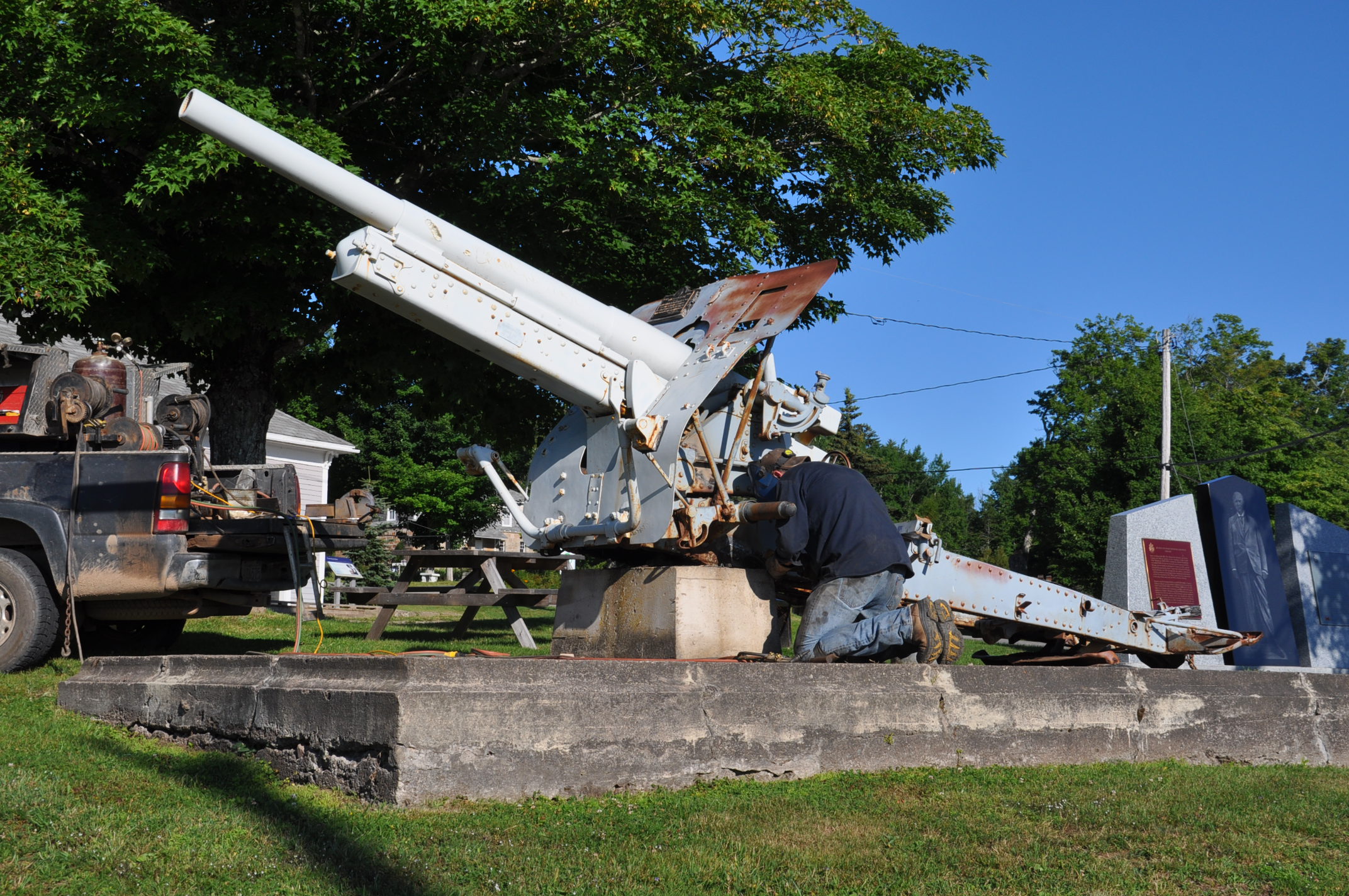
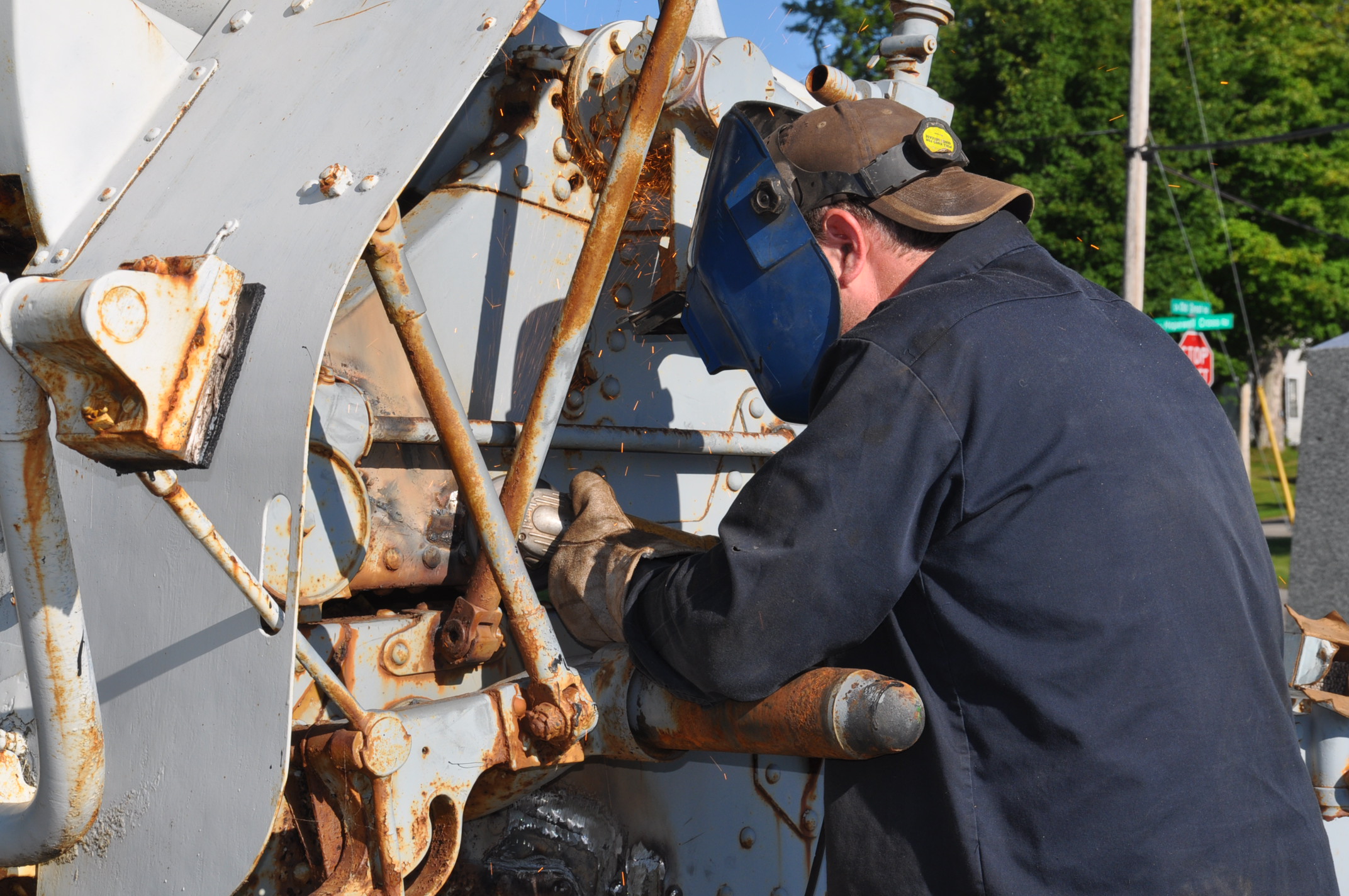
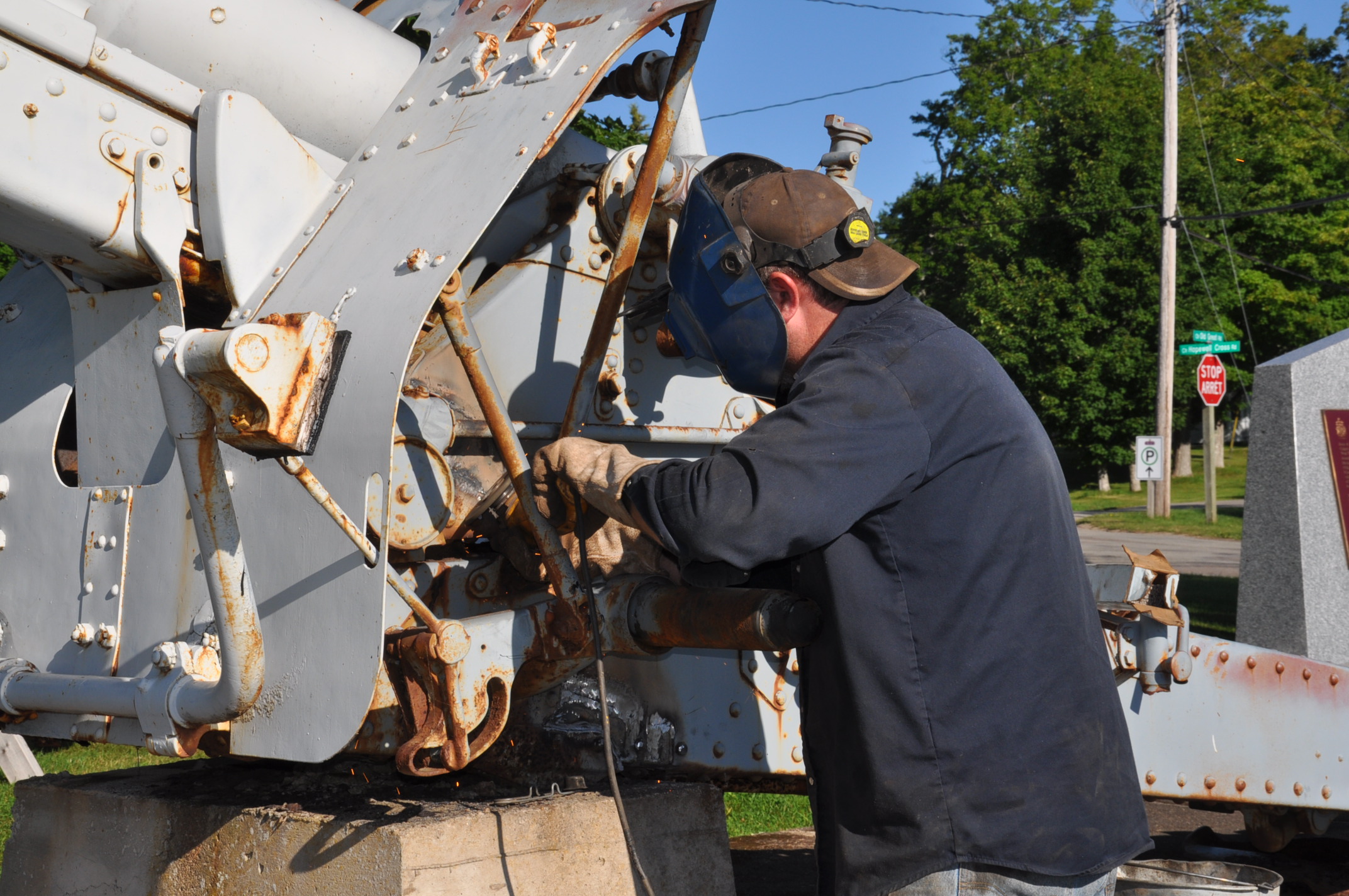
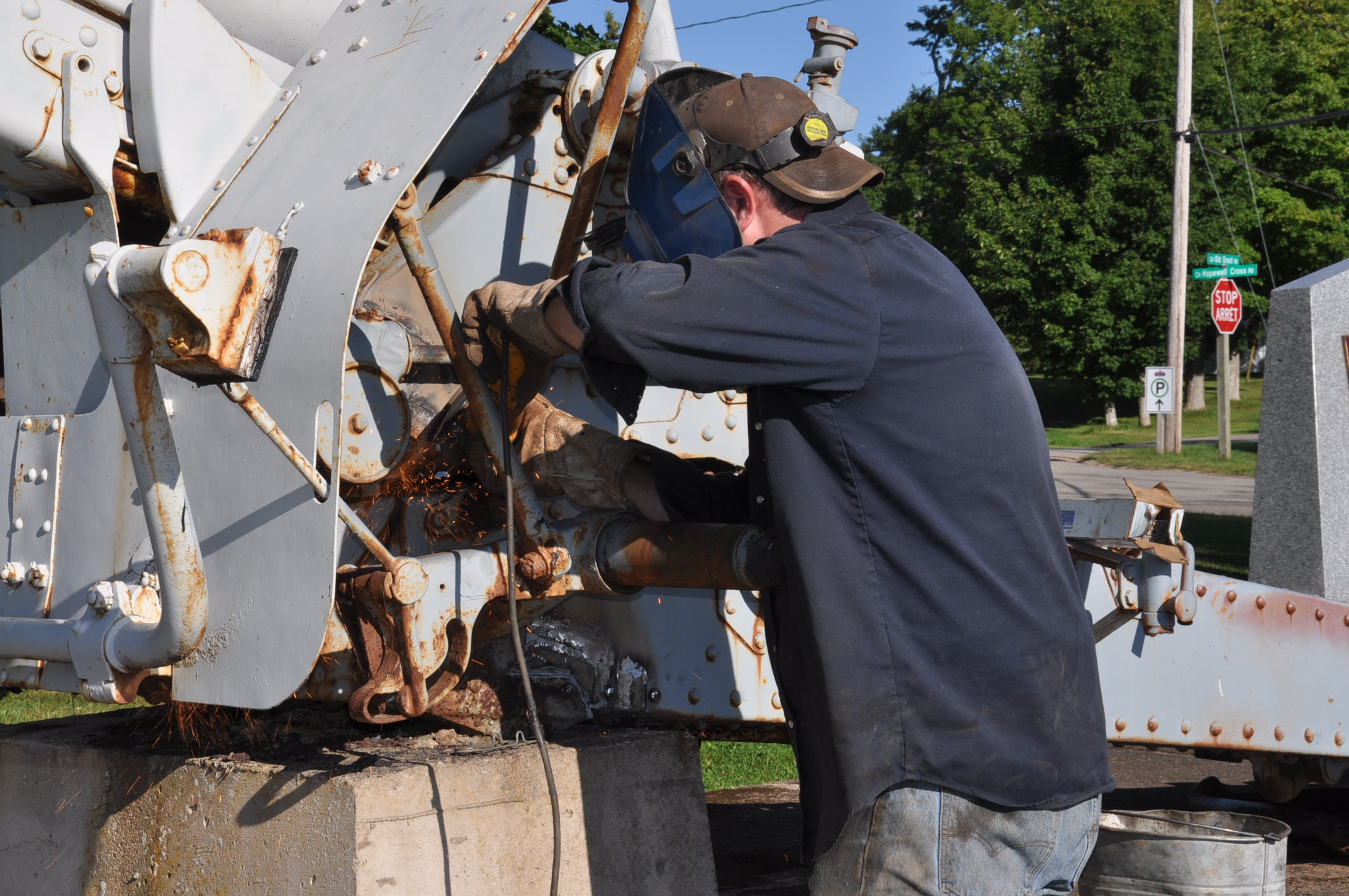
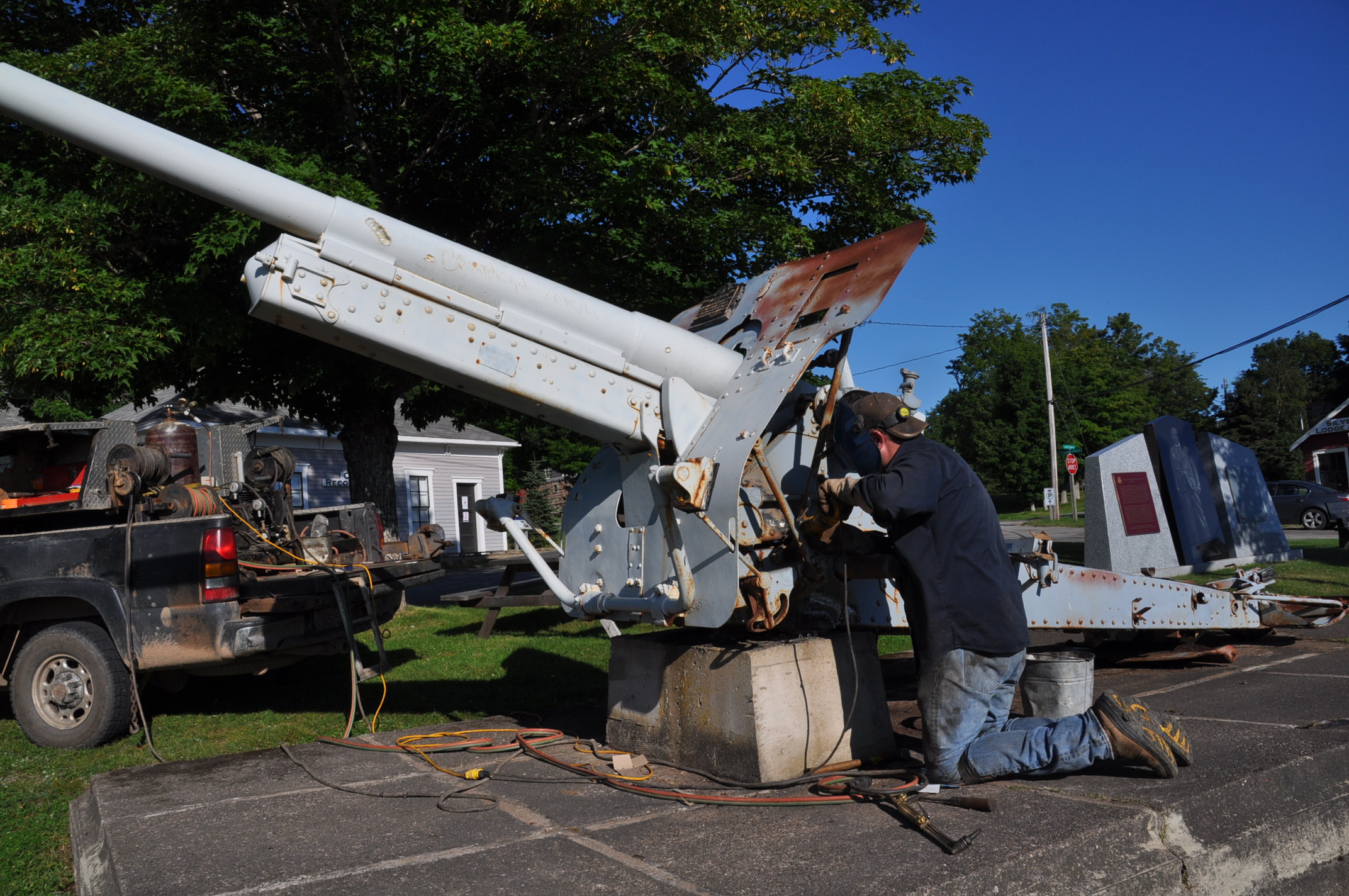
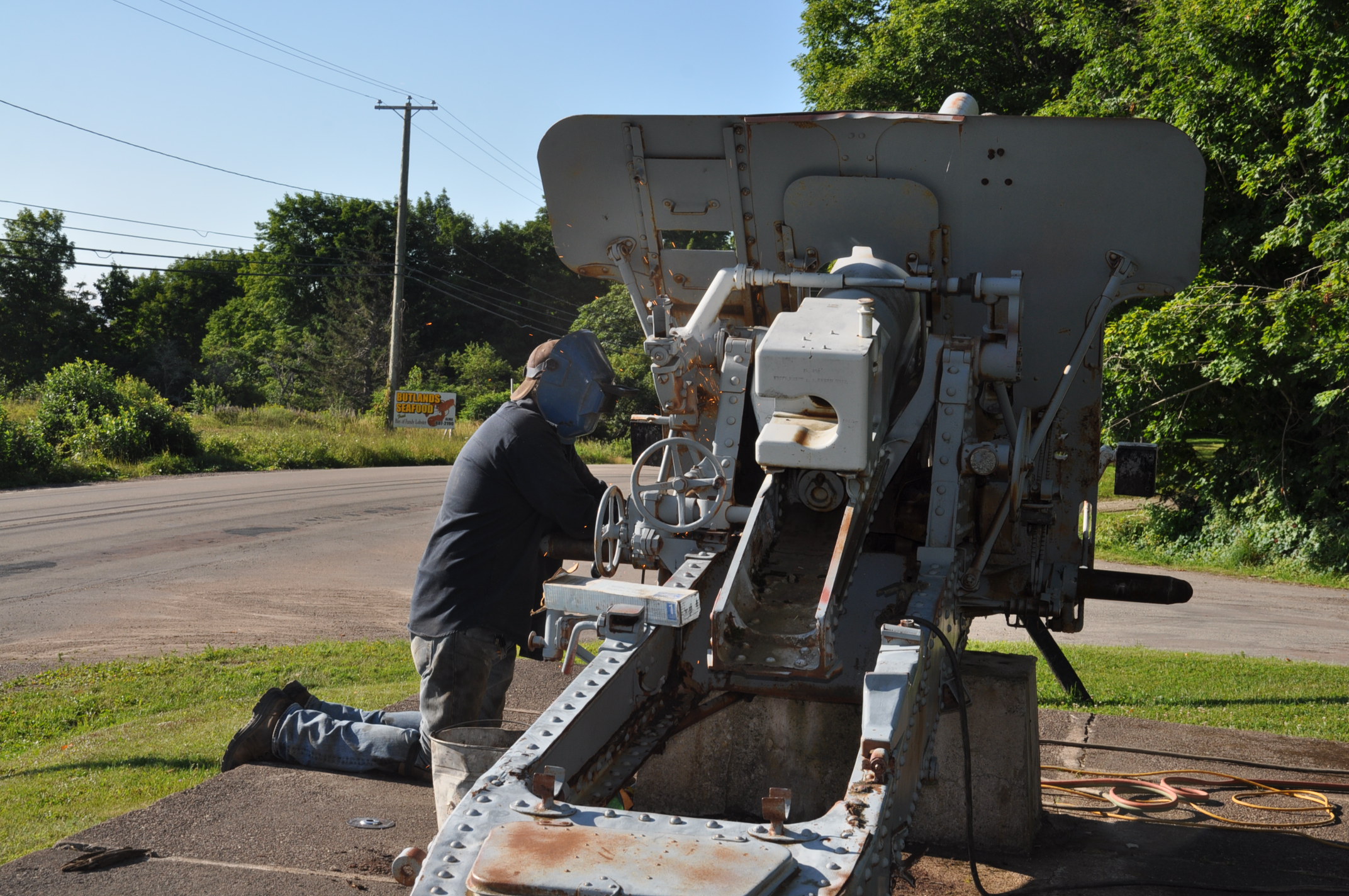
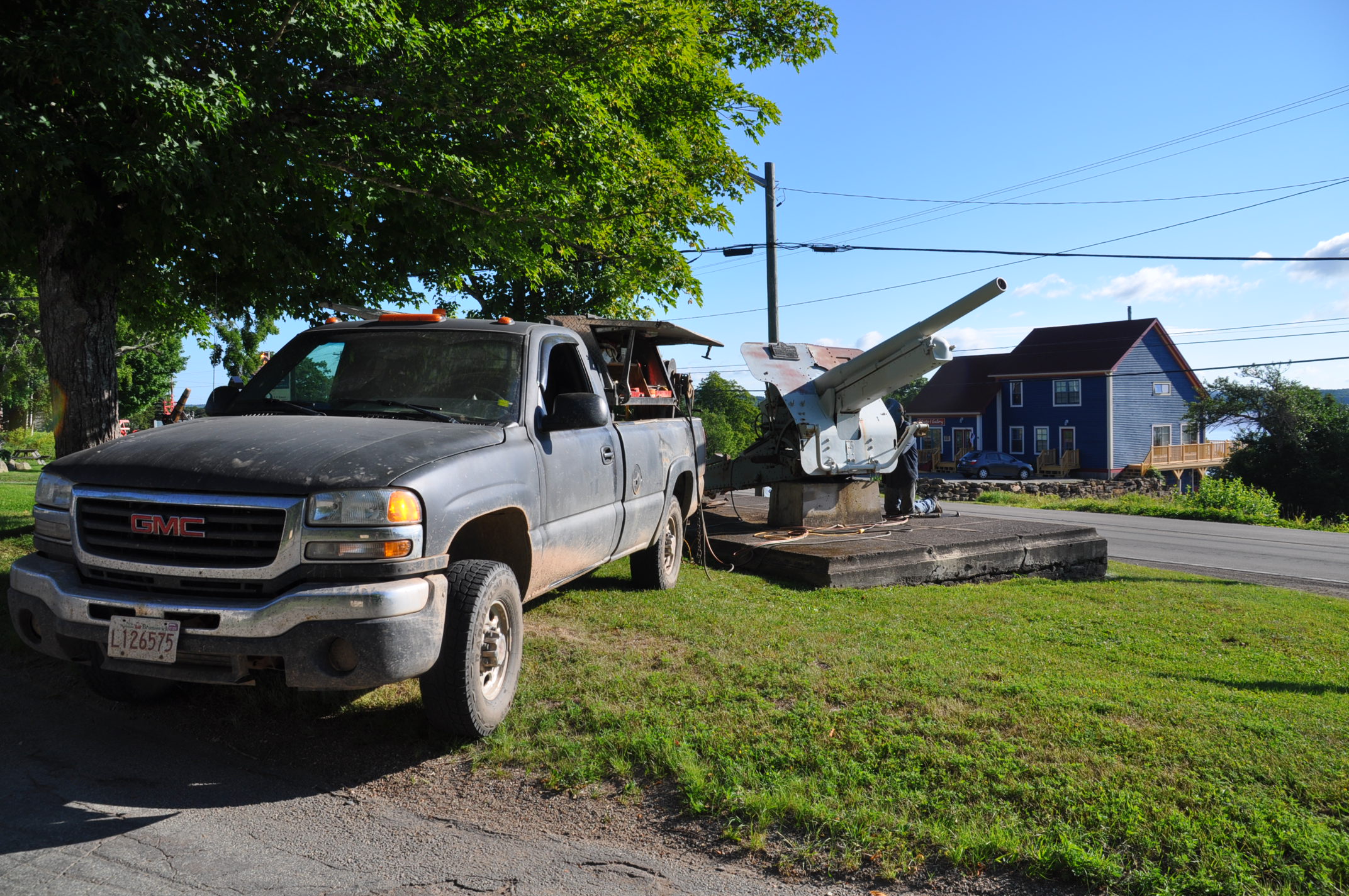
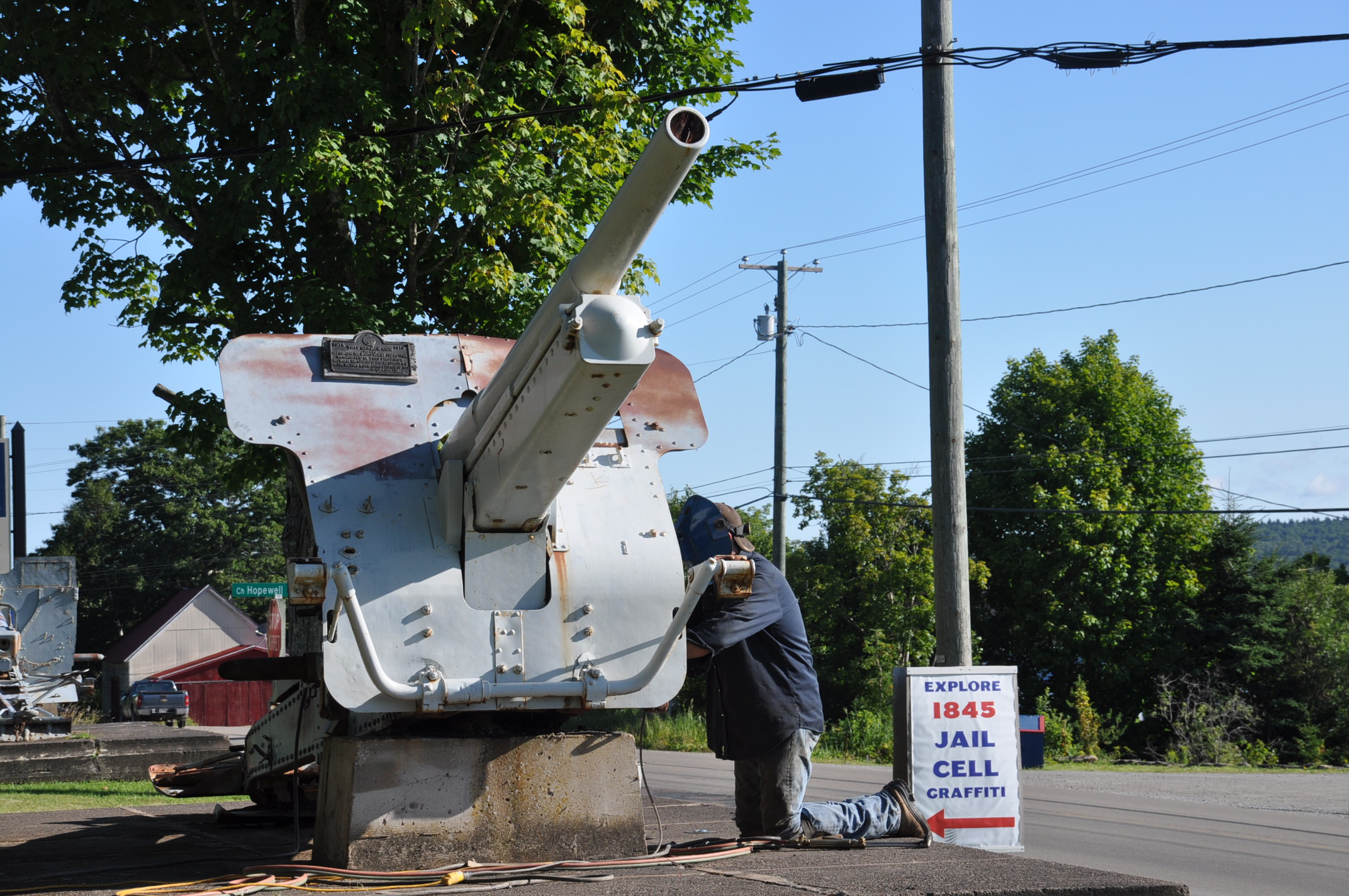
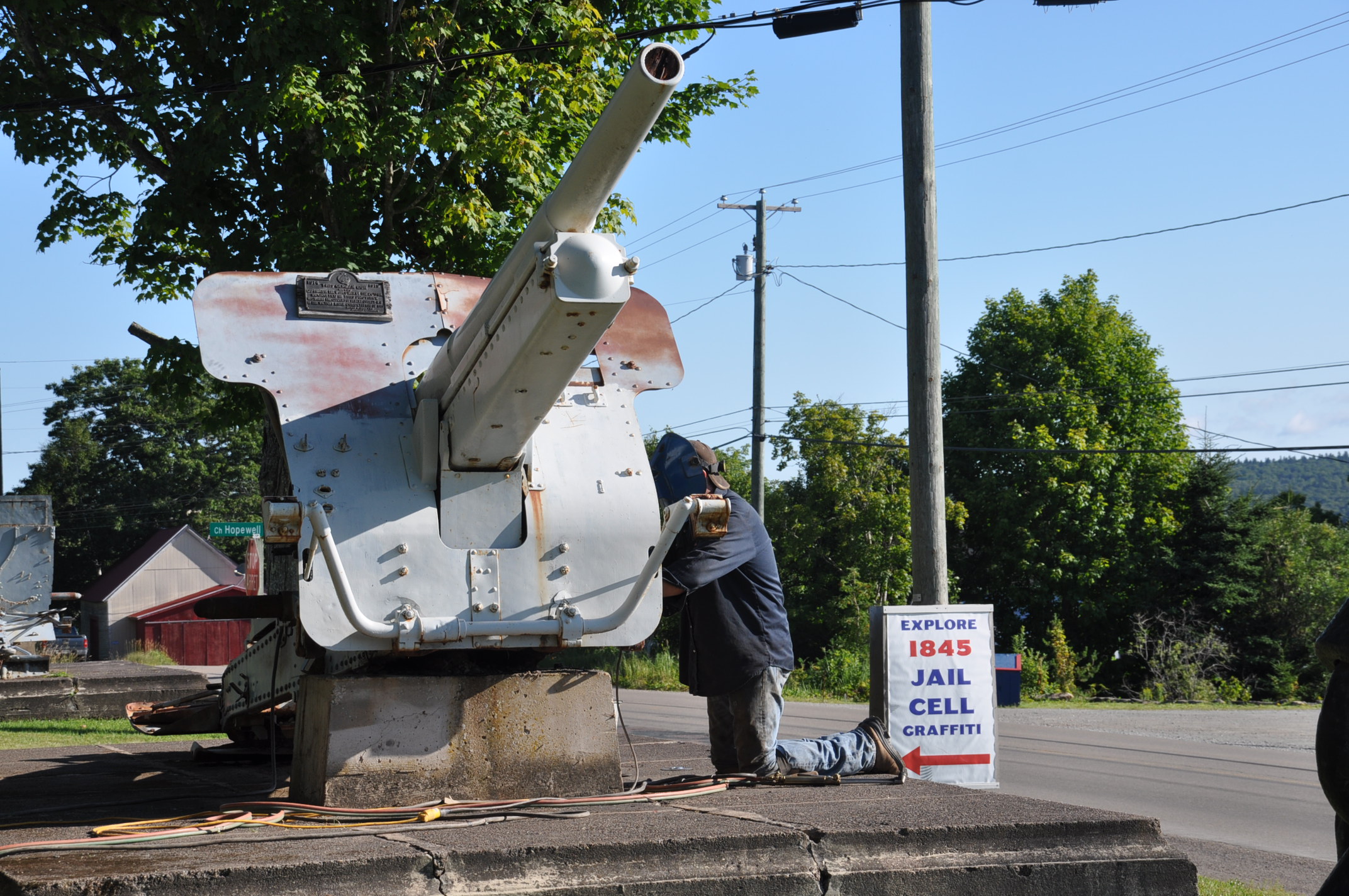
If you were driving through Hopewell Cape this Thursday, you would have seen the sparks flying around the large German First World War Cannon as repairs were made to its metal work.  The almost 100 years sitting in the square in Hopewell Cape were not the kindest to the large cannon, with considerable rust and corrosion around the base of the cannon where it rests on the concrete pillar. 

Thankfully we have local expertise to take care of that, Todd Steeves of TP Downey & Sons (Hillsborough) was able to come to the museum and make the necessary repairs without having to move the cannon. It is fantastic that we were able to find someone local with the skills and equipment necessary to do the job right so that it lasts another 100 years.

Todd replaced the center brace and carriage bolts, the 2 brackets above center brace, and fixed the  holes on side of cannon facing the road. When asked how the work went, Todd said, "The metal is a bit soft but with proper paint the metal should last another hundred years."

The large 10.5 Cm K14 German Cannon was captured at Vimy Ridge, April 9, 1917, and was won by the Citizens of Albert County during the Victory Loans Campaign of 1919 for raising the greatest percentage of monies over their set goal. They raised $347,000.00 tripling their goal of $110,000.00. Pretty impressive for a county of less than 10000 people!

Next on the list of repairs are the concrete pads!

Now that's a story worth saving!

The Victory Cannon Campaign is raising funds to restore the two captured World War One cannons situated in the square in Hopewell Cape. These cannons were captured by Canadians during the Great War, and were awarded to the people of Albert County. You can donate online to the Victory Cannon Campaign here, and best of all you'll be sent a tax receipt!  Click Here to Donate!


Commemoration of 100 Years to the Day Sailing of the 26th NB Battalion a ROARING Success!

Commemoration of 100 Years to the Day Sailing of the 26th NB Battalion a ROARING Success!

The Albert County Museum's 100th Anniversary Commemoration of the Sailing of the 26th Battalion on June 13, 1915 took place this past Saturday (June 13th, 2015) - 100 years to the day the Battalion sailed to England and war. Read more...

PARADE! PARADE! PARADE! THIS SATURDAY, JUNE 13 - 2-5:30 PM - 100 YEARS 26th NB BATTALION CEF - HOPEWELL CAPE, NB

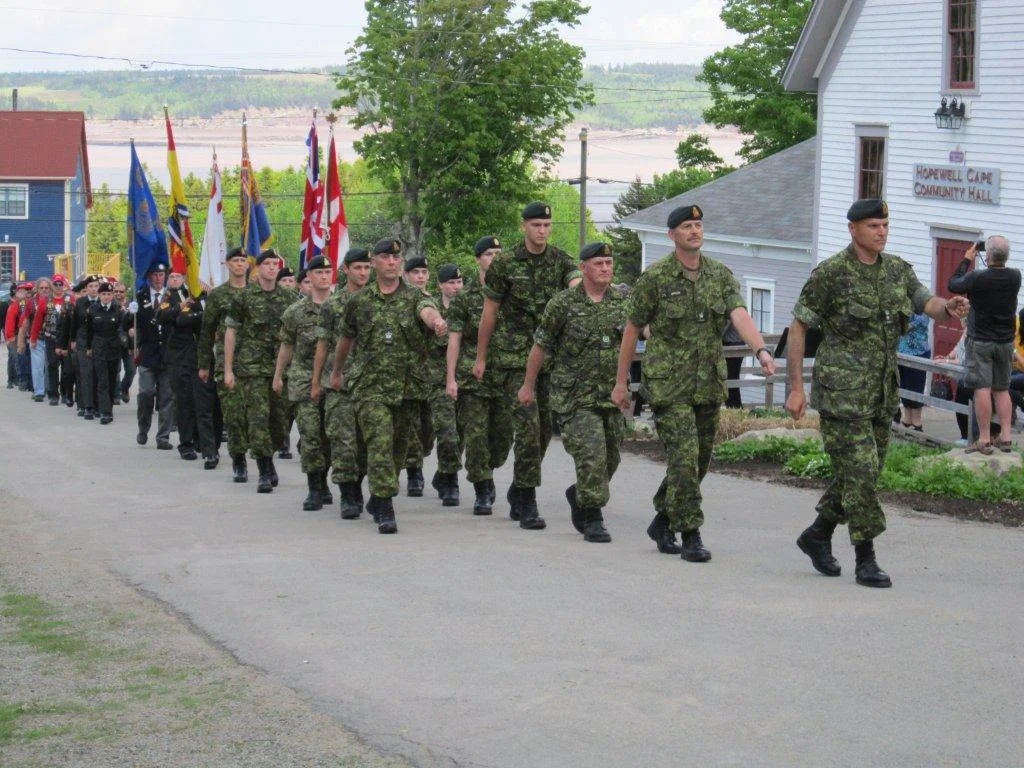
Did I say PARADE? This Saturday (June 13) at the Albert County Museum featuring the Royal New Brunswick Regiment, the RCMP Pipes and Drums, the Royal Canadian Legion Branch 32, the Riverview Veteran's Association,  the 560 Moncton Army Cadets and others; in a COLOUR PARADE - Commemorating the Sailing of the 26th New Brunswick Battalion 100 Years-to-the-Day, June 13, 1915. The events begin at 2:00 pm with a General Call to Assembly, followed by presentations on the 26th New Brunswick Battalion, known as the Fighting 26th and continues until the highlight of the day, the Colour Parade at 4:15 pm (sharp).

SPECIAL SURPRISE EVENT TO START PARADE!

PLEASE SHARE! INVITE EVERYONE!

For more details call the museum 506-734-2003, or click here. 


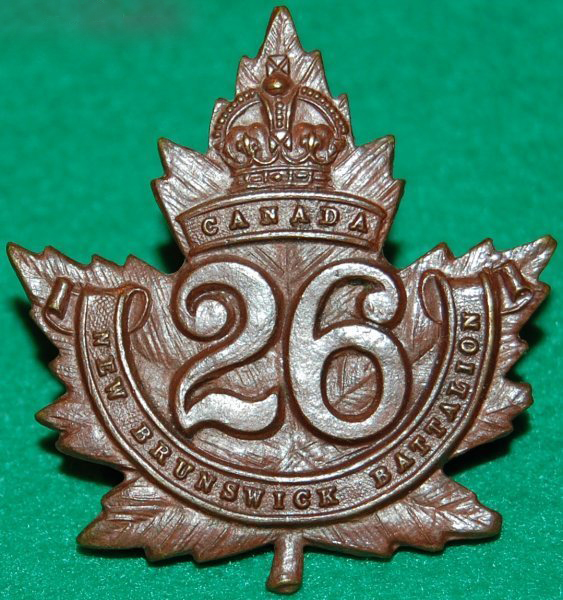
Honouring a Few Brave Men - The 26th New Brunswick Battalion 100 Years 1915-2015

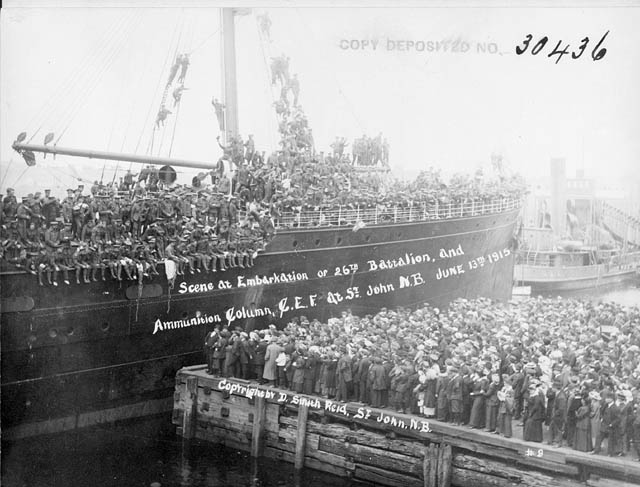
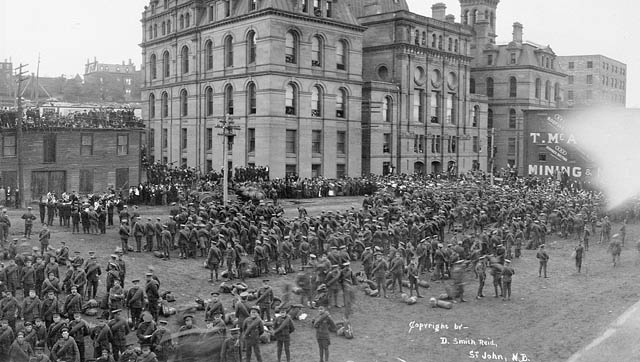
This Saturday, June 13, 2015 we're commemorating the Sailing of the 26th New Brunswick Battalion, 100 years to the day they left for the battlefields of Europe on June 13, 1915. On that day 1148 men set sail, comprised of 42 officers and 1106 other ranks, many would not return, and those that did were forever changed.

When the battalion returned home at the end of the war, only 4 officers of the original 42 and 113 of the original 1106 other ranks were still with the battalion, the others being killed, wounded or transferred to other battalions. Over all  about 6,000 men served with the 26th Battalion over the course of the war. 

It should be noted that the first member of the battalion to die was Lance Corporal George McKee of Fredericton. He died of pneumonia on April 21, 1915 and was buried in the Fredericton Rural Cemetery with full military honours. He was also the first resident of Fredericton to die on active service.

 The first member of the battalion to die in action was Private Moses Gallant from PEI. He was killed on September 28, 1915 during the 26th’s first tour in the trenches near Ypres in Belgium. The first officer from the battalion to die in action was Lieutenant Charles M. Lawson, who was a teacher at Saint John High School before the war. On November 26, 1915 he died of his wounds received during a patrol in No Man’s Land. 

Lieutenant Colonel A.E.G. McKenzie, the commanding officer of the battalion, was killed in action on August 28, 1918. The battalion losses on that day were 57 men killed and 199 wounded. The worst single day of the war for the 26th was September 15, 1916 when they lost 325 all ranks (killed, wounded and missing) helping to capture the village of Courcelette on the Somme.

The 26th Battalion never lost a battle the entire war. 

What follows is a condensed history of the "26th New Brunswick Battalion 1914-1919": 

October 25th 1914                   Lt. Col. J.L. McAvity received word to recruit a Battalion for the Expeditionary Force to be known as the 26th.

November 1914                         Recruiting carried on throughout the Province, Battalion well over strength.

December 1914                      Battalion Billeted in Armouries, Saint John.

June 1915                                     Training carried on intensively.

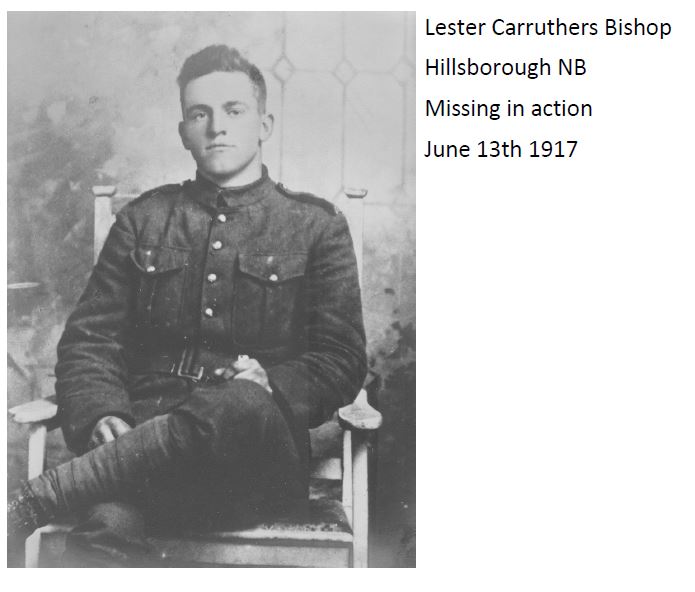
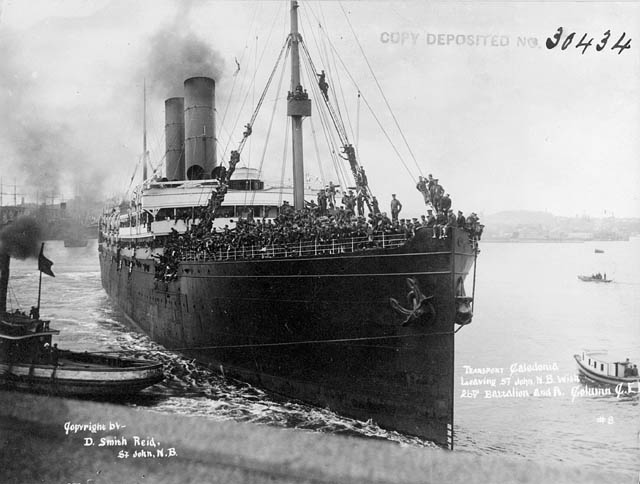
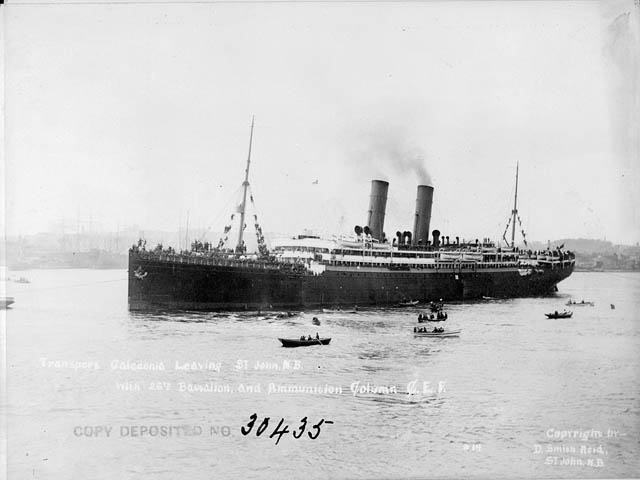
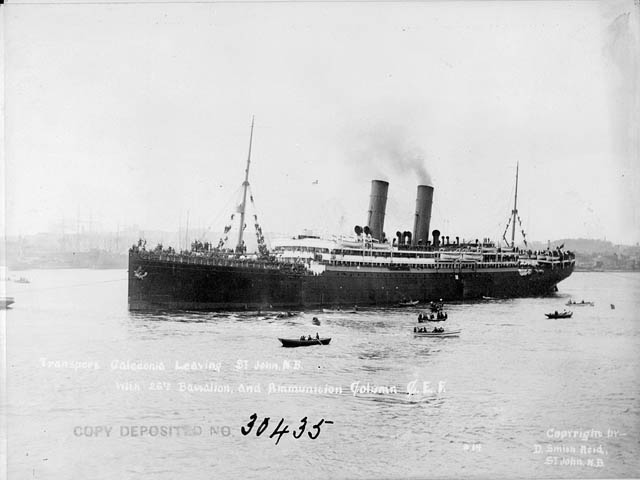
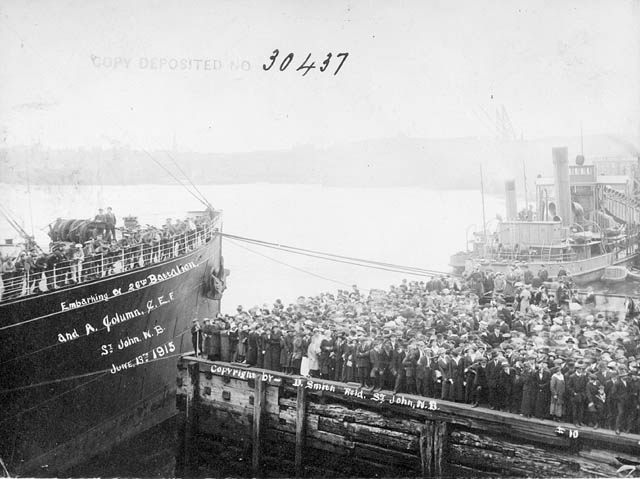
June 13th, 1915                          Battalion Sailed from Saint John on Anchor Line Caledonia.

June 24th, 1915                         Landed at Davenport, England, proceeded by train to East Sandling in the Shorncliffe Area.

June to Sept. 13, 1915             Intensive training in England.

Sept. 13th, 1915                           Advance Party of Battalion left for France including the Transport.

Sept. 15th, 1915                           Battalion marched to Folkstone and embarked landing at Bolougne, France.

Sept. 15 – 18, 1915                    Moved toward Firing Line.

Sept. 25th, 1915                           Took over Front, East of Kemmel Vierstraat Road from 22nd Batt.

Oct. 13, 1915                                Crater Fight Reconnaissance in Force, really one of the first daylight raids, heavy Casualties.  Sgt. Ryder received D.C.M., first decoration in 2nd Canadian Division.

Oct. 1915 to Mar. 1916             Holding Line.

March 1916                                  Took over St. Eloi Front.

April 1916                                      Lt. Col. J.L. McAvity Invalided to England and command assumed by Lt. Col. A.E.G. MacKenzie.

April – May, 1916                       Holding St. Eloi Front.

May 1916                                      Raid under Lt. Winter who was later decorated with the M.C.

June 3rd, 1916                            Heavy German Attack on left of Battalion.

June 6 – 12, 1916                        Holding Front prior to and after Counter Attack, heavy casualties.

June 15 to Aug 15                     Back on St. Eloi Front, holding line.

Aug. 1916                                      Out of Line for Reorganization.

Sept. 1916                                     Move to Somme Area.

Sept. 15th, 1916                           Attack on Courcelette, Battalion went in 555 all ranks and came out 174.

Sept. 28th, 1916                         Second Tour in Somme, Battalion went in 374 all ranks and came out 78.

Oct. 2 to 9, 1916                         Rest and reorganization Bertacourt.

Oct. 9 to 15, 1916                       Move by route march north to Bully Grenay Front.

Oct. to Dec. 1916                        Holding Line Bully Grenay Front.

Jan. 1917                                       Raid Enemy Lines for Identification Purposes.

Jan. 1917                                       Out of Line to Army Reserve for a month at Bruay.

Feb. to Mar. 1917                      New Front East of Neuville, St. Vaast.  Preperations for Vimy attack.

April 9th, 1917                            Attack on Vimy Ridge, Battalion in first place.

April 14th, 1917                           Attack East of Vimy Ridge, Battalion established most forward line on British Front which was named New Brunswick Trench.

April to May 1917                      Holding Front East of Vimy.

June 1917                                     Army Reserve in Estree Couche.

July 1st, 1917                                 Took over New Front East of Lievan towards Lens.

July 1917                                        Lt. Col. MacKenzie, D.S.O. goes on course to England and command assumed by Lt. Col. W.R. Brown, D.S.O.

Aug. 15th, 1917                            Attack from St. Pierre towards Lens, very heavy casualties.

Aug. 20 – Sept. 8                       Rest and Refit Maison Bouche.

Sept. – Oct. 1917                        Holding Front East of Vimy.

Oct. 1917                                       Lt. Col. MacKenzie returns and takes command of Battalion, Col. Brown goes to England to command the reserve.

Nov. 1917                                     Move North to Ypres Salient.

Nov. 6th, 1917                            Attack and Capture of Passchendaele.

Nov. 1917                                     Move back to Vimy Front.

Dec. 1917                                      Lt. Col. MacKenzie, D.S.O. Invalided to England.  Maj. C.G. Porter, D.S.O. assumes command.

Dec. 21st, 1917                             Battalion moves to Army Reserve, first Xmas out of Line.

Jan. 1918                                       Take over Front East of Vimy.

Feb. 1918                                      Move back to Lens Front.

March 1918                                  Battalion out for rest and refit, cut short by German Attack South on the 21st.

Mar. 24, 1918                               Move South to Bienvilliers Aubois.

Mar. 26th, 1918                            Move North again, S.E. of Arras, take over Telegraph Hill Switch.

April 7th, 1918                              Lt. Col. A.E.G. MacKenzie, D.S.O. returns to Battalion, Col. Porter assumes duties of 2 I/C.

Apr. – July 1918                          Holding Front East of Neuville Vitasse, many raids carried out by the Battalion.

July 1918                                        Hauteville for rest and refit.

Aug. 1918                                      Moves to Amiens.

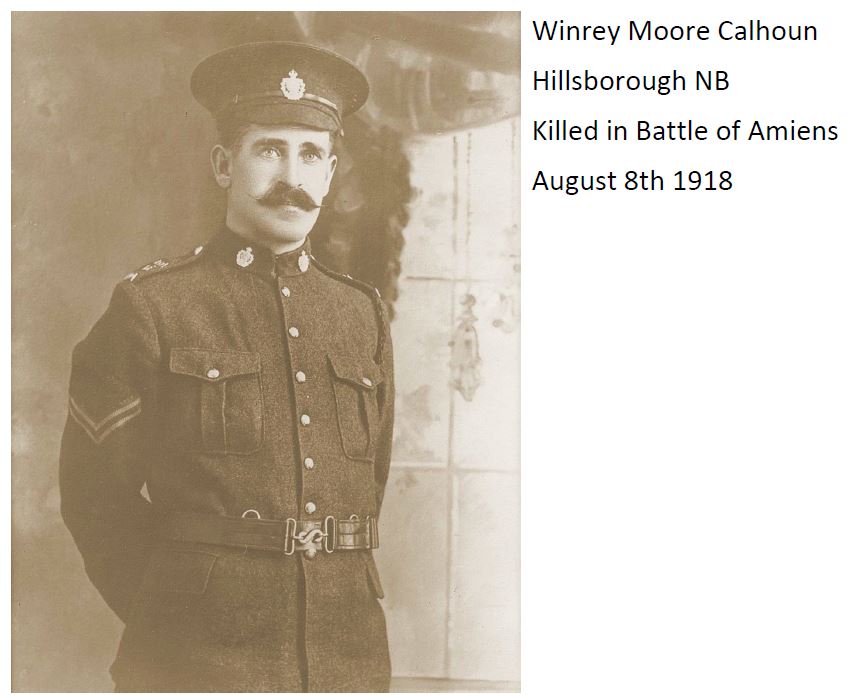
Aug. 8th, 1918                             Attack East of Amiens, great depths gained, many prisoners taken.

Aug. 18th, 1918                            Moved North to Arras Area.

Aug. 26th, 1918                            Attack East of Arras beginning of the end.

Aug. 28th, 1918                            Lt. Col. MacKenzie Killed, leading attack.

Sept., Oct. to Nov. 11th, 1918       Continue attacks towards Cambrai Valenciennes, with Battalion at Wancourt when Armistice Declared.

Nov. 15th, 1918                            Detail from Battalion in Official Entry into Mons.

Nov. 20th, 1918                           Start March to Germany with Army of Occupation.

Dec. 3rd, 1918                              Cross Rhine at Bonn Dursen, Inspected by Gen. Currie at the Bridge.

Jan. 1919                                       Germany East of Bonn, move back to Tamines in Belgium.

Mar., April 1919                          Tamines moved back to England.

May 10th, 1919                            Sailed from England on Olympic.

May 17th, 1919                            Landed in Halifax, Moved by train to Saint John, great reception.

May 17th, 19th, 1919                  Demobilization.

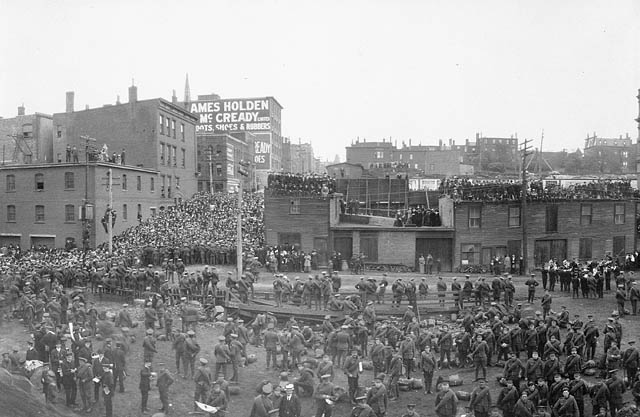
This Saturday, we are honouring the men of the 26th Battalion with a Colour Parade,  on June 12, 1915 in front of cheering crowds in excess of 20,000 people, the 26th Battalion marched from the Armoury in Saint John to the Harbour. In the early morning hours on June 13, 1915, the 26th Battalion boarded the troop ship, “Caledonia” and sailed for England.

In commemoration of this historic event, the Royal New Brunswick Regiment will parade in full dress uniforms, along with the RCMP Pipes and Drums Band and local cadet groups (the 560 Moncton Army Cadets). The parade will be inspected by Brigadier General Peter Atkinson (retired). BGen. Atkinson served with the Canadian Forces for over 35 years, and still has strong ties to Albert County. This parade has special meaning for the Royal New Brunswick Regiment for they are the living embodiment of the 26th Battalion and hold their battle honours, which are extensive.

Come out and help us remember the Fighting 26th!

To View the Event Click Here.
The Inspiration for an Event: The 26th Battalion Overseas Club Dinners

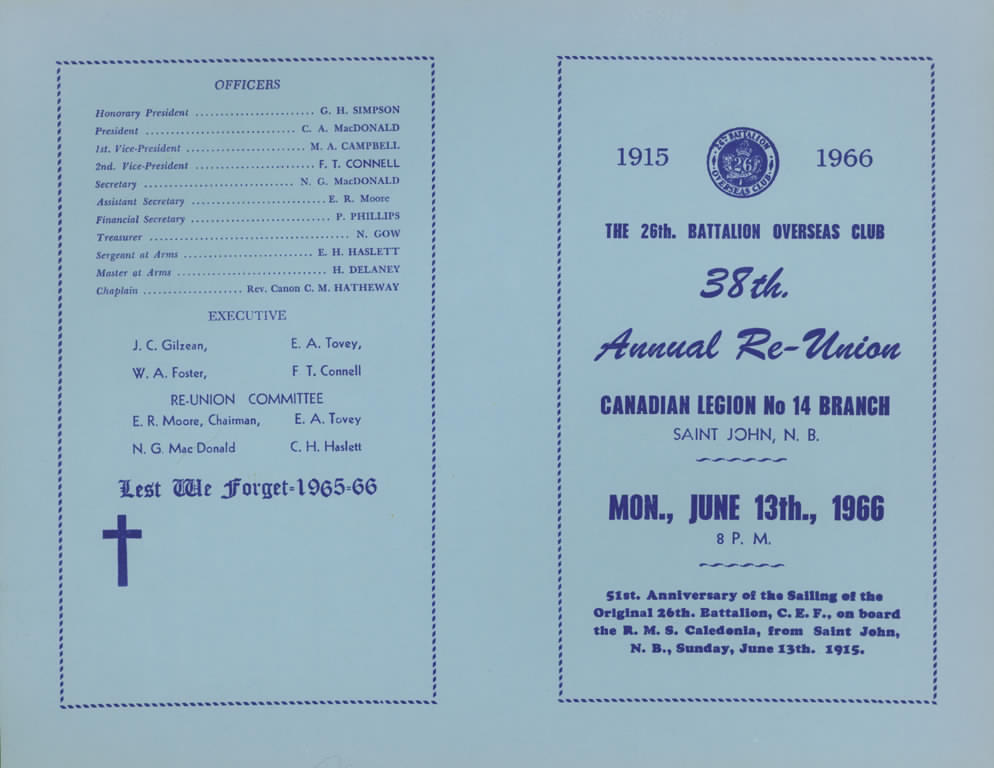
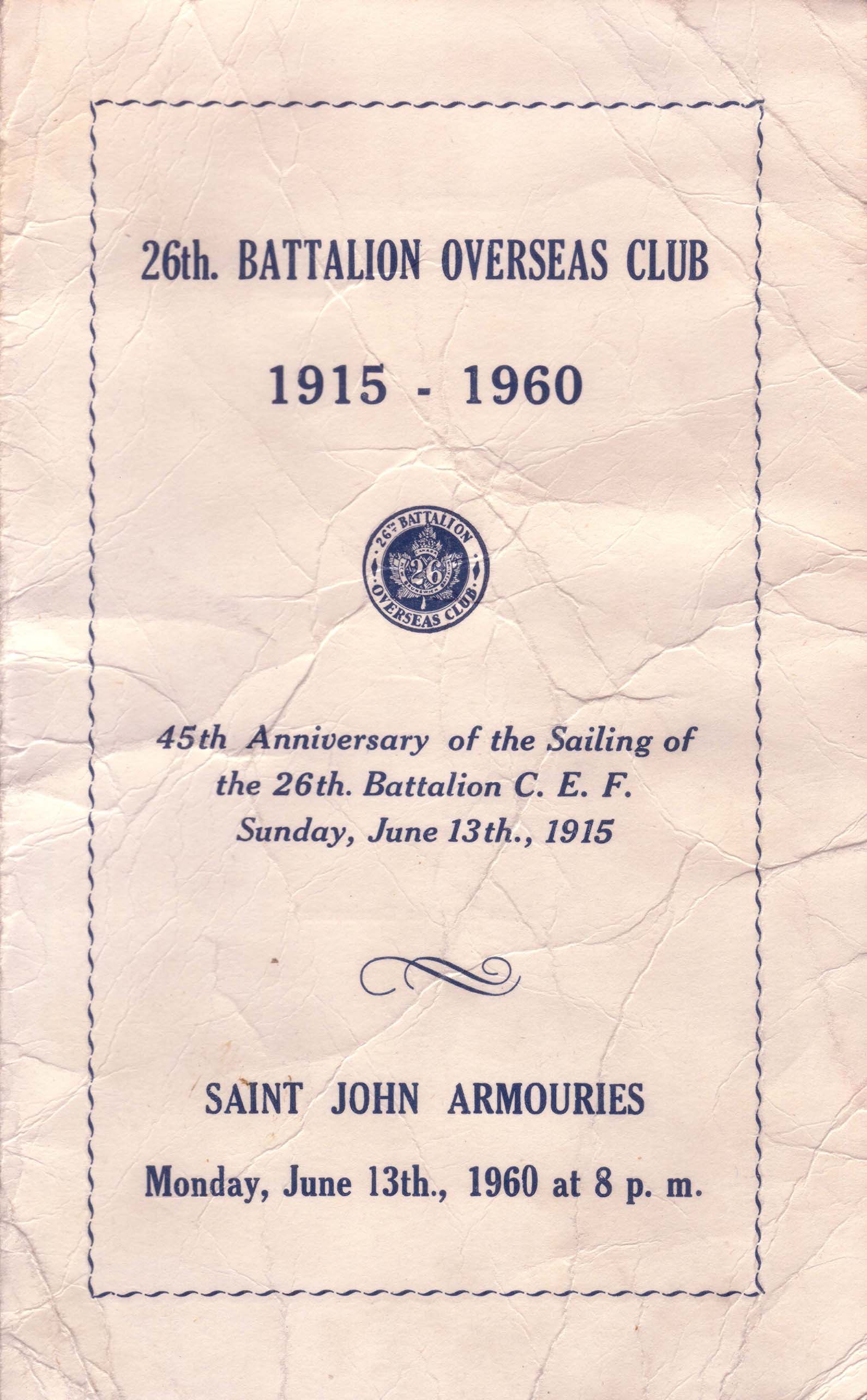
They say there is nothing stronger than the bonds formed on the battlefield, and the men of the 26th Battalion, who were in the thick of every major battle the Canadian Corps faced in the First World War, kept true to theirs for the rest of their lives. The veterans of the 26th Battalion organized the 26th Battalion Overseas Club after the war and held their first reunion ten years later in 1928. They continued to hold them every June 13th, commemorating the day the Battalion sailed for war from Saint John (for at least another 40 years).

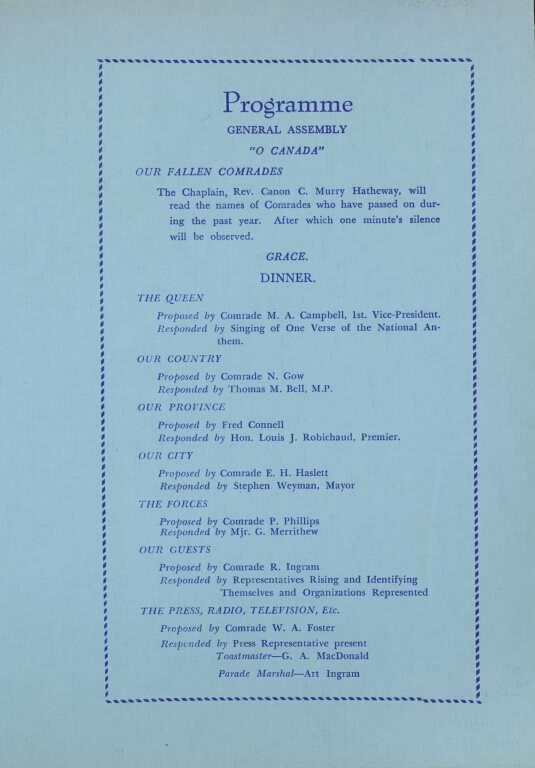
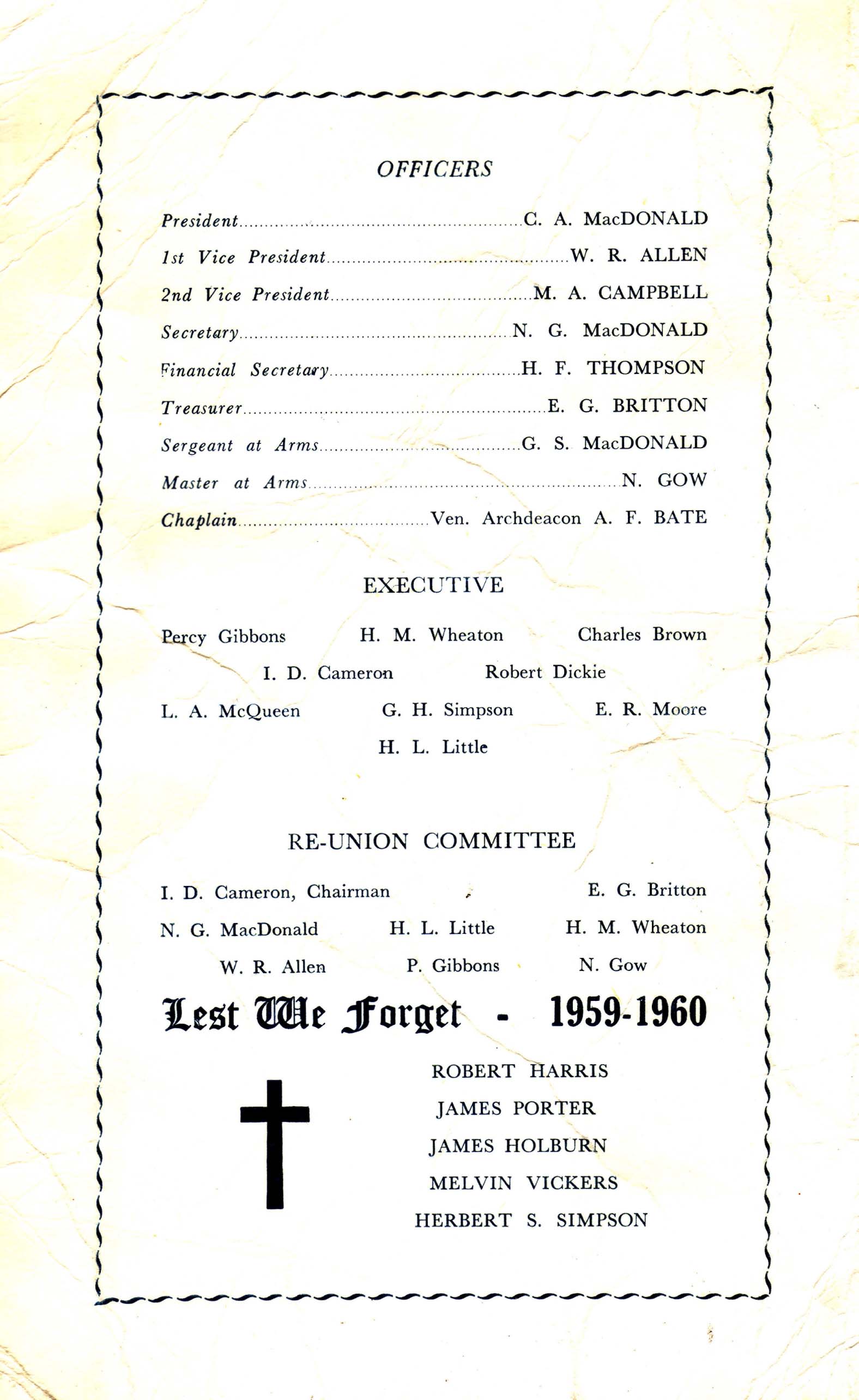
We have found two programs from these dinners: one from 1960 (the 45th year since the sailing) and the other from 1966 (the 51st year since the sailing). Both programs follow the traditions of the 26th Battalion and standard military protocol, with the prescribed singing of anthems, the prerequisite toasts and responses and the remembering of those lost to time. The menus included in the programs are similar and both ended with the S.R.D. (Seldom Reaches Destination). What is an S.R.D.? To find out you will have to attend the Commemoration Dinner on Friday, June 12 at 6pm.

Our dinner, inspired by the 1960 45th Anniversary will be following the 1960 menu and program almost to the letter. It will give you a taste of what the men of the 26th Battalion experienced 55 years ago, along with a few additions that will liven up the evening. The Banquet  is also a fund-raiser for the Victory Cannon Campaign, which will help restore the two captured German First World War cannons that sit in the square in Hopewell Cape.

Be sure to grab your tickets early as they are going fast, and seating is limited. It is a great chance to experience a unique dinner and program honouring an important historical event.


PS Tickets are $25.00 each and can be purchased by calling the museum 506-734-2003


The Mystery Box Talks - What Treasures Does Our Vault Hold? The Last Friday of the Month - May to September

The Mystery Box Talks - What Treasures Does Our Vault Hold? The Last Friday of the Month - May to September

Our First MYSTERY BOX TALK is taking place this Friday, May 29th at 7:30PM at the Community Hall in Hopewell Cape. What is a Mystery Box Talk? That's a good question, and to answer it we have to tell a story...

A Shipbuilding Past

The Bennett family came from England in 1635 and settled in the Saybrook Colony, a British colony established at the mouth of the Connecticut River.  Zadack (Zadoc) Bennett left Lyme, Connecticut in 1761 with his wife Mary (Mercy) Hackett and their children to settle in Horton, near present day Wolfville, Nova Scotia.  Their 500 acre land holdings included a town lot, a share of dyke land, and two farm lots.
In 1784 Benjamin Bennett, son of Zadoc Bennett, left his new wife in Horton while he went to Hopewell, New Brunswick, to clear land and build a home for his family.  Unfortunately his wife died in 1788 and therefore she never made the journey to join Benjamin in Hopewell.  In 1800 he married his second wife, Rebecca Stevens, of Harvey.  They had several children together.

Half-Model of a Bennett vessel

Half-Model of a Bennett vessel

Benjamin’s brother, George, was the first Bennett in what is now Albert County to build ships.  The 61 ton Schooner ‘Mary and Eliza’ was launched in May 1818.  Several members of the Bennett family followed in the shipbuilding tradition including Benjamin’s and Rebecca’s son, Nathan Murray Bennett.  Nathan’s first registered vessel was the 75 ton Schooner ‘Hopewell’ that was launched in July 1835.  Nathan’s son, Henry John Bennett, joined the family tradition and launched his first vessel, the 680 ton Barque ‘Enoch Arden’, in June 1867.

Half-Model of a Bennett vessel

Half-Model of a Bennett vessel

In all, there were 44 registered vessels built by the Bennett family.  36 of them were built at the family shipyard in Hopewell Cape, 7 in Hillsborough and one in Harvey.  The Bennett shipyard in Hopewell Cape was well equipped with a large boarding house, moulding copts, a blacksmith shop, barns and stables, and a general store.
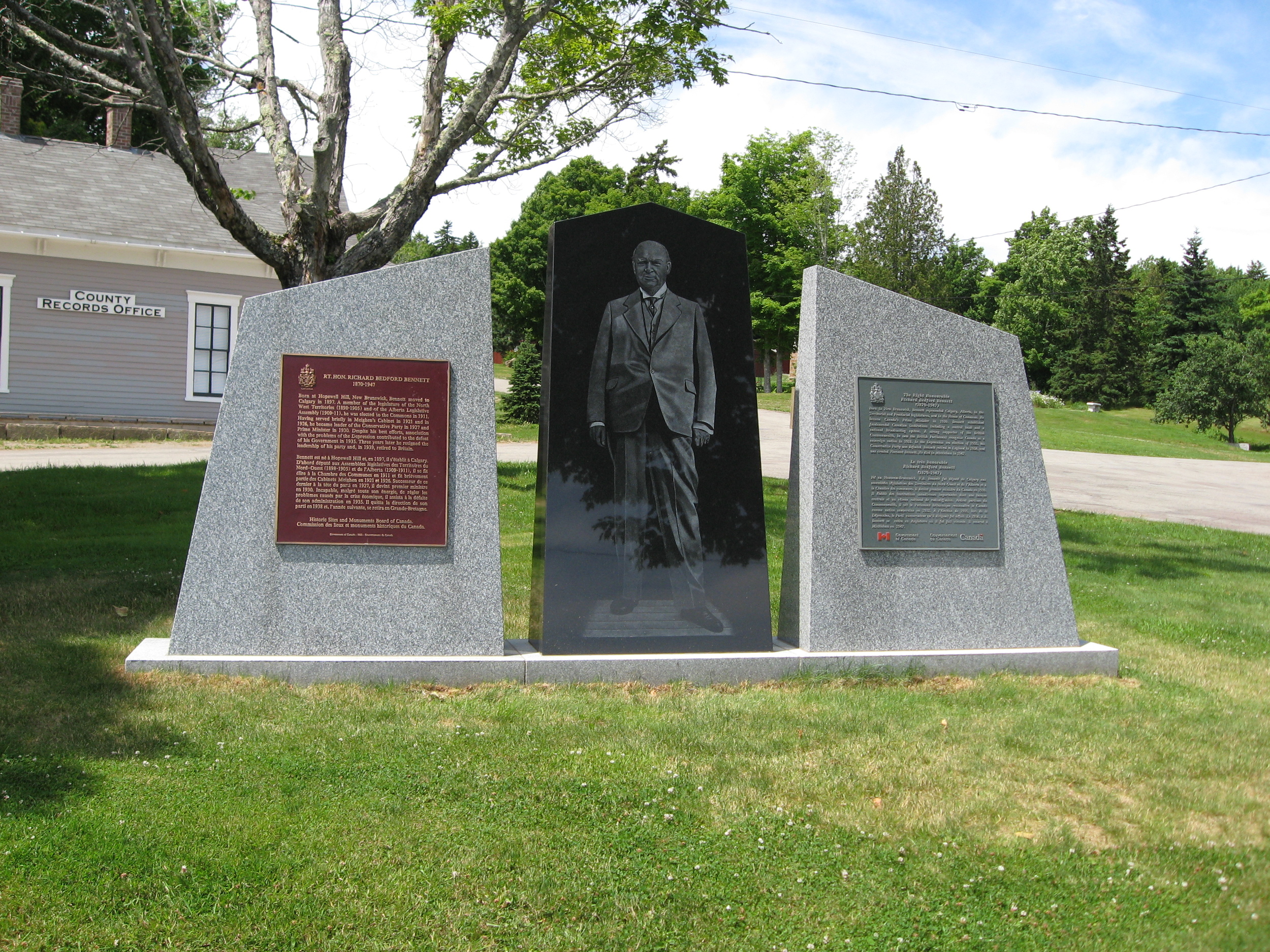
Henry Bennett, father of Richard Bedford Bennett, is credited as the builder of the last vessel constructed at the Bennett Shipyard, the 298 ton Brigantine ‘Romola’.  It was launched in December 1874 and marked the end of an era for the Bennett family.